Satellite hyperspectral cameras are powering a range of new Earth Observation (EO) and remote sensing applications and concepts.
Traditionally, hyperspectral technology was too expensive and complex for many missions. However, in recent years a variety of companies have qualified and brought to market commercially-available optical payloads with hyperspectral capabilities.
In this article we share some information on how hyperspectral solutions are generating value in space, what to consider when selecting a system for your next mission, and give details of payloads on the satsearch supply chain platform in April 2025. If you’re already familiar with the technology and would like to go straight to the supply chain review, please click here.
Hyperspectral imagery from space
Fundamentally, hyperspectral cameras enable simultaneous imaging of a target in many spectral bands – with the ultimate limit being precise data across the full spectrum for each pixel of the image.
This ability to collect data that is invisible to the operator’s naked eye, and to most satellites, opens up new possibilities in research and in the development of a commercial space service.
A typical system will enable capture in spectrally contiguous bands, with data in hundreds of wavelengths collected and combined in composite images and associated datasets. These can be used to identify and monitor data points that can be used in a wide range of applications such as:
- Greenhouse gas monitoring – e.g. identifying methane leaks at industrial sites
- Precision agriculture – e.g. monitoring hyperlocal soil content
- Water monitoring – e.g. determining chemical contamination or identifying the results of changing natural processes
- Understanding land use – e.g. mapping forestry changes
- Air quality monitoring – e.g. understanding emissions, pollution, and changing contents
These applications require accurate and structured data that goes beyond simple visible or multispectral observations.
Of course, due to their nature, hyperspectral systems result in a high volume of data being generated onboard the satellite. To deal with this, and get the most value from the payload, hyperspectral satellites usually include plenty of payload processing capacity.
This plays a variety of roles. For example, when you have the ability to collect data across so many bands it is important that the system can efficiently select those which are of the most interest.
Typical optical processing applications also apply – such as the removal of obscured imagery due to clouds (unless these are of value) and corrupted files. In addition, hyperspectral systems usually use compression to help deal with the high data volume.
All of these considerations should be taken into account when selecting a hyperspectral option for your next mission. And in the next section we take a look at several others to help accelerate your engineering and design processes.
Selecting a hyperspectral camera for a satellite mission
Selecting any optical payload is primarily driven by the data, insights, and value that you wish to generate in the mission. This is particularly true for hyperspectral solutions as the breadth of information that can be collected is so wide.
As always, size, weight, power, and cost (SWaP-C) budget requirements will be important; particularly peak or maximum power input as hyperspectral payloads are usually quite energy-hungry. The system will often have three power modes – peak (when imaging at maximum throughput), idle (when no action is being taken), and readout (when images are being transferred, downloaded, or downlinked).
Other common parameters such as the operating temperature range, radiation tolerance, and mission lifetimes will also be important to consider. And alongside these, here are some of the key optical specifications that will need to be determined in order to choose the best hyperspectral camera for your satellite:
- Focal length
- Number and frequency/wavelength of spectral bands
- Swath
- Ground sample distance (GSD)
- Signal-to-noise ratio (SNR)
Interoperability is also a key consideration. As mentioned, hyperspectral cameras can produce a lot of data per pass, meaning that the entire payload processing and communications chain needs to work as efficiently as possible to extract the maximum value. Potential data interfaces to use can include RS422 and RS485, I2C, SPI, SpaceWire (compliant with ECSS-E-ST-50-12C) and CAN.
Finally, heritage is very important. Many hyperspectral solutions are provided on a bespoke basis, with custom-designed filters and optics. But these are usually based on existing satellite camera heritage by established teams. Ensure you adequately vet both the technology and supplier expertise going in to any system of interest.
And to help with this, in the next section we have provided details of multiple hyperspectral cameras available on the global market today.
Satellite hyperspectral cameras on the global market
This section includes a variety of hyperspectral optical payloads available on the global market today. You can click on any of the links to open pages with more detail on each system.
From these pages you can submit requests for quotes, documents, or further information by the supplier, and we’ll handle the request for you (find out more about how this all works here).
If you want to shortcut this process, or need some assistance refining either your specific hyperspectral camera or more general EO payload requirements, you can instead submit an open tender and our expert procurement team will get back to you ASAP.

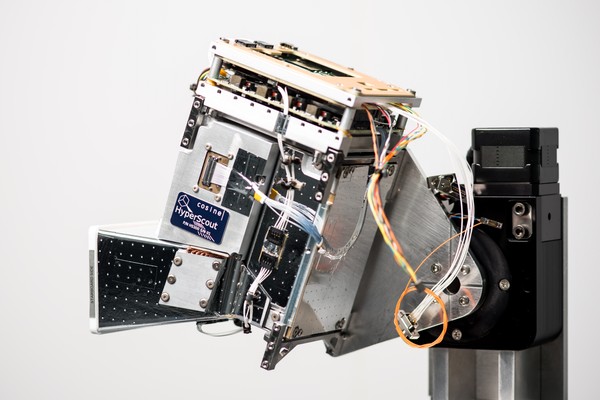
The cosine Remote Sensing HyperScout 1 is a hyperspectral imaging camera with VNIR (450-950 nm) channels for nano, micro and larger satellites. The system features an athermal telescope system, BEE/OBDH, MMU and ICU. For accelerating machine vision tasks, the Vision Processing Unit (VPU) can be equipped optionally. The systems has achieved flight heritage.
 Request quote
  request info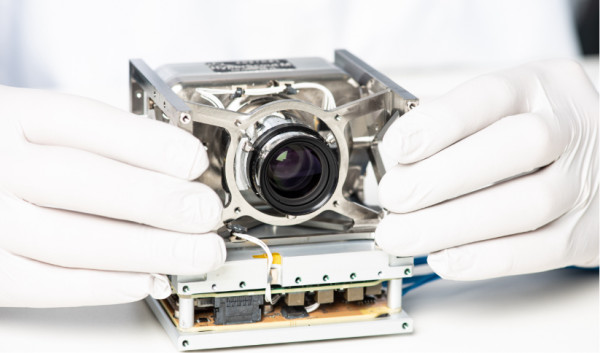
The cosine Remote Sensing HyperScout M is a hyperspectral imaging camera with VNIR (450-950 nm) channels designed to fit a CubeSat unit. The system features an athermal telescope system, BEE/OBDH, MMU and ICU. For accelerating machine vision tasks, the Vision Processing Unit (VPU) can be equipped optionally.
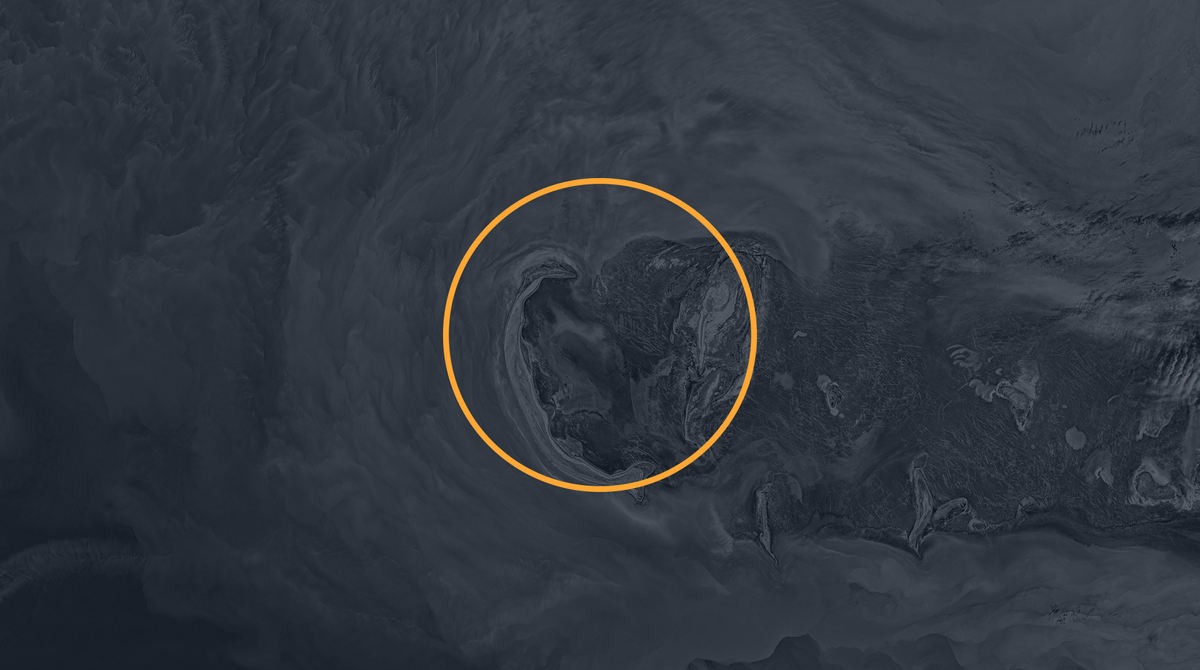
The cosine Remote Sensing HyperScout S is a hyperspectral imaging camera with VNIR (450-950 nm) channels and a medium spatial resolution of 30m. The system features an athermal telescope system, BEE/OBDH, MMU and ICU. For accelerating machine vision tasks, the Vision Processing Unit (VPU) can be equipped optionally.
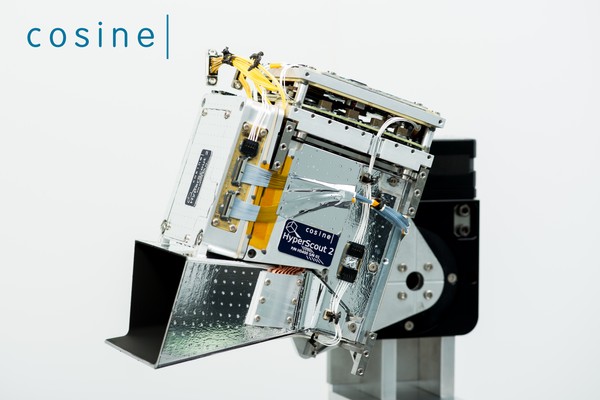
The cosine Remote Sensing HyperScout 2 is a hyperspectral imaging camera with VNIR and TIR (8-14 µm) channels for nano, micro and larger satellites. The system features an athermal telescope system, BEE/OBDH, MMU and ICU. For accelerating machine vision tasks, the Vision Processing Unit (VPU) can be equipped optionally. The systems has achieved flight heritage.
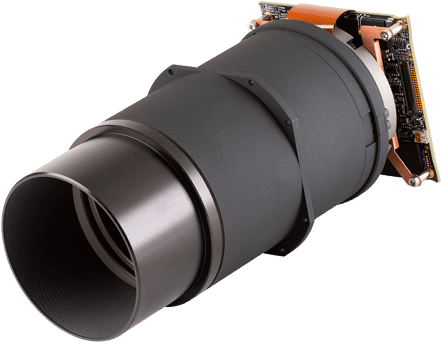
A multispectral or hyperspectral camera suitable for integration with 3U or larger CubeSats, with proven electronics with flight heritage. The Chameleon-MS has 5 V DC operating temperature, mass of 1.6 kg, and features customizable on-board storage and downlink options.
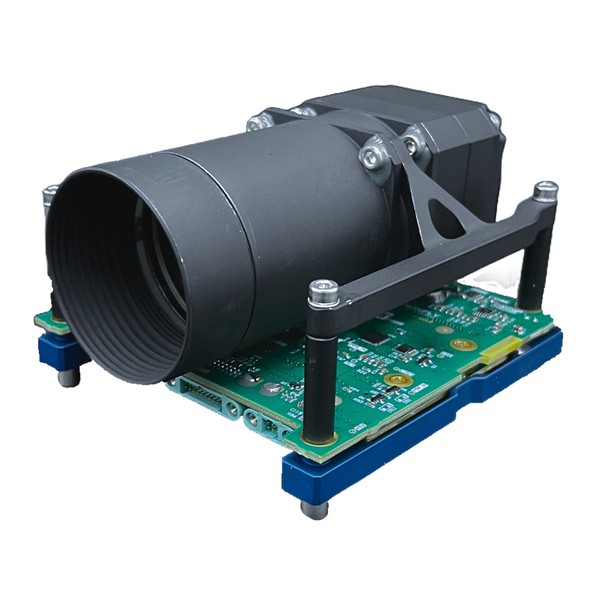
The Dragonfly Aerospace Mantis imager provides advanced multispectral or hyperspectral imaging in a small package.
Large high-speed data storage is integrated into the compact design, allowing Mantis to bring revolutionary imaging capability to CubeSats as small as 2U.
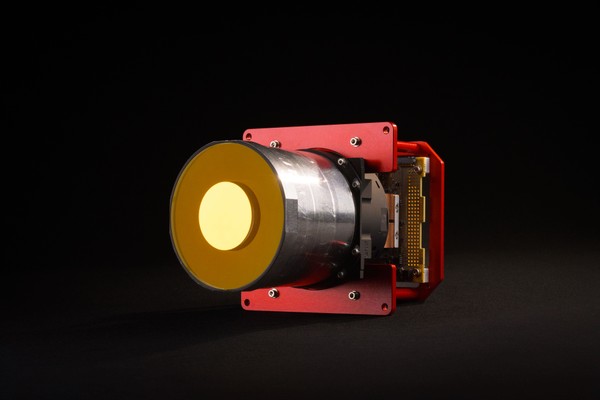
Simera Sense's HyperScape100 is a hyperspectral push-broom imager primarily designed for Earth Observation (EO) applications, as a payload for CubeSats. It is based on a CMOS image sensor and custom continuously variable optical filter in the visible and near-infrared (VNIR) spectral range.
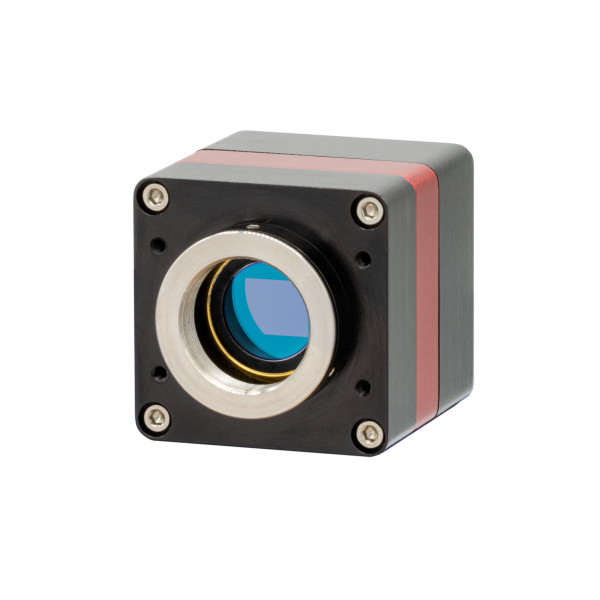
The Raptor Photonics Owl 640 T camera is a SWaP optimised ½" / VGA InGaAs sensor with a 10µm x 10µm pixel pitch. It offers a high intra-scene dynamic range that enables simultaneous capture of bright and dark portions of a scene.

The HRVI-6HD 2nd Generation is the latest version of BST's heritage line camera systems. It consists of three sub-units, the DCP (Dual Camera Payload) and two PLSU (Payload Support Unit), one attached to each of the DCP’s two optical heads. The HRVI-6HD 2nd Gen offers 4.6m GSD resolution imagery with a 70km swath. The hyperspectral version provides flexibility to adjust the GSD/SNR/spectral resolution to the mission's needs.

A 20 kg multispectral Earth Observation payload for small satellites. The unobscured Three Mirror Anastigmat (TMA) design maximizes MTF at high spatial frequencies, and multispectral, hyperspectral, PAN, and RGB functionalities are available.
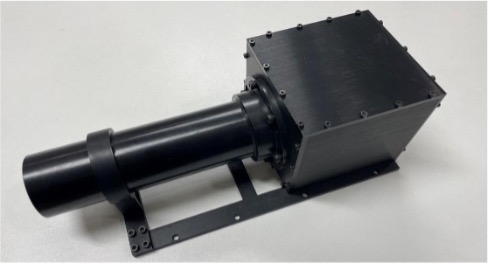
The SastX-SNIOE-02 is a Near-Infrared (NIR) hyperspectral push-broom imager for earth observation applications as a payload for CubeSat satellites.
The SastX-SNIOE-01 is a visible (VIS) hyperspectral push-broom imager for earth observation applications as a payload for CubeSat satellites.
Need help finding the best solution?
Share your requirements with us now
Would you like to be featured on satsearch?
Click here to get started today
Related technologies and further reading
At the links below you can find a range of satsearch articles that will be useful for learning more about this topic, or that feature other categories of technologies which you may need to consider in your mission.
- A guide to selecting Earth Observation cameras for satellite missions
- A guide to advanced data processing and AI for satellite missions
- CubeSat thrusters and in-space propulsion
- Satellite batteries for CubeSats and more
- Software-defined radios (SDRs) for space
- Satellite software providers on the global market
- Payload processors for satellites
- A brief introduction to the space supply chain