The variety of satellite software tools and packages being used to design, develop, and operate space missions is growing every year.
In addition, the process of optimizing space hardware, satellite technologies, mission operations, and ground segment performance is increasingly reliant on software stacks from multiple vendors around the world.
Onboard programs are also opening up new opportunities for systems to utilize edge computing, on-board data processing (OBDP), and artificial intelligence (AI) in order to:
- Cut operating costs,
- Increase data value and volume for end-user applications,
- Reduce downlink bandwidth requirements,
- Add versatility and flexibility to space systems, and
- Enhance the overall effectiveness and efficiency of space-based services.
In this article we take a look at the different categories of commercially-available space software packages and share information on a wide variety of products on the market today.
Navigation
There is no clear-cut categorization of space software packages. Many systems have multiple uses across different applications, or can be customized to operate in several different ways.
The section links below are only to help more easily navigate the list of systems on the market:
- Testing, simulation, and tracking software
- Mission design and planning software
- Combined mission design and operations
- Mission control software and flight software
- Onboard data processing (OBDP) software
- Satellite cybersecurity software
- An introduction to satellite software
- Satellite software procurement advice
- Related technologies and further reading
In each section you can find links to the satsearch page for every available software package, tool, or service. From these pages you can submit requests for quotes, documents, or further information by the supplier, and we’ll handle the request on your behalf (find out more about how this works here).
If you want to shortcut this process, or need some assistance refining your requirements, you can rapidly submit an open tender and our expert procurement team will get back to you ASAP.
Testing, simulation, and tracking software
Systems that enable radiation testing, thermal testing, component evaluation, and other forms of simulation of the space environment. These programs enable mission designers to iteratively test and improve hardware setups and performance, and streamline the all-important qualification steps of a space-based system.
In addition, accurately tracking orbiting satellites is a difficult challenge, whether for live systems or in mission simulations. This is becoming an increasingly important process as the volume of space traffic and debris grows, and there are a variety of software tools are available to help with this task – also listed in this section.

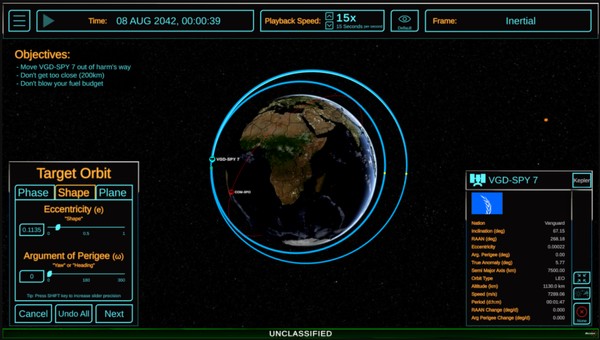
Auria's Keplera is a gamified trainer for spacecraft operators, teaching them the basics of orbital dynamics to prepare them for roles in satellite operations.
 Request quote
  request info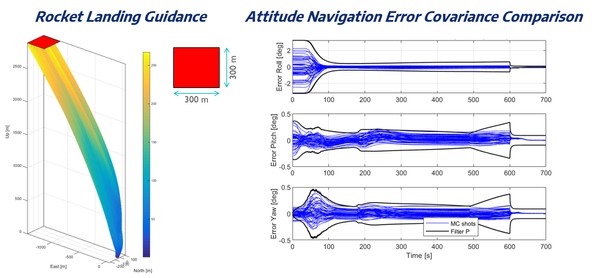
With over 20 years of accumulated expertise, Deimos’ GNC Forge provides a trusted platform for developing and testing GNC algorithms for all missions
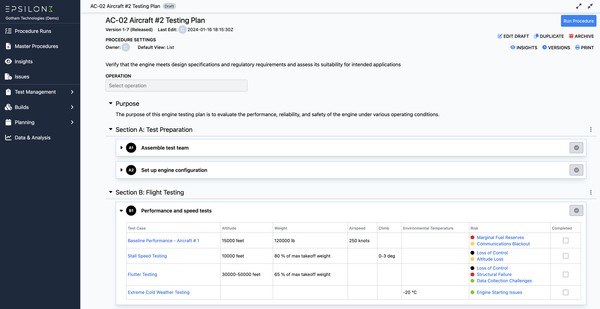
The Epsilon3 Test is designed to build and manage test plans with custom requirements and conditions for the space industry. It also runs test cases and collects outcomes as conditions and variables change. The tool also ensures traceability and repeatability as per the requirement of the customer's test operations scale. It can also visualize all test data in real time to discover areas of opportunity and risk.

The IENAI SPACE 360™ is a mission analysis tool with a cutting-edge space mobility analysis capability. It is based on a high-fidelity flight dynamics propagator, coupled to a heuristic optimization algorithm which enables a wide range of concurrent engineering and design functionalities.
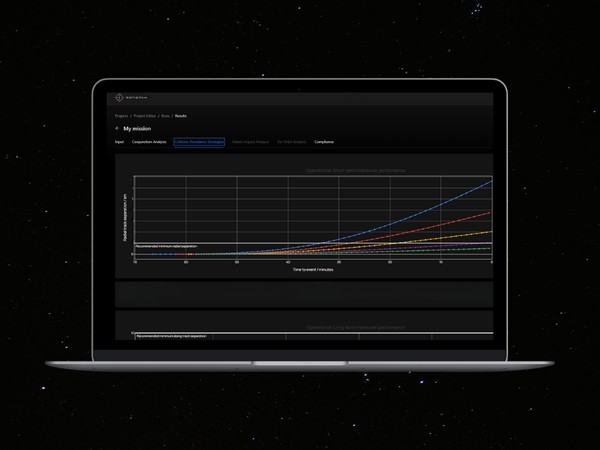
OKAPI:Soteria optimizes mission design and ensures mission compliance with relevant space debris mitigation requirements and standards.
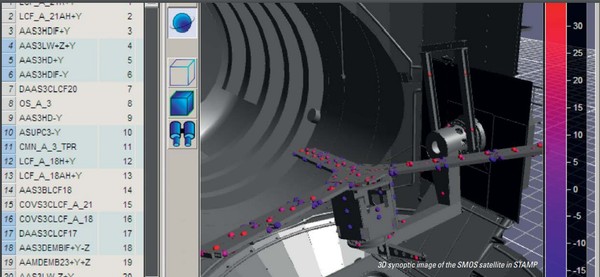
STAMP streamlines thermal testing by offering a robust system for data acquisition, visualization, and management, designed to support extensive thermal test campaigns. It stands out for its reliability, adaptability, and ease of use, coupled with advanced presentation features that enhance collaboration among sizable teams of operators and clients.
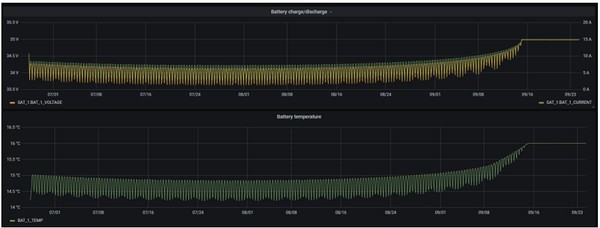
Terma's STAT is a sophisticated software product for the efficient archiving and analysis of spacecraft data. It serves as a central archive for telemetry and event data, ready for mission operations and AIT, and is scalable for constellations.
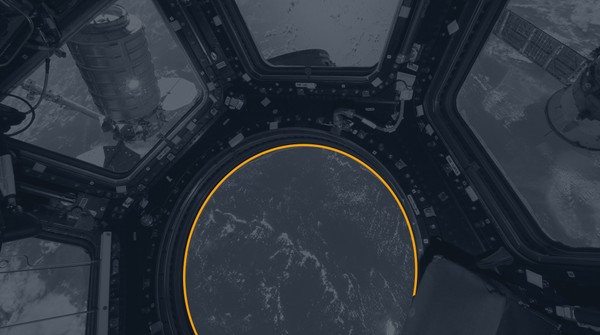
The Terma TEMU system is a high-performance emulator specialized in simulating a range of (multi-core) processors commonly deployed in European spacecraft. This versatile flight processor emulator supports a broad array of architectures including ERC32, LEON2, LEON3, LEON4, P2020 and ARM.
Terma's Software Validation Facilities elevate spacecraft onboard software development and validation, offering a state-of-the-art suite for efficient testing and simulation without the need for representative flight hardware.
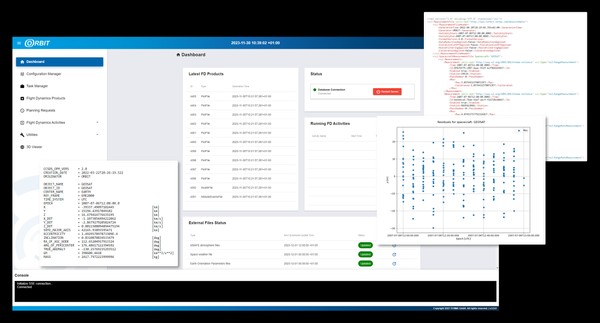
The Terma ORBIT product, leveraging the Terma Flight Dynamics library and an extension of Orekit, offers advanced support for Flight Dynamics across missions from LEO to GEO.

The Terma TRACK product enhances space mission management with precise, real-time orbit visualization and analysis for spacecraft and fleets, incorporating dynamic 3D and flat maps, terrain data, and solar system views.
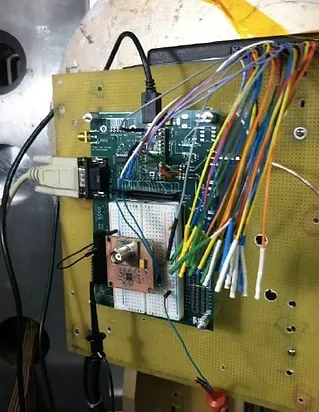
The Zero-G Radiation Assurance Radiation Testing is designed for space and other industrial applications. The company offers turnkey solutions - planning, design, execution, and analysis. Under this service, it also offers customized support to provide the setup and perform the irradiation or function as an onsite consultant for the customers.

The Zero-G Radiation Assurance Radiation Analysis is designed for space applications. Customers can run their analysis efficiently with Zero-G's in-house developed SEE analysis app. It can instantly calculate Figure-of-Merit SEU rates from heavy ion and proton test data. For proton data, the tool calculates rates from a set of mission parameters including orbit inputs, solar condition, and shielding level. Its SEE analysis app is free to use for the community.
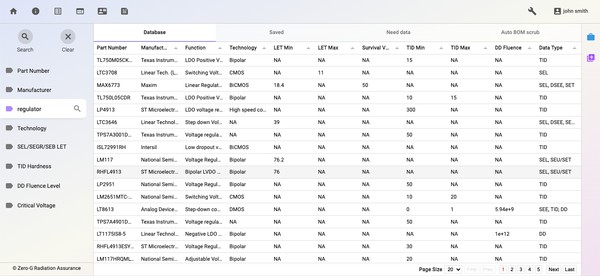
The Zero-G Radiation Assurance Radiation Database comprises radiation test data from mostly COTS devices and is hosted through a cloud software web interface. It contains data from over 20 years of papers and reports. Each record has been reviewed by subject matter experts. The modern web interface eliminates the need to sieve through reports and papers.
The Zero-G Radiation Assurance component evaluation is designed to ensure quality across the space mission components. It consists of a Bill of Materials (BOM) review, investigation of radiation data, screening requirements, etc. The company has decades of experience with various mission types & EEE parts requirements, from NASA Class A to Class D and CubeSat missions.
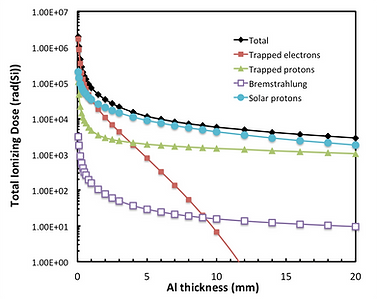
The Zero-G Radiation Assurance Environment Derivation is designed to simulate the space mission's radiation environment. The company can simulate the environment for space missions and determine the adequate radiation requirements based on customer mission needs, leveraging on its experience of creating radiation requirement documents for NASA missions and commercial space launch vehicle programs.
Mission design and planning software
Planning a space mission is an increasingly digital activity, potentially involving stakeholders in multiple different locations, and requires handling a greater volume of data than ever.
There are a variety of software tools and packages on the market, developed to enable faster, more powerful, collaborative mission design.
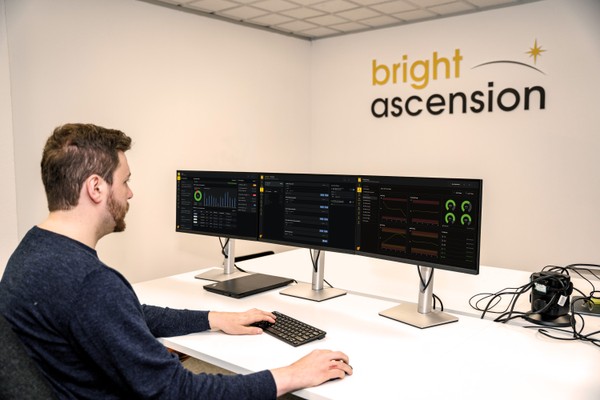
The HELIX family of space software products offers a fully integrated end-to-end solution, covering every aspect of space activities – from building flight software and managing ground operations to delivering space-based services and transforming them into value-added insights and applications. HELIX bridges the gap between currently disjointed and fragmented space software systems for significantly improved efficiency, simplicity, and noticeably lower costs. Designed with scalability in mind, it simplifies management of ever-changing mission requirements and hardware diversity within multi-vendor constellations, while offering end-to-end control and monitoring analytics.
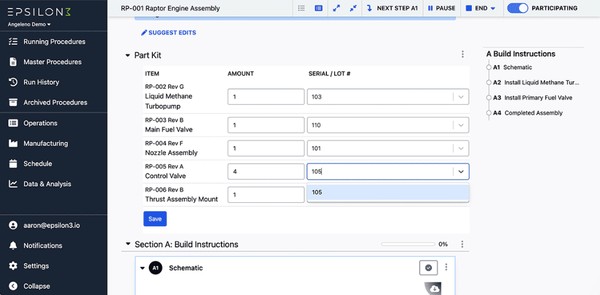
The Epsilon3 Build tool is designed to manage parts, inventory, resources, manufacturing, work instructions, and build history for space missions. It manages parts, Bill of Materials (BOMs), components, lead times, and more with easy ways to import parts or integrations with other product lifecycle management systems like Teamcenter. The Builds toolset is designed to streamline engineering workflows, manage parts, inventory, tooling, non-conformance, etc.
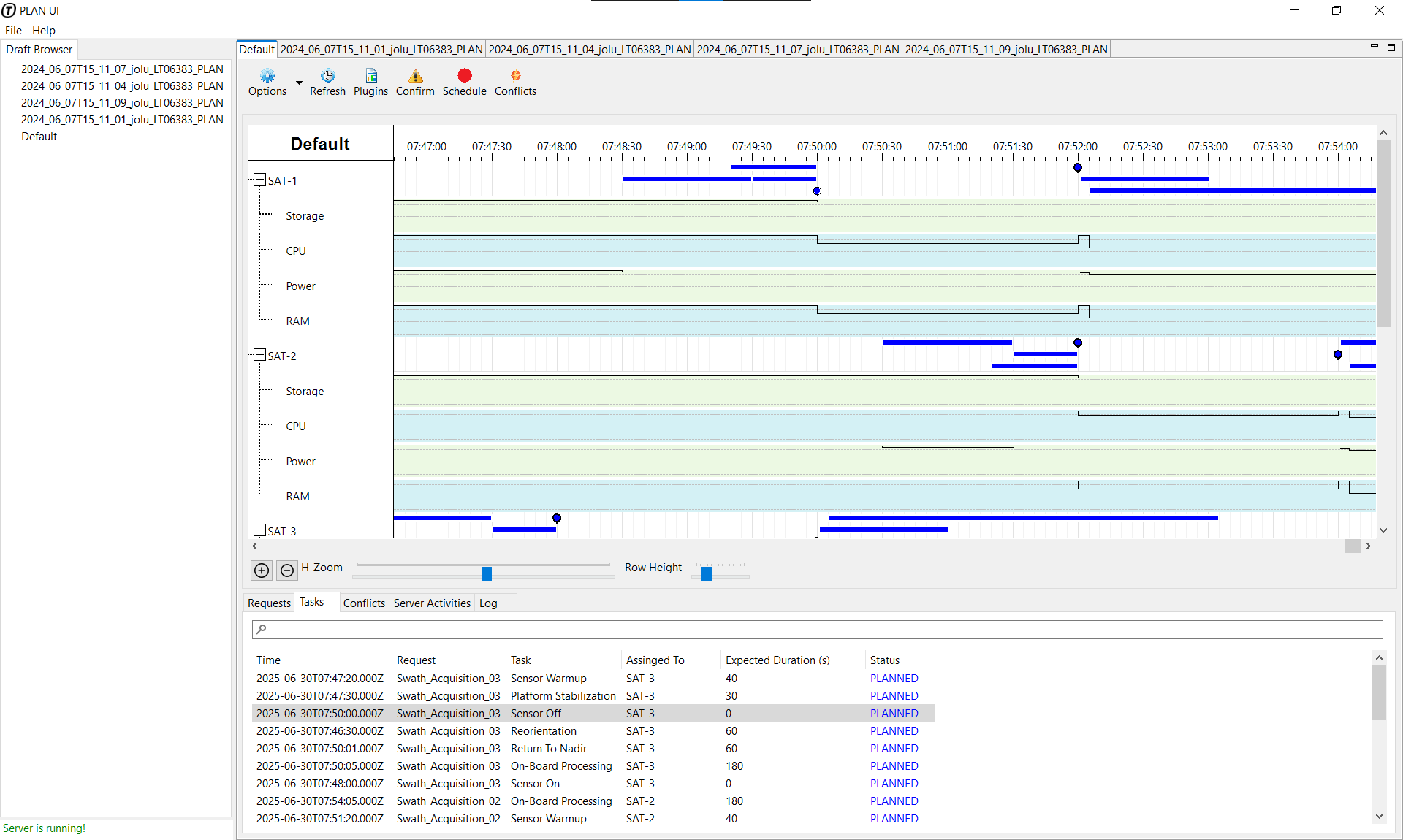
PLAN, integral to the Terma Ground Segment Suite, automates and optimizes mission schedules for satellite fleets, aligning tasks with key events to pinpoint ideal operational windows. With capabilities for manual adjustments and seamless integration with CCS5, its AutoPilot function executes scheduled tasks autonomously, ensuring timely and efficient mission control.
Combined mission design and operations
Alongside pure mission design tools there are a variety of software packages that combine mission development and digital engineering with operations. Software for satellite operations is bringing new capabilities and efficiencies to today’s missions, while giving teams greater flexibility at all stages.
The Auria CPAW couples high fidelity spacecraft modeling with AI scheduling algorithms and a multi-factor figure of merit to generate optimized collection plans.
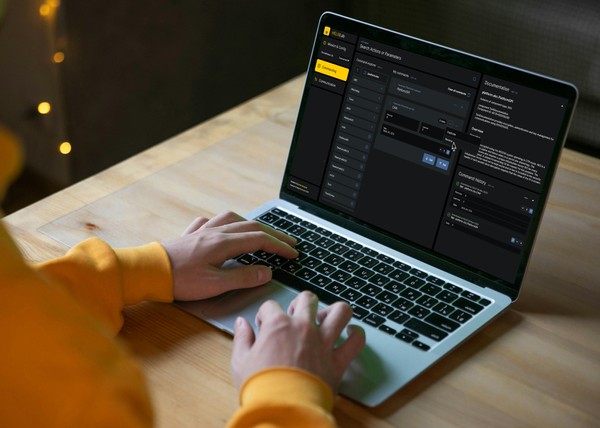
The Bright Ascension Flight Software Development Kit (FSDK) is designed to create mission-specific flight software using configurable and pre-validated components. The FSDK component library includes a wide range of components covering all mission needs and it is built on a variety of standard/cross-platform technologies, which can be readily adapted to suit different processes.
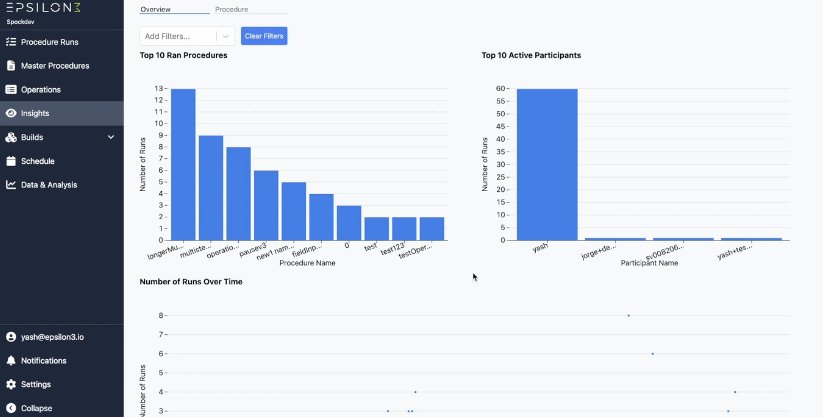
The Epsilon3 Discover tool is designed to access insights and increase efficiency to continuously improve performance. It helps discover key insights, trends, explore performance analytics, as well as share plots and analyses with other team members to quickly collaborate and troubleshoot anomalies or unexpected outcomes. This tool provides detailed analytics, dashboards, and reports of procedures.
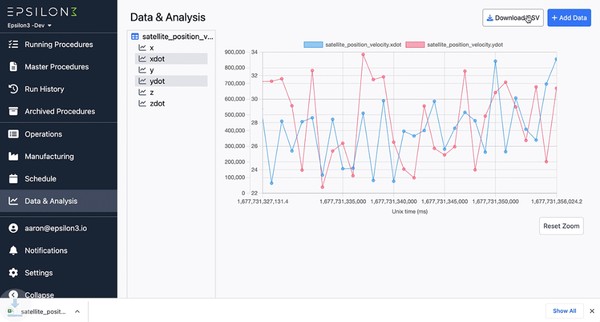
The Epsilon3 Analyze tool is designed to collect, store, manage, analyze, and export data with ease in the space industry. It is a cloud solution for the storage and retrieval of time series data, along with tools for plotting to help customers gain valuable insights and make informed decisions before making the next run or test.

The Epsilon3 Plan tool is designed to visualize schedules, timelines, and dependencies to track the critical path in the space industry. It helps to easily plan and manage tasks by scheduling procedures, events, and operations in an interactive Gantt view with powerful filtering, organization, and editing capabilities. All while leveraging customers' existing procedures and operations.

The Epsilon3 OS for Space Operations is a web-based, electronic procedures solution for operators who need to create, process, and track complex procedures. It is designed to streamline communication and help operators to reduce errors through intelligent error checking and automation. It also enables users to increase performance over time with detailed metrics and reports.
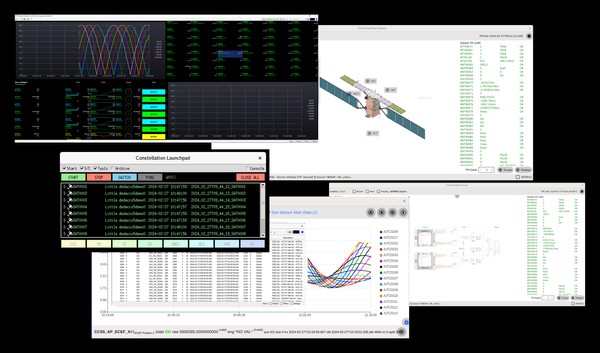
The Terma Spacecraft Control System – Operations and/or AIT (CCS5) is a multi-user operation and testing product designed for space applications. The CCS5 can be used for all phases of operations - from preparation and launch to routine operations. It can be also used as the central part of an EGSE for assembly and integration testing (AIT/AIV). The single-user version of CCS5 is called TSC and can be used for a variety of purposes including instrument and payload testing.
Mission control satellite software and flight software
Alongside combined development and operations systems, there are also a variety of telemetry downlink, telecommand uplink, and real-time satellite health monitoring software packages.
Effective mission control software and flight software systems help to ensure every space asset stays on track, remains operational, and delivers value. They often have to work across different hardware and software from multiple vendors, while maintaining a cohesive and responsive connection between Earth and space.
In this section you can see a variety of full satellite mission control software packages alongside tools that can control specific applications or functions of the system in orbit.

The Auria APS is flight software for onboard autonomous planning, including constellation coordination and optimization for inter-connected multi-domain assets.
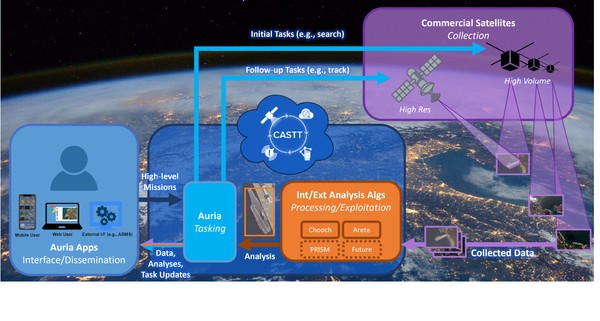
Cloud-based Automated Satellite Tactical Tasking, Collection, Processing, Exploitation and Dissemination (TCPED) (CASTT) connects intelligent AI/ML enabled software to commercial satellites for automated closed-loop data gathering and analytics.
The Auria Heimdall provides configurable, fast, optimized space target observation scheduling for any network of ground-based and space-based SSA/SDA sensors.

The Auria STK Scheduler is a space system scheduling tool with flexible resource, task, and constraint definitions and algorithms to optimize schedules.
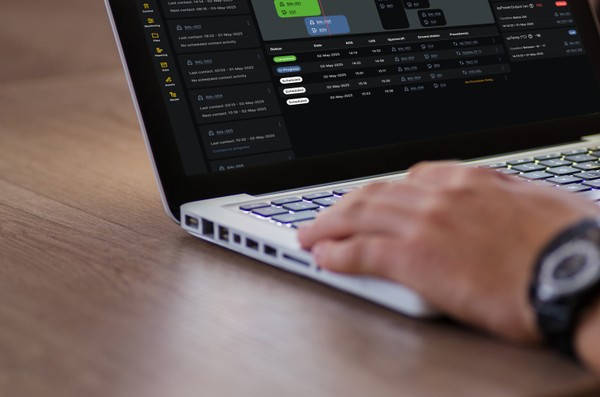
The Bright Ascension Mission Control Software (MCS) is designed to monitor and control onboard changes of the space mission. It harnesses the power of automation as well as unattended operations and further improves the efficiency and scalability of the mission. The MCS provides an ecosystem for parameter and event monitoring, including telemetry visualization, archiving, and monitoring with alarms and condition notifications.
The Bright Ascension Flight Software Development Kit (FSDK) is designed to create mission-specific flight software using configurable and pre-validated components. The FSDK component library includes a wide range of components covering all mission needs and it is built on a variety of standard/cross-platform technologies, which can be readily adapted to suit different processes.

The Dhruva Space Integrated Space Operations and Command Suite (ISOCS) is designed to control and operate processes for space applications. It enables virtual and remote operations including telemetry downlink, telecommand uplink, and real-time satellite health monitoring. The suite consists of three main segmentations - Space Operations, Mission Control, and Space Situational Awareness. It also has the capability to interface with a global network of partner ground stations.
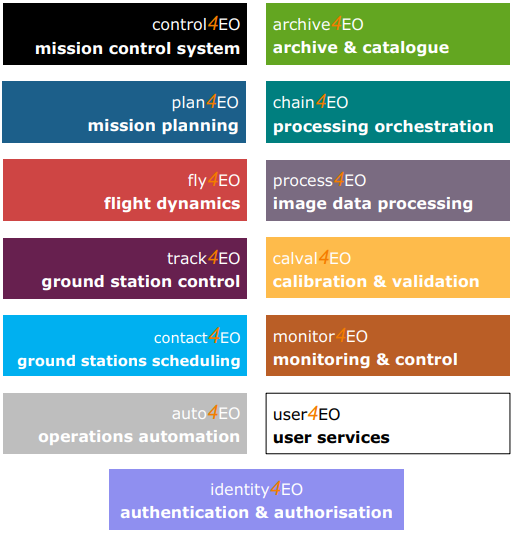
GS4EO is a complete suite of software tools to handle the ground segment of any space mission, with tailored tools for Earth Observation capabilities.
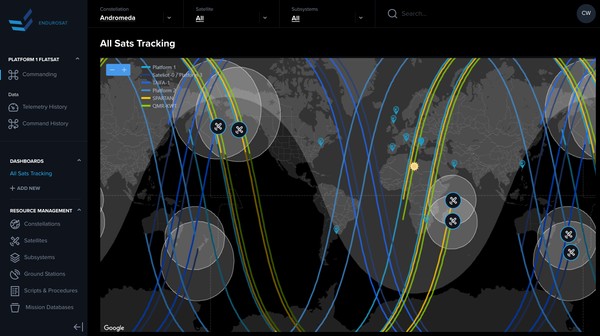
The EnduroSat SpaceOps is a suite of services that provides an integrated end-to-end solution for satellite operations of EnduroSat platforms. It consists of a complete ground segment for a satellite mission – from the ground station antennas, communication protocol handling, and data archiving, to the software tools that mission operators use to operate spacecraft.
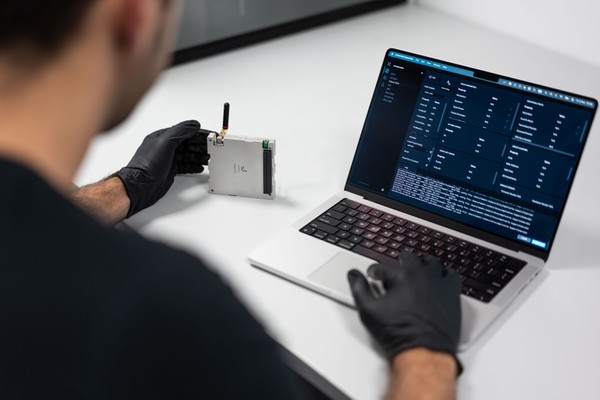
The EnduroSat SpaceDev is a desktop graphical user interface (GUI) application designed to simplify software development, configuration, and testing of software-defined satellites. It offers numerous benefits, including a streamlined setup, the ability to send instant telecommands via cable or radio, the import of custom telecommand definitions, and integration with SpaceOps.

A software star tracker solution that can be used with any camera hardware, achieving 3 fps for HD images.
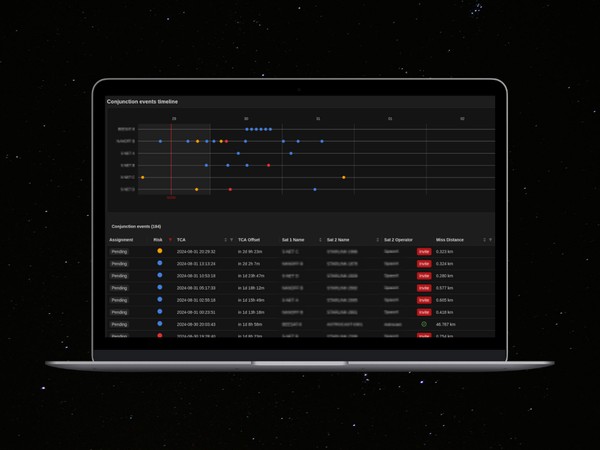
The OKAPI:Astrolabe facilitates coordination of critical conjunction events between active satellites. It offers a unique place to communicate, coordinate, and manage a conjunction from start to finish.
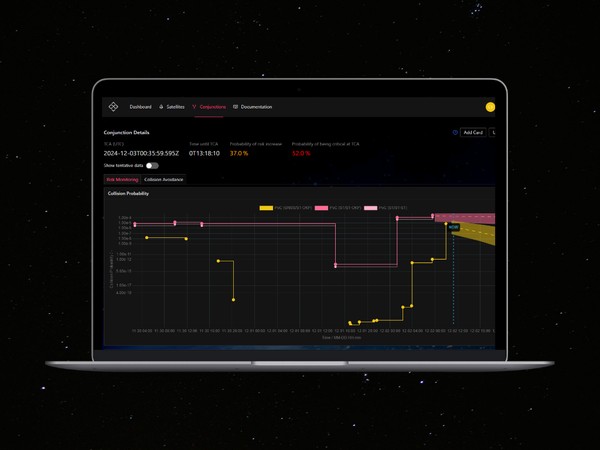
The OKAPI:Aether is an Al-based SSA and STM platform that supports satellite operators to safely and confidently navigate the challenges of all orbital regimes from launch to end-of-life.
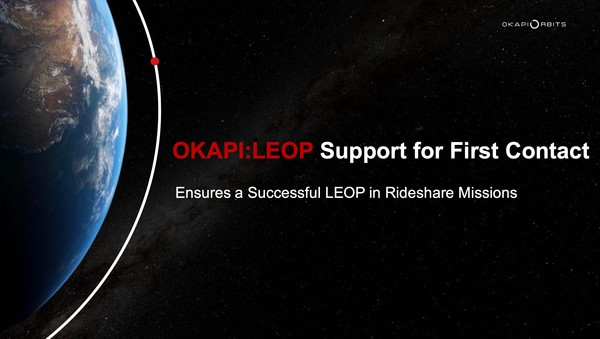
Launching with a rideshare? Establishing contact with your satellite as early as possible is crucial, especially when deployed alongside hundreds of others. OKAPI:LEOP Support for First Contact significantly reduces the time to first orbit solution.
GenMat's system is flight proven, patent pending Mission Control Software (MCS) built on Microservices architecture, ML powered data analysis and LLM integration
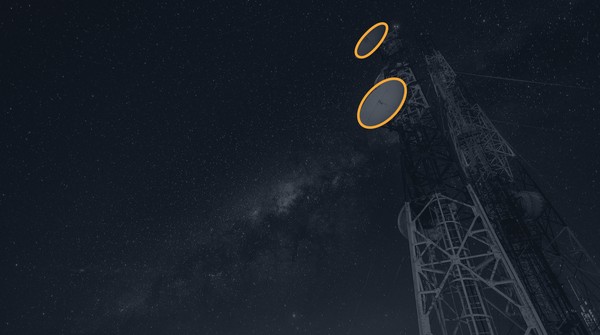
uNIS serves as the crucial interface linking the Spacecraft Control System with Ground Stations, facilitating the exchange of Telemetry and Telecommands via CCSDS Space Link Extension services (SLE). Additionally, it plays a pivotal role in ground testing scenarios, connecting the primary test system with Telemetry/Telecommand Front-end Equipment and ensuring interoperability through CCSDS Space Link protocols and ground station interfaces.
Onboard data processing (OBDP) software
OBDP systems can bring enhanced versatility and efficiency to space missions. There are a growing number of tools and programs coming to market that can, for example, compress data, discard useless data (e.g. cloud-covered images), and apply advanced artificial intelligence (AI) and machine learning (ML) algorithms to onboard data to enhance its value.
OBDP solutions can also enhance satellite autonomy and enable cloud computing capabilities in space.

STORM is SkyServe’s space segment software for onboard data processing across Multispectral, Hyperspectral, and SAR payloads. This enables geospatial analytics from space as a service by deploying AI/ML models onboard Earth observation (EO) missions. STORM comes with a lightweight embedded Linux OS and is a hardware-agnostic platform, which makes it easy to configure across the majority of Data processing units.

SURGE is SkyServe’s ground segment software to develop, manage, and deploy classical/geospatial AI/ML models for earth observation applications like Wild fire & Flood detection, crop monitoring, etc. With this infrastructure, geospatial companies can deploy applications in space, interact with models to extract inferences, and schedule models to run on location of interest.
The AI Marketplace Application is designed to offer a platform for Space Industry where users can explore, manage, and utilize various AI models. The application aims to integrate a suite of AI models within a single package.
StarVasa revolutionizes how companies extract insights from satellite data. Our custom-built models harness the power of AI to analyze vast amounts of information collected by satellites, uncovering hidden patterns for informed decision-making.

The Unibap SpaceCloud® OS is a Linux-based operating system designed for space applications. Together with Unibap's software framework, and a wide application suite, it facilitates simple and reliable execution of Edge Computing, Autonomous Operations, and Cloud Computing in space. SpaceCloud OS’s Linux heritage combined with its reliability and robustness enables rapid software development for a wide variety of users, including those without previous space experience.
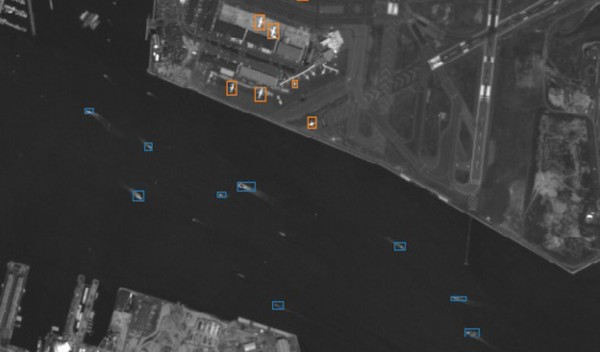
The Zaitra SKAISEN is an onboard cloud detection solution designed for Earth Observation missions and a wide range of optical sensors. SKAISEN can save costs associated with data transfer while empowering mission autonomy and supporting its purpose for space missions. Powered by AI algorithms, SKAISEN detects pixels polluted by clouds directly onboard the spacecraft.
Satellite cybersecurity software
Assessing and mitigating cyber risks is a growing concern in every domain, and space is no exception. Satellite cybersecurity software is available on the market to help protect space assets and missions from interference, attack, and disruption.
The CORAC Cyber-risk analysis for space assets is designed to prioritize the list of risks and mitigation recommendations. In this service, the CORAC team offers a holistic cyber-risk analysis of entire space missions, ground stations, and satellites. Under this analysis service, customers also receive a report containing a prioritized list of identified risks and advice on how to mitigate them.
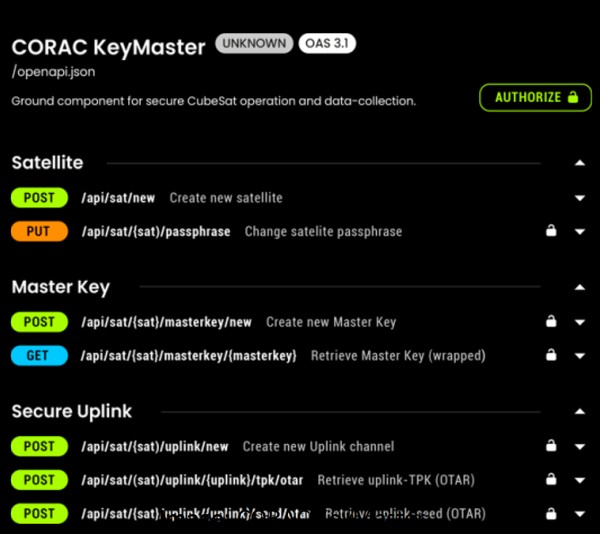
State-sponsored hacking groups are targeting satellite communication channels more than ever. Their goal is to steal sensitive data, hijack satellites, or damage the entire mission. Save solution development costs and integrate advanced off-the-shelf CORAC solutions.
An introduction to satellite software
The satellite segment of the space industry sees the highest volume of standardized and commercial offerings, compared to launch and exploration missions where most development is custom by necessity.
Therefore, for satellite missions there are a number of software tools and packages available for all stages of the process.
On the engineering side, several programs have been brought in from other technical industries and application areas. Digital engineering processes have been growing for many years, and it is a natural extension in the product roadmaps of many software providers to add capabilities for space systems engineering.
There are solutions based around end-to-end Models Based Systems Engineering (MBSE) and engineering digital twins, right through to specialist tools for specific analysis processes.
For operations, satellite missions have typically required bespoke software tools that can account for all the complexities of space-based hardware performance. These have been independently developed by a variety of providers, but we’ve also seen many satellite integrators and operators commercialize packages that were initially created in-house to manage proprietary hardware, missions, or even constellations.
You can also find various systems and development kits to create bespoke, mission-specific software, but many ambitious satellite operators are more focussed on multi-mission packages that can work across different satellites and application areas.
Satellite software procurement advice
Determining which software tool is best suited to your mission isn’t easy. There are a myriad of things to consider with regard to price, interoperability, team knowledge, supplier support and so on.
There are also a wide range of different systems on the market, with new versions being added regularly, so it is getting harder to identify the best option for your needs.
To help you out, we asked several suppliers to share their most useful advice on selecting a software system for a space mission, their responses are below:
We often see that time or budget constraints put pressure on engineers to focus on specific aspects of flight software such as the promise of short development time, lower licensing costs or hardware compatibility options. By all means, these things are important and our own modular software is a perfect and simple solution for anyone seeking to reduce development time and costs.
But what is often overlooked when choosing flight software is the broader context and the complex space system as a whole. It is crucial to think through how it is going to be tested and then operated on a daily basis, how the data or service is going to be delivered or how it is going to grow, evolve and scale into a constellation. The onboard software directly impacts these processes and poor choices at early stages can create significant risks that will only be revealed later on. This leads to significantly increased mission ownership costs and even re-development, which is not what any engineer wants.
One solution is a model-based approach. It ensures the highest degree of flexibility, integration and seamless data flow between all mission processes and stages, bringing the entire space-ground system together. The cost-saving aspect of this is significant, but, sadly, is often overlooked in favour of solving more immediate and isolated challenges at early stages of mission development.
Andrew Nairn, Commercial Director at Bright Ascension
When evaluating software for a satellite mission, prioritize flexibility, scalability, and seamless integration. Opt for user-friendly solutions from reputable vendors with strong support, security measures, and a track record of updates. Consider long-term costs and gather user feedback for informed decision-making.
Paul Dewost, Software Product Manager for spacetower™ at Exotrail
When assessing software for satellite missions, start by looking at the company’s mission, product reviews, and customer case studies. Then, you’ll want to search for products that are easy to use and proven to solve the problems or inefficiencies your team is dealing with. Lastly, you’ll want to ensure the product does the most important things for you. Decide the top 3-5 things you need with your team and evaluate based on those criteria.
Once you talk to the team building the product, you can ask about other ideas, but always go back to your criteria, or you’ll look at more software products than necessary. This last part is also essential because you’ll want to look for integrations that move your missions forward and remove manual work. Regardless of the use case, you’ll get the most value from software that seamlessly connects and shares data with the rest of your technology ecosystem.
Finally, determine if the software has the required levels of accessibility and security. If you’re implementing a new cloud-based tool for space missions, I recommend choosing an option that’s hosted on a cloud that’s compliant with export controls and offers offline capabilities to maximize security and reliability.
Max Mednik, Chief Operating Officer (COO) of Epsilon3
In the past, satellite software engineers haven’t always had too many options, but have had to work around hardware bound constraints. We at Unibap want to flip the tables by offering an excess of computing power in space. With our solution, you can access the full toolbox of open platform computing leaving your imagination as the only constraint left to tackle.
Anders Persson, Product Manager at Unibap
The most important feature of software in satellite missions is its testability. Software should allow you to test it without hardware and on hardware. Firstly, satellite hardware is often expensive, and it’s hard to provide every software developer with their own copy of satellite hardware on which he could develop software. Thus, it should be possible to emulate software on the target processor core and develop and test software without hardware.
This can greatly increase software development speed and reduce costs. Secondly, in the end, you want to run it and test it on hardware, so software should allow you to run the same tests as in the first step with as few as possible changes to software and simulators. Lastly, software should be easily integrated with a continuous integration system, to run tests on every change to the code and catch as many bugs and errors as soon as possible to fix it while hardware is still on earth, not in orbit.
Przemyslaw Recha, Embedded Software Engineer at KP Labs
I’d consider how much value does the software / service add to the tasks that I work on, as well as to my company’s overall mission. For example, how much time am I able to save by using the particular software relative to alternative processes, and what I could accomplish with the extra time. Schedule and time is probably the most valuable driver for many space programs. So I’d ask if the value-added is worthwhile in terms of getting something done efficiently yet still meeting or exceeding quality standards.
Dakai Chen Founder of Zero-G Radiation Assurance
Spacecraft are run using specialised operational software, tailored to specific missions. Operational software are like health systems, ensuring that critical parameters on the spacecraft are running in an acceptable range. The software should monitor the health of on-board systems; anything unusual is flagged and sent to mission operators who can look into potential causes and solutions.
So it is extremely important that one evaluates various software options thoroughly, while keeping in mind the company’s goals and activities, e.g. multiple missions at once, robust missions with high data requirements, certain financial parameters, and so on.
When evaluating software options – apart from the investment of resources – it is best to keep in mind the following criteria: versatility, scalability, customisations, effectiveness of pipeline, testability, and access to fresh data.
There is a growing number of open source software options and these solutions are certainly drawing a lot of interest due to reliability, cost effectiveness, and community access. However, when considering these options as a solution, be realistic in your expectations.
From a technical perspective, engineers should consider options that have third-party Ground Station networks that better support the data transfer infrastructure. Such an option would decrease overall cost of the software, may increase global connectivity and coverage, while also improving the spacecraft revisit time.
Fewer or just one Ground Station will turn the Ground segment of a mission into a bottleneck — the customer will have to wait for their spacecraft to overfly a limited number of stations; in the meantime, no TTC operations would be possible.
Selecting the right software for the job is not easy. On the other hand, when one gives it a thought, it is never just the software you are selecting; it is the company that designs it, develops it, and is there for you to have your back if needed.
After incidents like SolarWinds, Equifax, CCleaner, Octa, and many others, third-party software supply chain risks became a significant concern. While selecting a software vendor, it is important to understand if cybersecurity is taken seriously and that cybersecurity best practices are deeply rooted in a company’s culture.
This pertains not only to company processes but especially to the minds of the people you are dealing with. Therefore, before selecting any software vendor, ensure that the company works with internationally recognized cybersecurity standards maintained by organizations like NIST, MITRE, or OWASP.
Make sure that cybersecurity best practices are an integral part of the software development process, and that at least an IT asset registry, SBOM (Software Bill of Materials), and vulnerability & patch management processes are in place. Then, consider such a vendor to supply you with software for space missions.
Dusan Mondek Chief Executive Officer (CEO) of CORAC Engineering
If you’re considering adopting AI solutions for your mission, you’re likely aiming to save team time, preserve infrastructure resources, and improve profitability. To achieve these goals, you now have the option to select from various features and combine different solutions.
While making these decisions, always keep your objectives in mind, and remember, AI operates on data. Therefore, when determining which operations to automate, ask yourself – and your team – which tasks currently require the most intervention due to the volume of data or the number of hours your team spends on them?
Moreover, one of the most important factors is having a supportive and knowledgeable supplier. This supplier should not only facilitate the integration of AI into your mission but also provide ongoing support. They play a crucial role in simplifying complex technical processes and ensuring that the AI system aligns with the mission’s needs. Furthermore, a competent supplier can transfer essential knowledge and skills to the internal team, empowering them to manage and optimize the AI system effectively.
Ultimately, opt for a unified solution that is not only capable of scaling but also seamlessly incorporates third-party models and data, much like our gifted_GENE platform. Adopting such a solution simplifies management by consolidating all operational aspects of your pipeline under a single system and provider, enhancing efficiency across the board.
Alessandro Benetton Chief Technology Officer (CTO) of AIKO
Hopefully these pointers will help you to more efficiently select the best software system and service agreement to meet your needs.

Need help finding the best solution?
Share your requirements with us now
Would you like to be featured on satsearch?
Click here to get started today
Related technologies and further reading
At the links below you can find a range of satsearch articles that will be useful for learning more about this topic, or that feature other categories of technologies which you may need to consider in your mission.
- Satellite electrical power systems (EPS) on the global market
- Satellite power equipment
- CubeSat thrusters and in-space propulsion
- Software-defined radios (SDRs) for space
- On-board computers (OBCs) for space
- Optical payloads for space
- Payload processors for satellites
- A brief introduction to the space supply chain
- Reaction wheels for space on the global market
- Space grade solar cells
- Solar Array Drive Assemblies (SADAs)