
Solar simulators are important tools for testing and validation of spacecraft and satellite components.
They replicate the solar radiation spectrum and intensity, enabling engineers to assess the performance and durability of space-bound systems under conditions that closely mimic those they are designed to operate in.
The increasing complexity of space missions necessitates the use of advanced solar simulators to ensure the reliability and efficiency of various technologies in Earth’s orbit, and beyond.
In this article we share some basic advice on how to choose the most suitable solar simulator for your needs along with information on systems from across the global market.
If you’re familiar with how solar simulators work and would instead like to skip straight down to the information about the products on the market, please click here.
Uses of solar simulators for space missions
Understanding how space hardware will perform when subjected to the effects of solar radiation and temperature variations is very important in any mission, particularly for those in Earth’s orbits.
Solar simulators can play an important role in validating technologies for such conditions. In particular, they can be used for:
Individual component testing
Assessing the performance and durability of spacecraft components such as:
- Solar panels: to determine the efficiency, variability, and degradation under simulated solar radiation.
- Thermal protection systems: to evaluating the performance of thermal coatings and materials designed to protect spacecraft from solar heat.
- Optical payload components: to ensure accuracy and productivity is maintained in spite of solar effects.
- Attitude sensors: to assess data precision and timeliness under expected operating conditions.
Whole system validation
In addition to individual components, solar simulators are used to validate entire systems, such as:
- Power systems: to test the performance of spacecraft power systems, including the solar cells/panels, batteries, and power distribution units, under simulated solar conditions.
- Thermal control systems: to ensure the effectiveness of thermal control systems in managing heat generated by solar radiation.
- Entire satellites or spacecraft: to test whether the completed system performs as expected in space.
Environmental testing
Solar simulators can also contribute to more extensive environmental testing protocols for spacecraft and satellites for more complex assessments – for example:
- Thermal Vacuum Chambers (TVACs): solar simulation performed in a TVAC will simulate the combined effects of solar radiation and vacuum conditions to validate the performance of spacecraft in space-like environments.
- Radiation hardening: the technique can also form part of assessing the resilience of electronic components and materials to prolonged exposure to solar radiation.
These are just a few of the common applications of solar testing equipment in a space mission. In the next section we share some advice on how to choose an analysis option to meet your specific needs.
Advice on selecting the best solar simulation option for your needs
Deciding which solar simulation option is the best choice for your mission can be tricky, as there are a few options on the market to consider.
Aside from the typical characteristics for any product (e.g. price, availability/lead time, country of origin, payment terms etc.) here are some important criteria to take into account:
Light source and spectrum
Solar simulators utilize various advanced light sources to replicate the solar spectrum accurately, such as:
- Xenon arc lamps – widely used for their ability to produce a spectrum closely matching that of the sun, xenon arc lamps are a common choice in solar simulators.
- LED arrays – offering precise control over the spectrum and intensity, LED arrays provide a flexible and energy-efficient alternative to traditional light sources.
- Filtered lamps – specialized filters employed to fine-tune the output spectrum, ensuring an accurate match to solar radiation across various wavelengths.
Thermal management
Effective thermal management is essential to maintain the stability and performance of solar simulators. Common systems to ensure this are:
- Active cooling systems – integrated cooling systems, such as water or air cooling, dissipate the heat generated by high-intensity light sources, preventing thermal damage to the simulator and test subjects.
- Thermal coatings – advanced coatings on light sources and optical components help manage heat distribution and reduce thermal stress.
Uniformity and stability
Achieving uniform irradiance and stable light output is crucial for reliable testing – this is typically achieved in a simulator through:
- Optical homogenizers – these devices ensure uniform light distribution across the test area, eliminating hotspots and providing consistent irradiance.
- Stabilized power supplies – precision power supplies maintain constant light intensity, compensating for fluctuations and ensuring stable testing conditions.
Spectral match and calibration
Ensuring an accurate spectral match to solar radiation requires meticulous calibration. You can check how the simulator option you are interested in achieves this (which is also a good way of assessing the expertise of the supplier) – which may be through, for example:
- Spectroradiometers – these instruments measure the output spectrum of the simulator, guiding adjustments to achieve the desired spectral match.
- Adherence to known calibration standards – reference standards and calibration protocols ensure the accuracy and repeatability of solar simulator performance.
Configurations
Solar simulators are available in various configurations to meet the diverse needs of space hardware testing, such as:
- Compact benchtop models – designed for laboratory use, these simulators provide high-intensity solar radiation in a compact form factor, ideal for component testing.
- Large-area simulators – suitable for testing entire spacecraft or large assemblies, these simulators offer extensive test areas with uniform irradiance.
- Portable simulators – for field testing and on-site validation of satellite components, portable solar simulators provide flexibility and convenience without compromising performance.
Customization options
As always, make sure you ask the supplier what customization options are available. To cater to specific testing requirements, solar simulators can sometimes be customized in terms of spectral output, intensity, and configuration, with options such as:
- Spectral range adjustments – tailoring the spectral output to match specific mission requirements or testing standards.
- Intensity control – adjustable intensity settings allow for testing under various levels of solar radiation.
- Custom test enclosures – designed to accommodate unique test setups, custom enclosures provide optimal testing environments.
While being by no means exhaustive, these options should help you make faster and easier decisions on what sort of solar simulator is suitable for your mission.
In the next section we take a look at specific options in the marketplace.
Solar simulators on the global market
This section includes a variety of solar simulators suitable for space missions available on the global market today. You can click on the links to open pages with more detail on each system.
From these pages you can submit requests for quotes, documents, or further information by the supplier, and we’ll handle the request for you (find out more about how this all works here).
If you want to shortcut this process, or need some assistance refining either your specific solar simulator or more general solar simulator requirements, you can instead submit an open tender and our expert procurement team will get back to you ASAP.

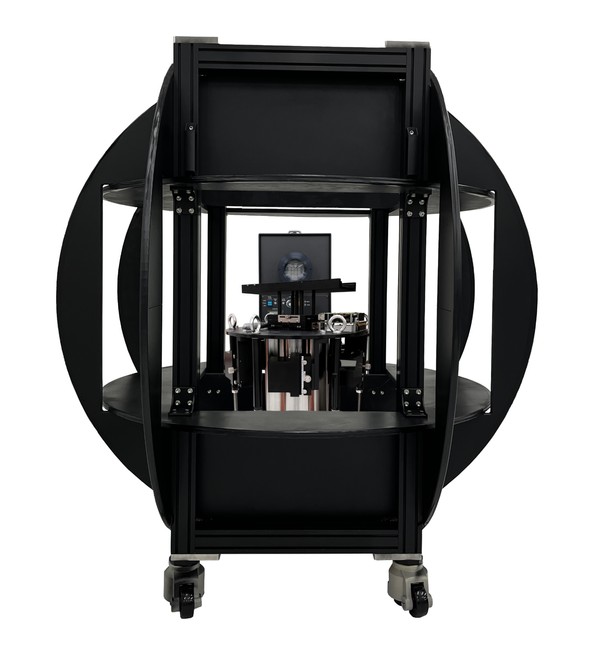
Tensor Tech ADCS TestBed is designed for CubeSats up to 16U and small satellites with ADCS weighing less than 30kg. It serves as a comprehensive tool for ADCS calibration, measurement of mass properties, and the testing and validation of ADCS algorithms. The ADCS Testbed consists of an air-bearing platform, a triaxial Helmholtz cage, and a solar simulator. It is easily customizable and can be adapted to fit customer-specific requirements.
 Request quote
  request info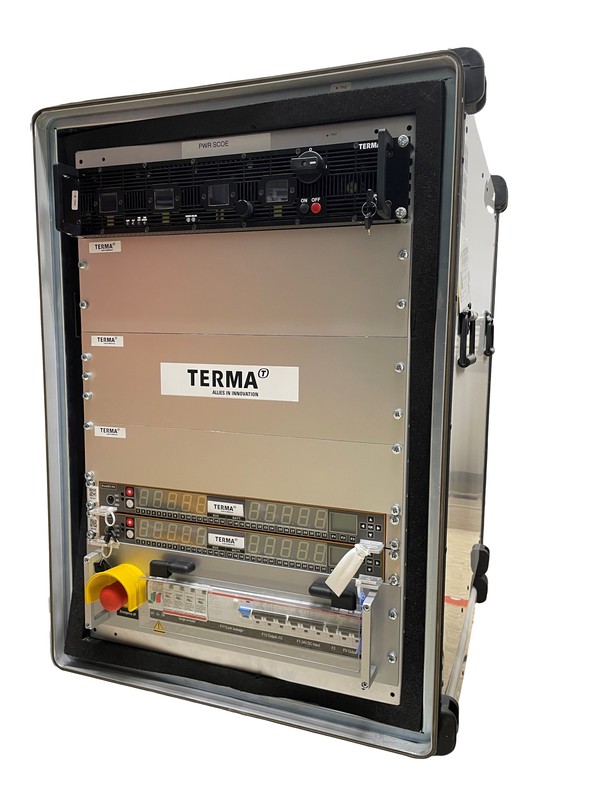
The Terma Power SCOE is the reliable solution for powering, monitoring and testing your satellite’s power subsystem during assembly, integration and test (AIT) as well as on the launchpad just prior to lift-off.
It consists of Terma's own COTs proven products based on generic and mission-independent components. The digital power supply can operate as: solar array simulator, battery simulator, launch power supplies, pyro and payload load simulator, ensuring that your satellite’s most vital system, the power supply, is in perfect condition for the launch and prepared to perform flawlessly for its entire lifespan.

The Avalon ST AM0 Solar Simulator is designed for space applications. It consists of an extended IR spectrum for single and multi-junction solar cells. Its independent LED control allows software-assisted per-junction calibration.
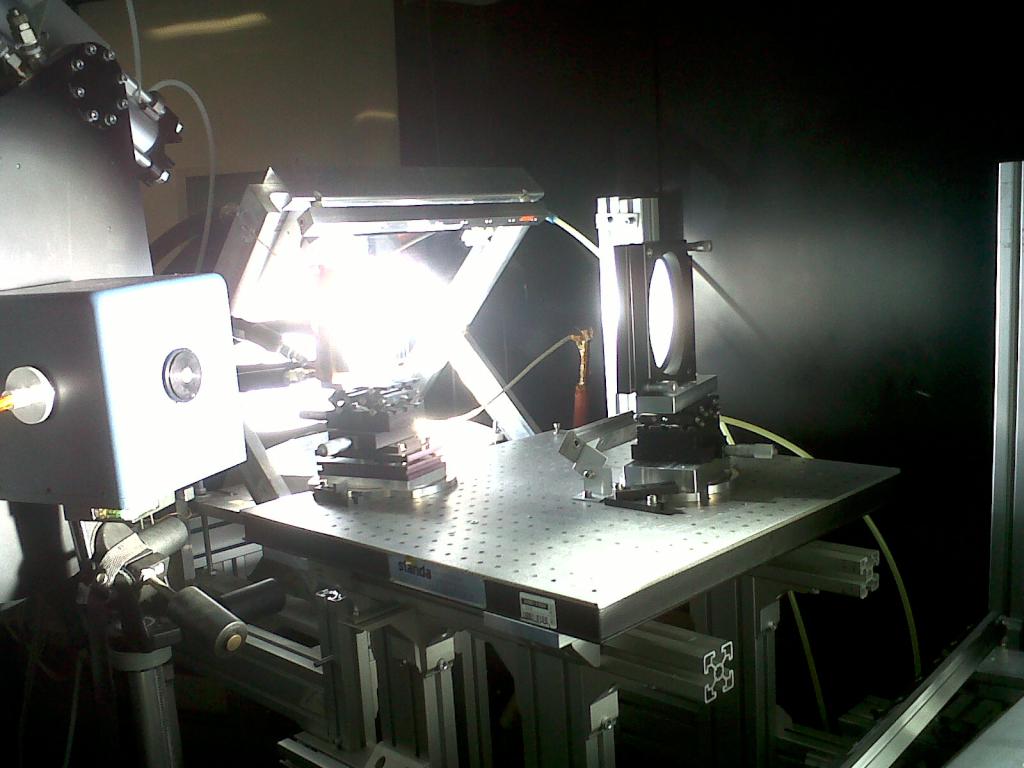
EIE GROUP operates in the fields of Astronomy and Space Technology, specializing in engineering, management and production.
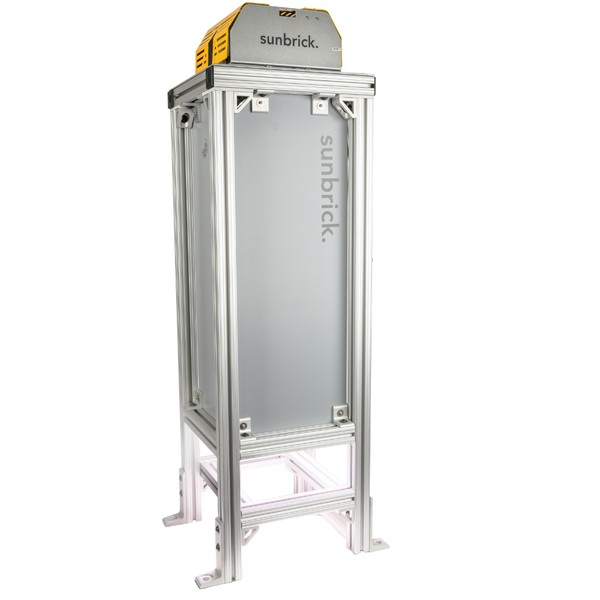
The G2V Optics Sunbrick LED Solar Simulator is a large area Class AAA tunable LED solar simulator starting at 20 cm x 20 cm illumination area and scalable to any size.

The G2V Optics small area Class AAA solar simulator is well designed for illumination areas of 2.5 cm x 2.5 cm or less.
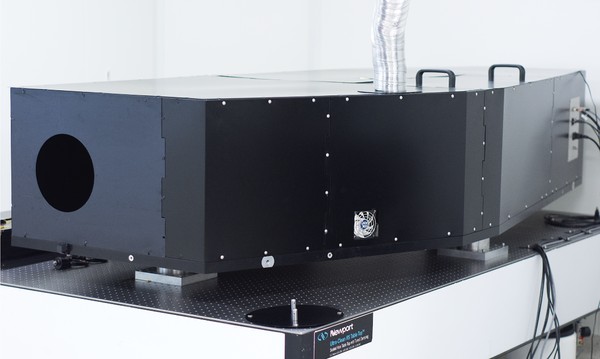
SUSI is a sun simulator part of the optical ground support equipment (OGSE). SUSI covers a very wide spectral range, from 270 to 2385nm, with an irrad
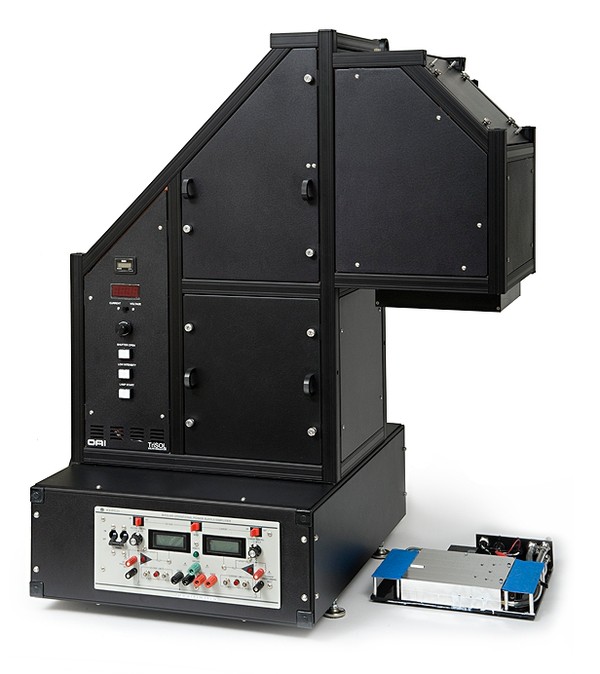
OAI is a Silicon Valley-based manufacturer of advanced precision equipment for the Semiconductor, MEMS, Space, and PV / Solar industries.
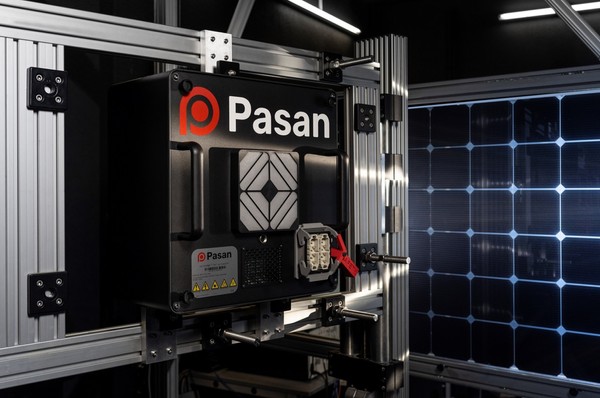
Pasan is active in PV modules and cells testing equipment, with measurement tools providing the best accuracy in the field of photovoltaic testing.

The Rovsing spacecraft power SCOE simulates the I/V characteristics of spacecraft solar arrays as seen by the PCDU, without the actual solar arrays.
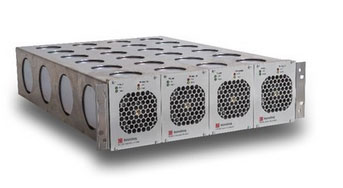
The Rovsing RO-5000 Solar Array Simulation Product Range offers ultra-fast dynamic response performance, key to high-fidelity SA simulation for space.
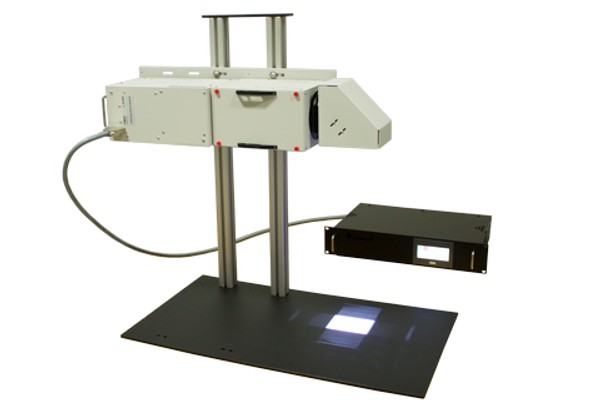
Sciencetech designs and manufactures optical spectroscopy instruments for applications in space sciences, aerospace and research.
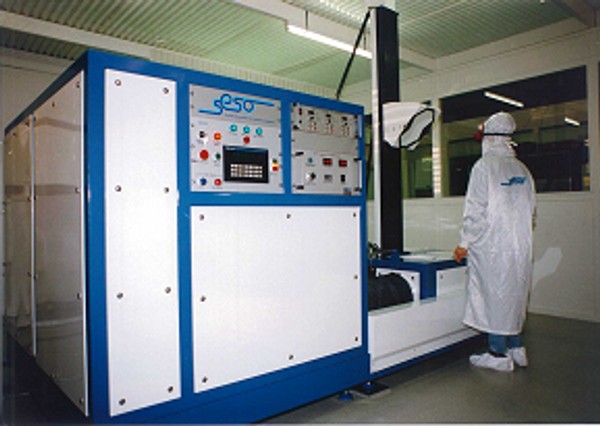
Thales SESO is a manufacturer of precision-optics components designed to serve space, astronomy, science, x-ray and test systems.
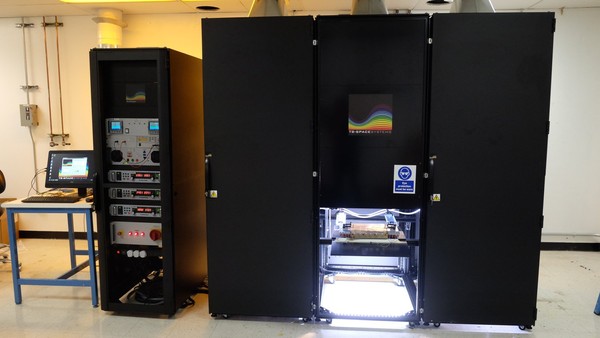
The TS-Space Systems Unisim ‘N Zone’ Solar Simulator is designed for the accurate measurement of solar cells with >4 junctions and to exceed the ASTM, IEC and JIS international standards for spectral match and temporal instability.
Need help finding the best solution?
Share your requirements with us now
Would you like to be featured on satsearch?
Click here to get started today


Resources and further reading
At the links below you can find a range of satsearch articles that will be useful for learning more about this topic, or that feature other categories of technologies which you may need to consider in your mission.
- Solar Array Drive Assemblies (SADAs) on the global market
- How to choose a satellite on-board computer (OBC)
- Advancing the use of FPGA-based OBCs in space
- A guide to Command and Data Handling (CDH) systems for space missions
- On-board data processing for next-generation satellites
- Space grade FPGA-based OBCs and payload processors
- Satellite electrical power systems (EPS) on the global market
- CubeSat thrusters and in-space propulsion
- Software-defined radios (SDRs) for space
- Optical payloads for space
- Satellite software providers on the global market
- Payload processors for satellites
- A brief introduction to the space supply chain