
Control moment gyroscopes (CMGs) are attitude control units made up of a spinning rotor, or flywheel, and motorized gimbals which can tilt the rotor’s angular momentum.
Control moment gyroscopes are used in the attitude control system (ACS) or attitude determination and control system (ADCS) of a spacecraft or satellite in order to orient it, along three axes, to ensure stable operation and achieve specific mission goals.
In this article we take a look at how CMGs function, the value they can bring to space missions, and then share details of systems on the marketplace today.
If you’re familiar with how CMGs work and would instead like to skip straight down to the information about the products on the market, please click here.
The importance of attitude control in space
One of the key Guidance, Navigation and Control (GNC) engineering challenges when developing a space system is attitude control.
A spacecraft or satellite cannot be rotated by an external force while in orbit, and so we need internal solutions that can apply a torque to the spacecraft as a whole that can be controlled, measured, and utilized only when needed.
The attitude of a space system is its orientation relative to another important point or frame of reference.
The external references are usually the orbital plane, a celestial body, a space station, or another nearby object. They must provide a fixed inertial reference in order for measurements of the attitude of the space system to make sense.
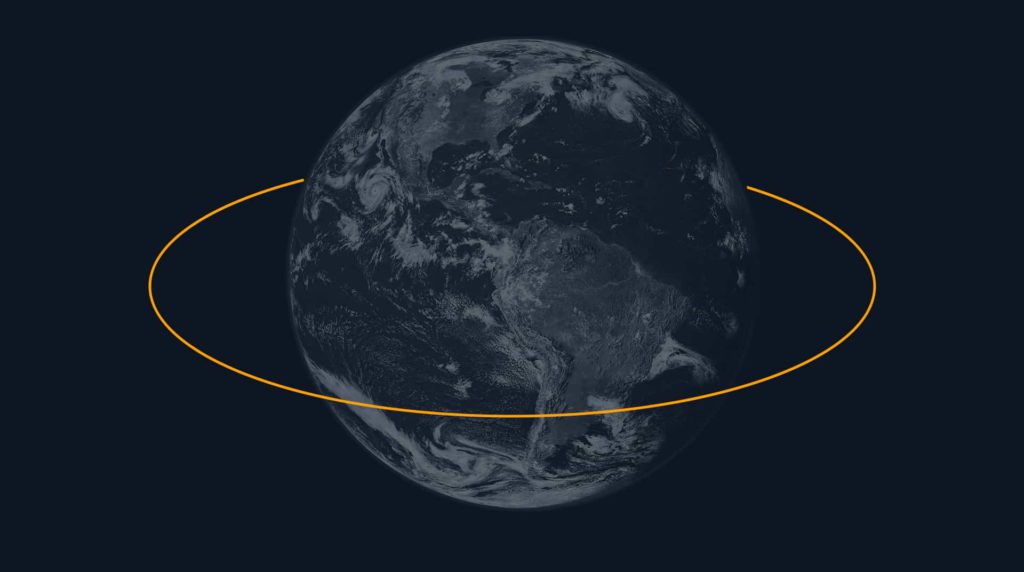
Typically, to understand the attitude of a satellite, for example, we specify an orbital frame (a set of 3D coordinate axes in the orbit) and a body frame (the 3D coordinate axes of the satellite itself).
Controlling the satellite’s attitude then refers to the process of measuring and affecting the body frame with respect to the orbit frame – i.e. aligning the satellite effectively with the Earth’s surface.
There are various reasons why this is important, for example:
- Earth Observation (EO) cameras need to point towards regions of interest on Earth to collect the right data,
- Astronomical measurement systems (e.g. telescopes or spectrometers) need to be accurately pointed towards specific celestial bodies so we can capture the information needed, and
- Satellite antennas or optical communications systems need to be aligned correctly in order to achieve line of sight with their counterparts and enable telemetry exchange.
An attitude control system consists of sensors, which measure the relative orientations of the body and orbital frames, and actuators, which change the body frame orientation by applying torque where required.
A control moment gyroscope is one form of attitude control actuator for space systems.

How does a control moment gyroscope work?
A control moment gyroscope works by creating gyroscopic torque that rotates a spacecraft or satellite, by changing the direction of a spinning rotor’s angular momentum.
A CMG is made up of a flywheel or rotor that spins around an axis at a constant rate. This is placed on one or more motorized gimbals, which can change the orientation of the rotor’s axis.
When the gimbals change the flywheel’s orientation, this alters the direction of the rotor’s angular momentum causing an output of gyroscopic torque onto the space system. In the absence of any forces acting in the opposite direction, this will cause the spacecraft or satellite to rotate as needed.
The number and placement of the gimbals in a CMG will determine the accuracy and flexibility of the torque that can be produced by each unit. In addition, the integration of multiple CMGs in a single satellite or spacecraft will enable more powerful and advanced attitude control in orbit.
CMGs can be constructed in a few different configurations:
Single-gimbal control moment gyroscopes – these are usually considered the most efficient setup. In such systems torque is produced by rotating the gimbal (as a result of the rotor’s angular momentum direction changing) which usually requires very little power. For full attitude control, a minimum of three single-axis CMGs are required onboard.
Dual-gimbal control moment gyroscopes – such systems can point the angular momentum vector of the rotor in any direction, bringing added flexibility to the system. However, this process typically needs more power than a single-gimbal CMG to produce the same amount of torque.
Variable speed control moment gyroscopes (VSCMGs) – in such gyro systems there is a trade-off between operating energy efficiency and additional versatility. A VSCMG requires power input to change the rotor speed and produces a small output torque (relative to single- and dual-gimbal CMGs operating at constant rotor speeds) as a result. However, they can provide spacecraft with one additional degree of freedom (DoF) per system.
As attitude actuators, control moment gyroscopes operate in a similar fashion to reaction wheels – but there are a few key differences as explained below.
How is a control moment gyroscope different to a reaction wheel?
Control moment gyroscopes are different to reaction wheels because in a CMG the spin axis can be changed (with a constant rotor speed) to produce gyroscopic torque in the required direction, whereas a reaction wheel has a fixed spin axis enabling it to generate torque in one direction only.
Reaction wheels are very common attitude control actuators that are used in satellites and spacecraft of all sizes. A reaction wheel’s rotational spin can be altered to produce more or less torque (generated when the rotor is accelerated), but the direction in which this torque is applied to the spacecraft remains constant.
When using reaction wheels alone for attitude control, torque along multiple axes is created by integrating multiple wheels, with at least one pointing in each required direction.
On the other hand, a control moment gyroscope’s gimballing enables multi-axis torque generation in a single system. Multiple CMGs are still often used for larger satellites and/or more complex attitude control requirements.
This ability does bring with it added complexity in the mechanical and electrical engineering, as well as in the control of the devices on-board.
A CMG can also typically generate greater torque per unit mass of the actuator, compared with a reaction wheel – however they obviously require greater power input in order to do so.
There are a wide variety of reaction wheels on the market today, suitable for spacecraft and satellites of all sizes, while fewer suppliers offer space-ready CMGs. You can see examples of the systems that are on the market in the next section.
Control moment gyroscopes on the global market
This section includes a variety of CMGs available on the global market today. You can click on any of the boxes to open a page with more detail on the system that you are interested in.
From these pages you can then submit requests for quotes, documents, or further information by the supplier, and we’ll handle the request on your behalf (find out more about how this works here).
If you want to shortcut this process, or need some assistance refining either your specific CMG or more general attitude control requirements, you can instead rapidly submit an open tender and our expert procurement team will get back to you ASAP.

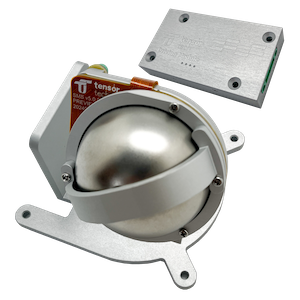
The Tensor Tech CMG-10m is a variable-speed, single-gimbal Control Moment Gyroscope (CMG) suitable for 3U CubeSats. Unlike traditional CMGs driven by two or three motors, this CMG is driven by only one spherical motor, making it capable of minimizing into a CubeSat form factor. As an attitude actuator component, the CMG-10m can provide Torque and Speed modes through commands from the user’s onboard computer (OBC) or ADCS computer.
 Request quote
  request info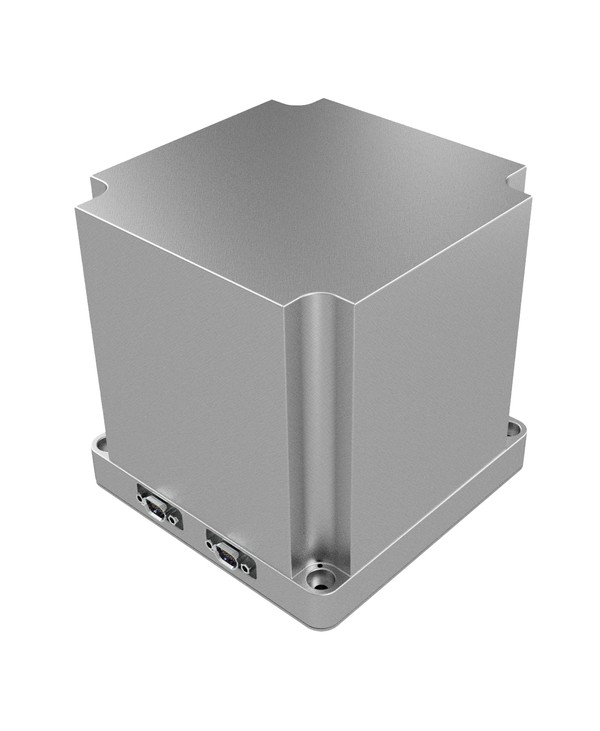
The SmallSat TensorCMG series present the high-performance alternative to the conventional attitude actuator in ADCS positioning, resulting in decreased weight, reduced volume, and lower power consumption. Utilizing Variable-Speed, single-gimbal CMG (VSCMG) technology, it outputs torque in both the x and y-axis.
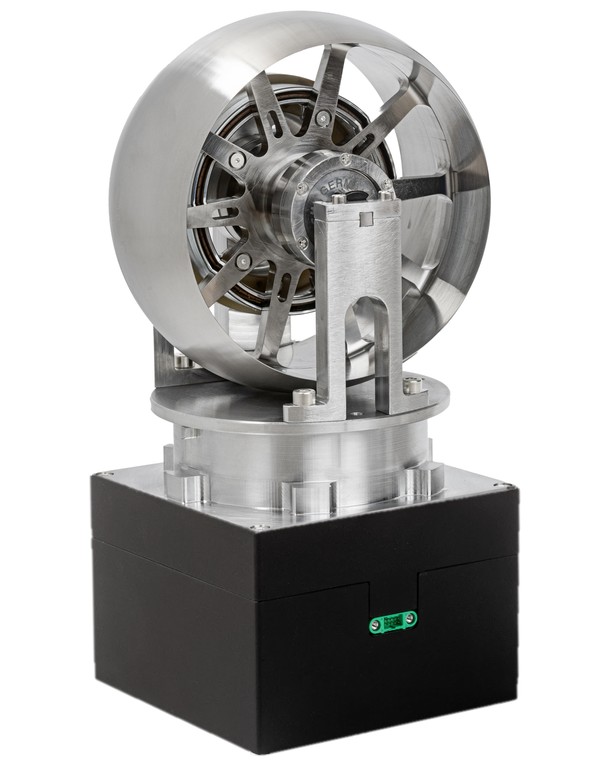
The VEOWARE SPACE MiniCMG - Control Moment Gyroscope is a control moment gyroscope (CMG) suitable for satellites above 250kg. A CMG is an attitude control unit (actuator) consisting of a spinning rotor (also referred as a fly wheel) and one or more motorized gimbals that tilt the rotor’s angular momentum. As the rotor tilts, the changing angular momentum causes a gyroscopic torque that rotates the spacecraft.

The VEOWARE SPACE MicroCMG is a control moment gyroscope (CMG) suitable for 50kg - 250kg satellites. CMGs are attitude control actuators that consist of a spinning rotor, which is also referred to as a flywheel, along with and one or more motorized gimbals. The gimbals tilt the rotor’s angular momentum causing a gyroscopic torque that rotates the spacecraft.

The Airbus CMG 15-45 S is a compact and high-performance control momentum gyroscope (CMG) solution designed for medium satellites. It has 45 Nm torque available with only 2 Nm applied at gimbal. Some of its other features include a dedicated single electronics channel per CMG, easy satellite integration, and rigid preload in the bearings to withstand launch loads. The product weighs 18.4 kgs and can operate for ten years in the low earth orbit (LEO).

The Airbus CMG 40-60 S is a compact and high-performance control momentum gyroscope (CMG) solution designed for medium to large satellites. Some of its key features include easy satellite integration and highly accurate pointing performances. The product weighs 36 kgs and can operate for ten years in the low earth orbit (LEO).

The Airbus CMG 75-75 S is a compact and high-performance control momentum gyroscope (CMG) solution designed for large satellites. Some of its key features include rigid preload in the bearings to withstand launch loads, satellite integration, and highly accurate pointing performances The product weighs 69 kgs and can operate for ten years in the low earth orbit (LEO).
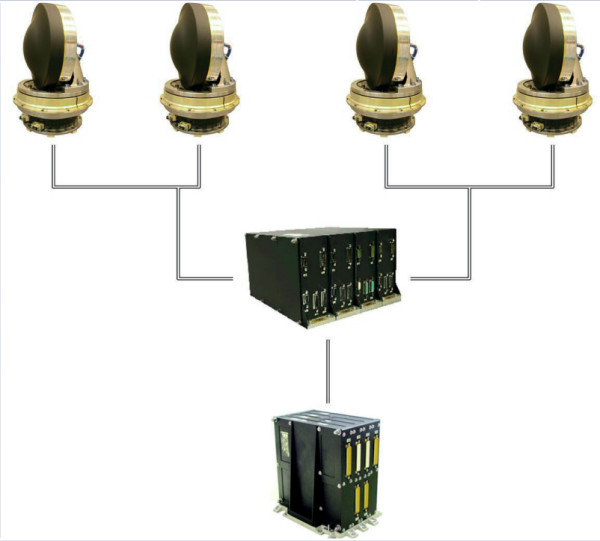
The Airbus NEWTON CMG PACKAGE is a control momentum gyroscope (CMG) cluster designed for space applications. It can be commanded with 3D torque command. Some of it's key features include integration of saturations on CMG commands, and compatibility with all Airbus Defence & Space CMGs (15-45, 40-60 and 75-75) with the similar telemetry and telecommand interface. The product weighs 81 kgs and requires power supply less than 180 Watts.
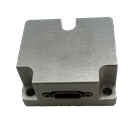
KT-MEMS-1 is a high-precision three-axis MEMS gyroscope, whose accuracy index data has reached the index level of medium and low precision fiber optic gyroscopes. At the same time, this MEMS gyroscope has the advantages of small size, light weight, and low power consumption, which can replace medium and low precision fiber optic gyroscopes.
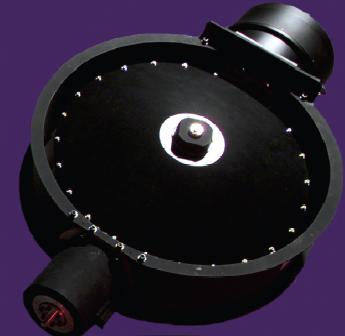
The Honeywell Aerospace M50 CMG is an established control moment gyro for space applications designed to offer an economically viable attitude actuation solution for small satellites and spacecraft.
Need help finding the best solution?
Share your requirements with us now
Would you like to be featured on satsearch?
Click here to get started today



Operational challenges when using control moment gyroscopes
Every spacecraft subsystem and component comes with a unique set of engineering challenges – and CMGs are no different.
As you know, experienced systems designers see all of these as necessary trade-offs that must be carefully weighed up when deciding whether to test and integrate a specific solution.
When it comes to CMGs, here are a few common issues that have affected mission designs in the past, and which today’s suppliers work to mitigate in their latest innovations:
Saturation – an operational situation in which a CMG cluster reaches maximum angular momentum in a specific direction, preventing any further attitude control. If this occurs the satellite or spacecraft needs to be repositioned with an alternative source of torque, such as by firing reaction control system (RCS) thrusters.
Singularities – these are orientations in which the system produces no usable output torque, in certain directions, due to gimbal motion. This would result in no possible attitude control in certain directions
Anti-parallel alignment – this is the loss of roll control due to a directly opposite alignment of two rotor spin axes from separate CMGs onboard. This is a similar situation to saturation but instead of a local maximum of angular momentum along one vector, the spacecraft is experiencing two equal and opposite angular momenta that negate each other.
CMGs have been used in space missions for a long time – particularly larger systems on space stations such as those in the Salyut program from 1971 to 1986, Skylab launched in 1973, Mir launched in 1986, and the International Space Station (ISS) launched in 1998.
Due to this wealth of experience and heritage, today’s manufacturers, who are working to develop high-power systems in much smaller form factors, are addressing all of the common engineering challenges that control moment gyroscope technology can face.
Conclusion
Control moment gyroscopes (CMGs) are one of the newer classes of attitude actuator to be used on microsatellites and larger CubeSats in recent years, and the supply chain for them is developing well.
They consist of a spinning rotor fixed to motorized gimbals that are used to alter the rotor’s orientation and thus change its angular momentum, producing torque.
This torque acts on a satellite to change its attitude in orbit, or to counteract attitude changes caused by external forces.
This is similar in function to a reaction wheel of course, however a CMG can produce torque in any direction whereas a reaction wheel is in a fixed position and can produce it in one direction only.
This means that although CMGs are heavier and take up more volume than a reaction wheel, to deliver the same amount of torque, you only need one system (if gimballed correctly) to replace multiple reaction wheels.
Several companies, including some satsearch Trusted Suppliers, have brought to market CMGs that are designed to maximize torque output with a minimal SWaP budget, and they can also work well when used in conjunction with reaction wheels, or even multiple CMGs for larger systems and more complex mission needs.
While there are some operational challenges to using CMGs, they are emerging as a reliable, proven, and high-performance option for controlling both satellites and spacecraft, and should be carefully assessed in mission plans.
Take a closer look at the control moment gyroscope supply chain here – and let us know if you need support sourcing attitude actuators for your next mission.
Related technologies and more
At the links below you can find a range of satsearch articles that will be useful for learning more about this topic, or that feature other categories of technologies which you may need to consider in your mission:
- Attitude actuators
- Satellite electrical power systems (EPS) on the global market
- CubeSat thrusters and in-space propulsion
- Software-defined radios (SDRs) for space
- On-board computers (OBCs) for space
- Optical payloads for space
- Satellite software providers on the global market
- Payload processors for satellites
- A brief introduction to the space supply chain