
Space grade solar cells are crucial for many of today’s space mission. Without the ability to generate new power in-orbit, a typical satellite will have a much shorter operating life and reduced performance.
In this article we introduce and discuss space solar cells before providing an overview of products available on the global market. If you’re familiar with the technology and just want to see the available products, click on the links below to navigate to the right section.
Navigation
- What are space grade solar cells?
- How are terrestrial and space grade solar cells different?
- Space grade solar cell suppliers and manufacturers active in the industry
- Space grade solar cells and products available on the global market
- Share your solar cell requirements here
- Add or update your company and products to this page
- Resources and further reading
What are space grade solar cells?
Space grade solar cells are essentially the onboard power plants of a satellite or spacecraft – there are no plug sockets or power cables in space, so the only source of power while in orbit is the Sun.
A typical satellite, for example, will have a battery unit and electrical power system (EPS) to manage and deploy energy to the rest of the system. But once the battery is out of charge, the mission is over, unless of course it can be topped up with solar power.
Solar cells are the basic units of photovoltaic power generation – turning the Sun’s rays into electrical energy. Multiple cells are usually arranged in solar panels, which themselves can be combined into arrays or used individually.
Solar panels may be affixed to a spacecraft or satellite’s outer surfaces in certain useful positions, or added in deployable arrays that are stowed during launch and certain operations, then unfurled when power collection is required.
The harsh environment of space poses significant challenges to any technology. In the next section we take a look at how solar cells are prepared and protected for space use.

How are terrestrial and space grade solar cells different?
Obviously, solar cells on Earth and in orbit work in the same way – and terrestrial cells will also typically be arranged into arrays and panels. The most common materials and construction are silicon (Si) cells covered in thin glass, and multi-junction cells made from gallium arsenide (GaAs) layers.
Where cells used in the two environments (Earth and space) differ is mainly in the durability and reliability of space-based systems and the versatility that they are often required to have.
Space grade solar cells, once in orbit, cannot (currently) be maintained or replaced. They are also subject to extreme temperature variations, high levels of radiation, and physical stresses during launch and deployment. This requires robust cells that can operate effectively for long missions.
Satellites are also moving quickly around the Earth, in and out of the eclipse, and may need to rotate to perform various mission operations, so the cells need to generate power at different angles to the Sun with minimal disruption.
Some of these issues are solved with effective solar panel and array construction, as well as deployable system setups, but the cell itself must also function efficiently in the harsh environment of space.
Space grade solar cell suppliers and manufacturers active in the industry



Space grade solar cells and products available on the global market
In recent years, as the demand for higher power in orbit has grown (to meet the needs of deployables, edge computers, powerful payloads, larger satellites and so on) a number of suppliers have brought solar cell options to market across the world.
In addition, some terrestrial providers have adapted cells for use in space and extended their product lines. And while it is possible to procure a wide range of pre-made solar panels for space systems, many mission teams are either electing to purchase and integrate solar cells themselves, and/or need smaller orders of cells to use on non-standard hardware or form facto systems.
Photovoltaic (PV) solar cells are the fundamental unit of power generation in space. They need to be able to provide a consistent level of power, or at least provide power above the minimum necessary for the system to operate, for the entire mission lifetime.
Photovoltaic cells transform solar radiation into electrical energy, but they still require protection from high levels if unwanted radiation to operate effectively in space. To enable this, solar cover glass is added to cells (either individually or when arrange in panels) to protect them.
Some of the most important criteria to consider when assessing solar cells for a mission are;
- Efficiency and power output
- Number of junctions (e.g. tiple-junction or multi-junction)
- Cell size and weight
- Panel development options
- Substrate
- Solar cover glass inclusion and thickness
- Heritage details – particularly power output data for mission lifetime
- Any specific integration requirements, especially for non-typical engineering requirements
- Sample or engineering model availability for testing and qualification
- Availability and lead time – this is very important as solar cell supplies can be quite constrained in the industry and delivery times may be long
- Post-sales support from the supplier
These are just a few of the considerations that you will need to make when selecting options. If you need any guidance or assistance in any aspect of sourcing or procurement of solar cells, satsearch is here to help.
In this section you can find details of individual space grade solar cells and products from across the global market. You can click on any of the links below to find out more about the equipment and the manufacturers on each product page.
From the product pages you can submit free requests for further information, quotes, documents, or whatever else you might need for your procurement or trade study processes.
Alternatively, to quickly send out a free and no-obligation request for quote or proposal to all of these companies, click here and share your requirements with us.

The EXA solar cells offer unparalleled high-temperature robustness with a remarkable x2 improvement in the temperature coefficient, ensuring robust performance in extreme temperature variations. EXA's solar cells achieve ultra-high efficiency and a lightweight design of 80-120 mg/cm2, boasting an impressive efficiency of >30% and >27% (AM 1.5, outdoor).
 Request quote
  request info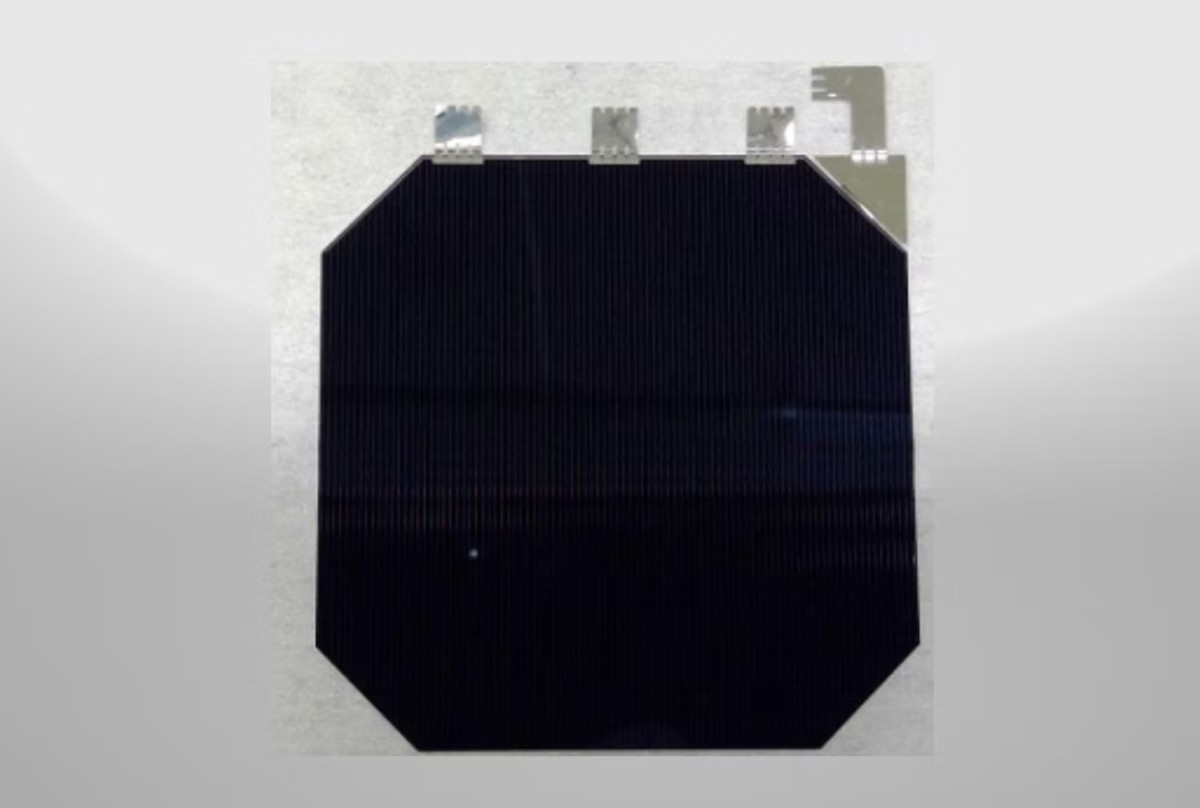
The EXA solar cells offer unparalleled high-temperature robustness with a remarkable x2 improvement in the temperature coefficient, ensuring robust performance in extreme temperature variations. EXA's solar cells achieve ultra-high efficiency and a lightweight design of 80-120 mg/cm2, boasting an impressive efficiency of >30% and >27% (AM 1.5, outdoor).

The EXA solar cells offer unparalleled high-temperature robustness with a remarkable x2 improvement in the temperature coefficient, ensuring robust performance in extreme temperature variations. EXA's solar cells achieve ultra-high efficiency and a lightweight design of 80-120 mg/cm2, boasting an impressive efficiency of >30% and >27% (AM 1.5, outdoor). They seamlessly integrate with electronic systems, providing ~2.5V under one sun (AM0) and featuring an integrated by-pass diode for enhanced efficiency.

The EXA solar cells offer unparalleled high-temperature robustness with a remarkable x2 improvement in the temperature coefficient, ensuring robust performance in extreme temperature variations. EXA's solar cells achieve ultra-high efficiency and a lightweight design of 80-120 mg/cm2, boasting an impressive efficiency of >30% and >27% (AM 1.5, outdoor).

The Ecuadorian Space Agency (EXA) Solar Cells (30x40) are designed for space applications.

These are the most proven, cheap, and powerful space-grade silicon solar cells in the market, with titanium oxide and aluminum cover glass and cell interconnects (3) installed, they have been flown many times in many CubeSat missions.


The AZUR SPACE Solar Power GmbH Triple Junction Solar Cell 3G30C-Advanced (80µm) is a GaInP/GaAs/Ge cell on Ge substrate. The cells are in a grid system design with 2 contact pads and each covers and area of 30.18 cm^2.

The AZUR SPACE Solar Power GmbH Triple Junction Solar Cell 3G30C-Advanced (7 x 4 cm) is an InGaP/GaAs/Ge cell on a Ge substrate. The cell has an efficiency class of 30% and has a thickness of 150 ± 20 µm.

The AZUR SPACE Solar Power GmbH Triple Junction Solar Cell 3G30C-Advanced (8 x 4 cm) is a GaInP/GaAs/Ge cell on a Ge substrate. The average weight of a product is ≤ 86 mg/cm^2 and the cells have an efficiency rating of 30%.

The AZUR SPACE Solar Power GmbH Triple Junction Solar Cell 3G30C-Advanced with Integrated Protection Diode (8 x 4 cm) is an InGaP/GaAs/Ge cell on a Ge substrate. The cell has an updated grid design (with 2 contact pads) and is equipped with an integrated bypass diode, which protects the adjacent cell in the string - offering shadow protection.

The AZUR SPACE Solar Power GmbH Triple Junction Solar Cell 3G30C-Advanced (8 x 8 cm) is an InGaP/GaAs/Ge cell on a Ge substrate. The cells cover an area of 60.36 cm^2 and have an average weight of ≤ 86 mg/cm^2.

The AZUR SPACE Solar Power GmbH Triple Junction Solar Cell 3G30C-Advanced (12 x 6 cm) is an InGaP/GaAs/Ge cell on a Ge substrate. They have a cell area of 68.76 cm^2 and a thickness, without contacts, of 230 ± 20 µm (with other thicknesses available).


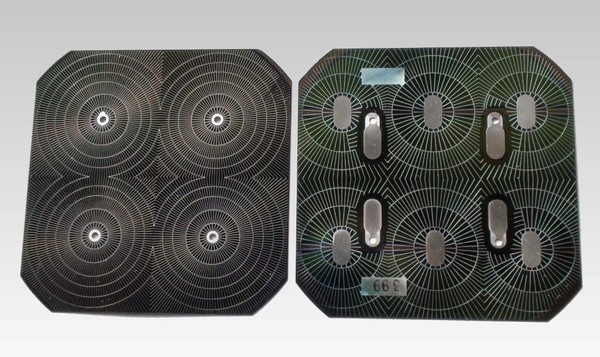
The mPower Technology DragonSCALES™ - High-Efficiency Back Contact Silicon Cell - is a customizable, space-qualified solution for space solar power.


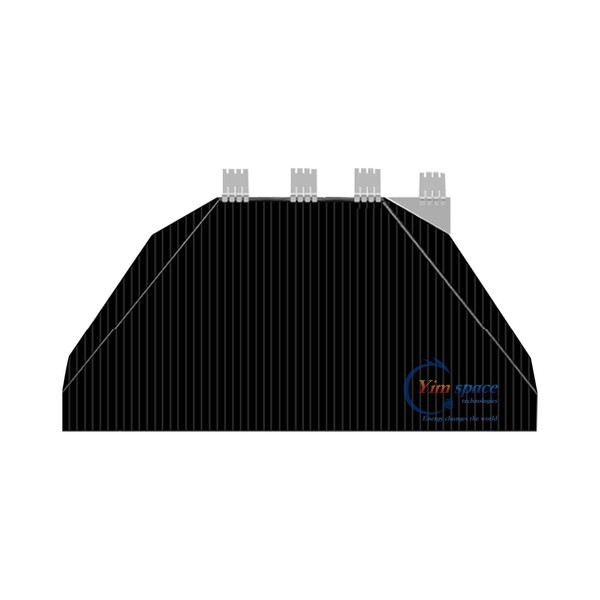
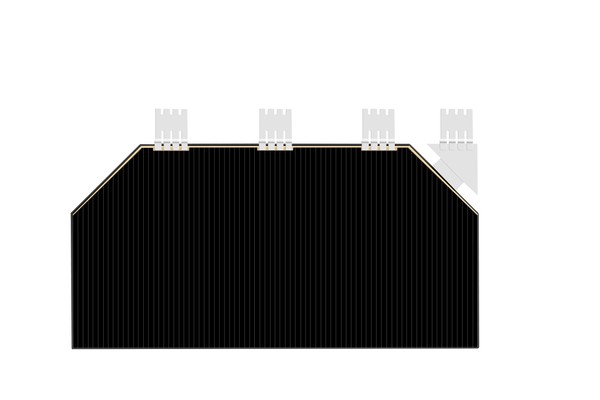
The Shanghai Institute of Space Power-Sources (SISP) 30% Triple Junction GaAs Solar Cell Assembly (SC-3GA-3) features an external Si bypass diode.

The Shanghai Institute of Space Power-Sources (SISP) Triple Junction GaAs Solar Cell Assembly (SC-3GA-4) features an external Si bypass diode.

The Shanghai Institute of Space Power-Sources (SISP) Mini-size High Efficiency Solar Cell is a customizable cell for microsatellites and space assets.

The Sharp Energy Solutions Corporation triple-junction (InGaP/GaAs/Ge) solar cell/CIC is a space-approved, rigid solar cell with >29.0% efficiency.

The Sharp Energy Solutions Corporation triple-junction (InGaP/GaAs/InGaAs) solar cell sheet (film type) is a flexible solar cell for standard fluence.

The Sharp Energy Solutions Corporation triple-junction (InGaP/GaAs/InGaAs) solar cell sheet (glass type) is a lightweight cell, with a by-pass diode.
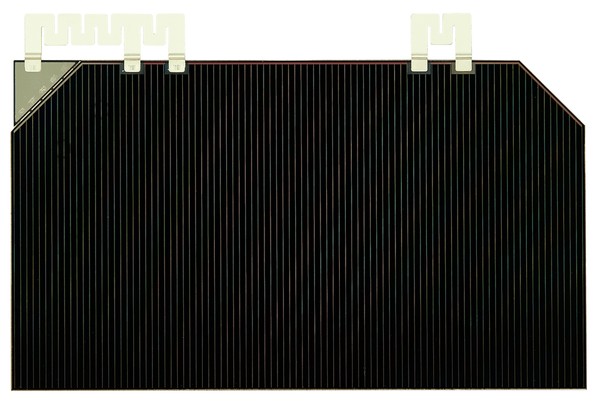
Features
29.5% Minimum Average Efficiency
› 3rd generation triple-junction (ZTJ) InGaP/InGaAs/ Ge Solar Cells with n-on-p polarity
› Solar cell mass of 84 mg/cm2
› Extensive flight heritage with more than 1 MW delivered to multitude of LEO, GEO and interplanetary missions
› Compatible with corner-mounted silicon bypass diode for individual cell reverse bias protection
› Excellent mechanical strength for reduced attrition during assembly and laydown
› Weldable or solderable contacts
› Custom sizes available
Space qualification and characterization to the AIAA-S111-2005 & AIAA-S112-2005 Standards.

The Solestial Flexible Silicon Solar Cell can self-cure radiation damage at normal operating temperatures and features greater than 20% efficiency.

The Spacelis Ultra-lightweight Plastic Solar Cell is designed to offer flexible power generation for a variety of space applications and hardware.

The Spectrolab 29.5% NeXt Triple Junction (XTJ) solar cell is a space grade solar cell available in a range of standard and custom sizes.

The Spectrolab UTJ Space Solar Cell is a space-qualified, ultra triple junction cell available in a variety of sizes.

The Spectrolab XTE-SF (Standard Fluence) Triple Junction Solar Cell is a space-qualified cell, meeting the AIAA-S111-2014 standard, available in a range of sizes.
The Spectrolab XTJ Prime Triple Junction Solar Cell is a space-qualified cell with a heritage upright lattice-matched XTJ structure.


Share your solar cell requirements here
We offer expert procurement support and advice that is 100% free, and no-obligation, for engineers and mission designers across the world.
If you are searching for solar cells (or anything else across the entire global supply chain) we can help you refine your needs and contact suppliers on your behalf.
It all starts with our fast and simple open tender submission form:

Our dedicated procurement team is experienced in getting quotes, further information, proposals, documents, or whatever else might be needed to facilitate a new transaction or trade study (for any kind of space-related hardware, software, or service) – typically getting supplier responses in a matter of days rather than weeks.
We can handle multi-vendor conversations and collate all the information in order to share the relevant details with your team. We then hand over the discussion to you to finalize a purchase.
To get started, simply click here and share your requirements with us today. We look forward to hearing from you!
Add or update your company and products to this page
If your company or team offers solar cells or similar products, and you are not currently included on this page or the satsearch platform, please click here and share your company information with us.
In addition, if you would like to find out more about how satsearch can help your company attract and develop new business opportunities from qualified buyers all over the world, click here to find out more about the satsearch Trusted Supplier program.
Finally, for any questions or comments about anything on this page, please feel free to email [email protected] at any time.
References
- Space-Based Solar vs. Conventional Solar – How Are They Different?
- Solar Array Drive Assemblies (SADAs) on the global market
- Solar Energy in Space Applications: Review and Technology Perspectives
- High-power, deployable solar arrays for CubeSats – with DCUBED
- ESA – Inside a solar cell
- Smallsat and CubeSat solar panels on the global market
Related technologies and further reading
At the links below you can find a range of satsearch articles that will be useful for learning more about this topic, or that feature other categories of technologies which you may need to consider in your mission.
- Satellite electrical power systems (EPS) on the global market
- CubeSat thrusters and in-space propulsion
- Software-defined radios (SDRs) for space
- On-board computers (OBCs) for space
- Optical payloads for space
- Satellite software providers on the global market
- Payload processors for satellites
- A brief introduction to the space supply chain
- Reaction wheels for space on the global market
- Solar array drive assemblies (SADAs) on the market