In this post we provide an overview of satellite structures; frames and chassis products for various sized spacecraft that provide stability and support to all of the sub-systems and components housed within.
We share details of various products on the global market along with service providers offering custom designs and configurations – if you’re familiar with this technology and would like to skip straight to the product listings please click here.
An introduction to satellite structures
Satellite structures give spacecraft their shape, secure all sub-systems and other components, and provide vital protection from mechanical stresses during launch, radiation while in-orbit and vibration at all stages.
Structures and structural products for satellites of any size are often sub-divided into primary and secondary components for simpler classification.
Primary structures are typically whole frames that are capable of housing an entire CubeSat for example. They can be sold as commercial-off-the-shelf (COTS) parts or customised to meet non-standard satellite setups.
Secondary structures are components such as struts and brackets that can be used in different configurations as needed, typically for more complex spacecraft setups.

Some structure components are used mainly for load-bearing purposes whereas others perform more specific tasks, such as housings that provide protection for electrical sub-systems or optical payloads.
For smaller satellites with fixed form factors, such as PocketQubes and CubeSats, the term structures usually refers to the primary frames that give a satellite its shape, set the limits of the physical footprint and provide a functional chassis within which all the other sub-systems are housed and connected.
Structures are available as complete frames or as individual component parts such as chassis walls, base plates and cover plates.
Selecting the best structure for your satellite
CubeSat structure manufacturer and satsearch member NPC Spacemind has previously explained in this article that two vital aspects to consider when assessing structures are their handling and performance.
Handling refers to the ease with which the structure can be manipulated and used during satellite development and testing. A chassis that is too fragile or difficult to rotate and affix, so that sub-systems can be easily integrated, can slow down production.
The performance aspect consists of the following parameters:
- Ability to withstand launch stresses – including the thermal stress, vibrational forces etc.
- Stability during deployment and de-tumbling – compatibility with launch separation system and ability to maintain the satellite’s security during its deployment into the correct orbit, and stabilization once reached, and
- Ability to operate effectively in orbit – radiation protection, extreme low temperature etc.
In addition, a high-quality satellite frame or structural component must be manufactured of space-grade material, ideally feature flight heritage and needs to be the correct size for your mission requirements.
You may also need to select a model with additional capabilities beyond simple physical support. This could include redundant or kill switches, specific launch system interoperability (such as separation springs) and other more complex functionality depending on your needs.
Satellite structures on the global market
In this section, you can find a range of CubeSat and PocketQube frame and chassis products that are available on the market. These listings will be updated when new structures are added to the global marketplace for space at satsearch.co – so please check back for more or sign up for our mailing list for all the updates.
We have also put together overviews of launch separation systems, launch providers and many other components and sub-systems for smallsats, CubeSats and PocketQubes if you require additional help for your mission.
Click on any of the links or images below to find out more about each product. You can also submit a request for a quote, documentation or further information on each of the products listed or send us a more general query to discuss your specific needs, and we will use our global networks of suppliers to find a system that can meet your specifications.

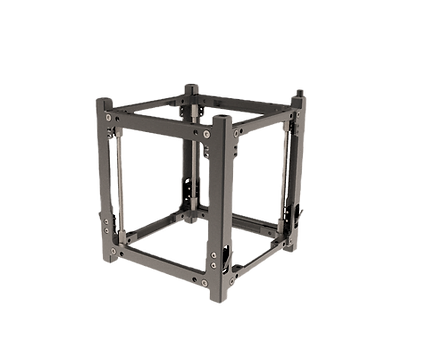
The 2NDSpace VERSE-01 1U Structure is designed for CubeSats. It is compatible with CDS and commercial components. The VERSE-01 has a user-definable aperture layout and customization capabilities. It allows flexible, fast, and mistakes-exempt platform integration for space missions.
 Request quote
  request info
The 2NDSpace VERSE-02 2U Structure is designed for CubeSats. It is compatible with CDS and commercial components. It weighs approximately 195 grams. The VERSE-02 has a user-definable aperture layout and customization capabilities. It allows flexible, fast, and mistakes-exempt platform integration for space missions.

The 2NDSpace VERSE-03 3U Structure is designed for CubeSats. It is compatible with CDS and commercial components. It weighs approximately 290 grams. The VERSE-03 has a user-definable aperture layout and customization capabilities. It allows flexible, fast, and mistakes-exempt platform integration for space missions.
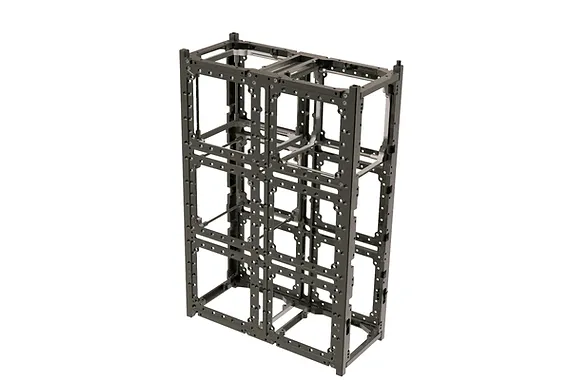
The 2NDSpace VERSE-06 6U Structure is designed for CubeSats. It is compatible with CDS and commercial components. The VERSE-06 has a user-definable aperture layout and customization capabilities. It allows flexible, fast, and mistakes-exempt platform integration for space missions. It weighs approximately 690 grams.
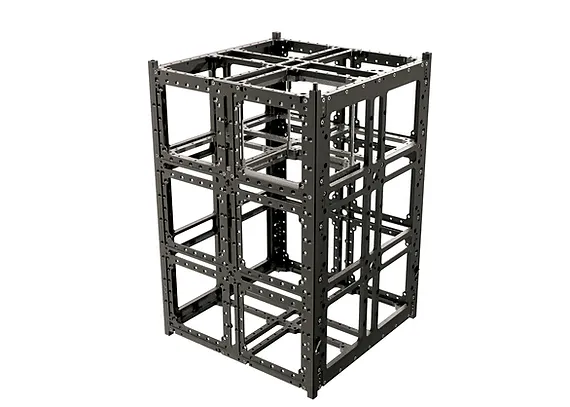
The 2NDSpace VERSE-12 12U Structure is designed for CubeSats. It is compatible with CDS and commercial components. The VERSE-12 has a user-definable aperture layout and customization capabilities. It allows flexible, fast, and mistakes-exempt platform integration for space missions. The product weighs approximately 1190 grams.
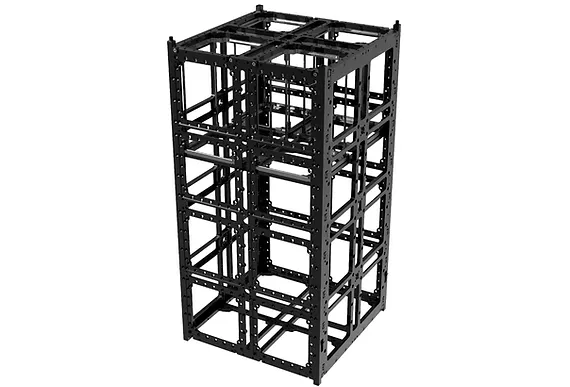
The 2NDSpace VERSE-16 16U Structure is designed for CubeSats. It is compatible with CDS and commercial components. The VERSE-16 has a user-definable aperture layout and customization capabilities. It allows flexible, fast, and mistakes-exempt platform integration for space missions. It weighs approximately 1520 grams.

Our AAC Clyde Space engineered ZAPHOD structure range, 1U to 12U form factors, is one of the most light weight, adaptable and user friendly available on the market.

Our AAC Clyde Space engineered ZAPHOD structure range, 1U to 12U form factors, is one of the most light weight, adaptable and user friendly available on the market.

Our AAC Clyde Space engineered ZAPHOD structure range, 1U to 12U form factors, is one of the most light weight, adaptable and user friendly available on the market.

The AAC Clyde Space ZAPHOD 6U Structure is a lightweight, adaptable, and user-friendly structure with a variety of customization options. The structure is fitted with deployment switches and anodized rails, and complies with NASA’s General Environmental Verification Standard (GEVS) requirements.

The AAC Clyde Space ZAPHOD 12U Structure is a versatile, user-friendly, and adaptable structure with several avionic and payload configurations. The structure complies with NASA's General Environmental Verification Standard (GEVS) requirements and is fitted with anodized rails and deployment switches.
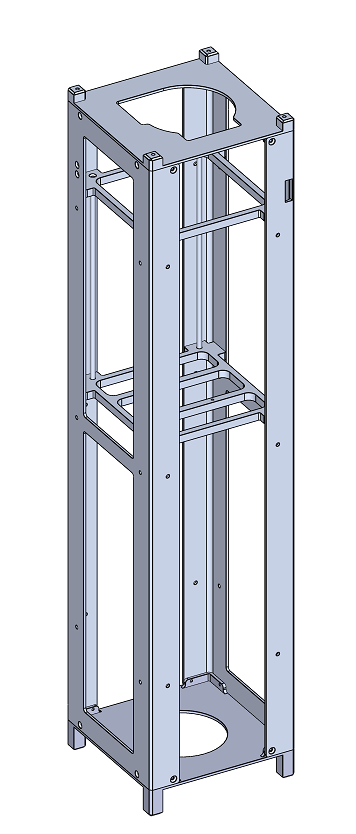
The HEX20 CubeSat structures are available in various configurations tailored to customer specifications. HEX20's expertise encompasses solutions in 3U, 6U, 12U, 16U, and 27U form factors, delivered with minimal lead time. These meticulously designed structures prioritize maximizing payload space while optimizing structural mass

A 1U CubeSat structure with 6 kill switches and PC104 stack layout. NPC Spacemind's SM structures are modular CubeSat frames designed for ease of integration and compatibility with off-the-shelf components.

A 2U CubeSat structure with 6 kill switches and PC104 stack layout. NPC Spacemind's SM structures are modular CubeSat frames designed for ease of integration and compatibility with off-the-shelf components.
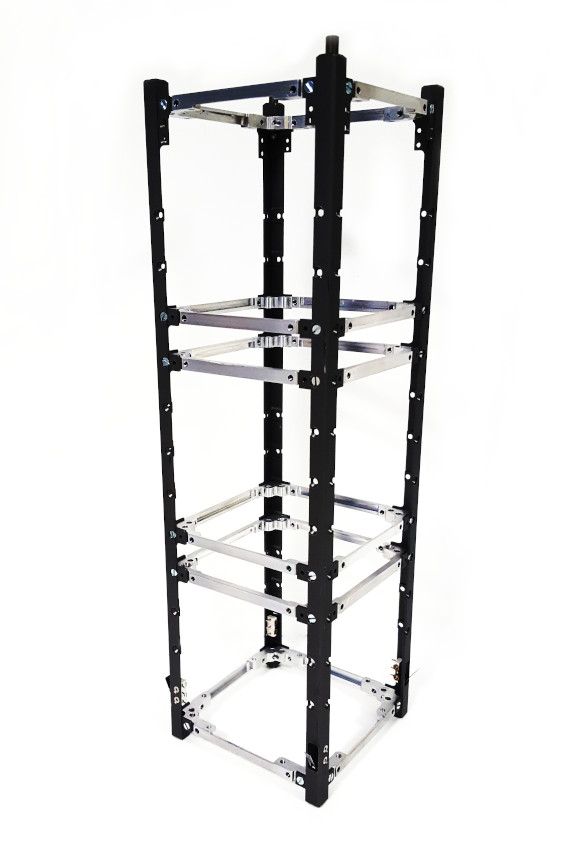
A 3U CubeSat structure with 6 kill switches and PC104 stack layout. NPC Spacemind's SM structures are modular CubeSat frames designed for ease of integration and compatibility with off-the-shelf components.

A 6U CubeSat structure with 6 kill switches and PC104 stack layout. NPC Spacemind's SM structures are modular CubeSat frames designed for ease of integration and compatibility with off-the-shelf components.

A 12U CubeSat structure with 6 kill switches and PC104 stack layout. NPC Spacemind's SM structures are modular CubeSat frames designed for ease of integration and compatibility with off-the-shelf components.



Compoxi has deep expertise in composite design, analysis, qualification and manufacturing for space.


The Space Structures Small Satellite Structure is designed to use in spacecraft. It can be made available in any size (up to a few meters in length or width) based on mission requirements. The structure consists of Aluminum and CFRP as both face skin and core materials. It also consists of a Kapton surface and can be customized as per the client's mission requirements.

The Serenum Space 1-Unit Structure (1U) is designed for 1U form factor CubeSat missions. It weighs approximately 137 grams and has a dual kill switch mechanism. It can also support multiple sizes of PCB.

The Serenum Space 2-Unit Structure (2U) is designed for 2U form factor CubeSat missions. It weighs approximately 269 grams and has a dual kill switch mechanism. It can also support multiple sizes of PCB.
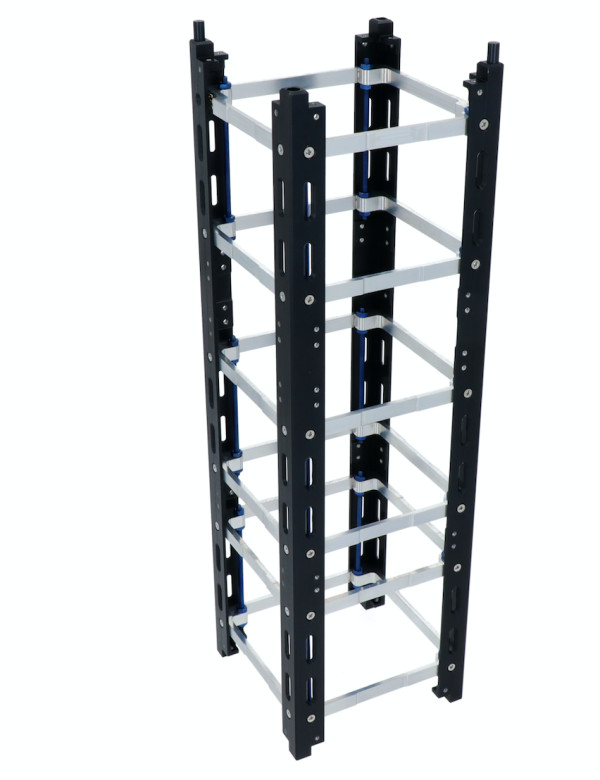
The Serenum Space 3-Unit Structure (3U) is designed for 3U form factor CubeSat missions. It weighs approximately 396 grams and has a dual kill switch mechanism. It can also support multiple sizes of PCB.
Need help finding the best solution?
Share your requirements with us now
Would you like to be featured on satsearch?
Click here to get started today