
This article addresses the benefits of GaN on Diamond technology for RF capabilities onboard demanding space missions, based on expertise at Akash Systems. It captures expert insights provided by Brendon Grunewald, Managing Director, and others at Akash Systems.
Jump to
- Turning thermal headroom into RF performance
- When an RF power problem becomes a heat problem
- Why put diamond beneath GaN
- What the thermal margin can buy
- Diamond cooling for Terrestrial AI Datacenters
- Start the RF trade study at the hotspot
- Akash’s solutions for the space sector
- References
- Additional resources
Turning thermal headroom into RF performance
As satellite payloads generate and process more data, ideally the radio frequency (RF) chain can transmit more information without a matching increase in spacecraft power, mass or radiator area to minimize knock-on effects for the rest of the spacecraft bus. Gallium nitride (GaN) has already expanded the capabilities of space power amplifiers. Bringing diamond into the thermal path can create further headroom for RF performance.
When an RF power problem becomes a heat problem
The communications bottleneck on a modern spacecraft is not simply spectrum. It is the combination of bandwidth, available DC power and the amount of waste heat the spacecraft can reject.
A solid-state power amplifier (SSPA) converts only part of its input power into useful RF output. The remainder becomes heat, concentrated around small transistor channels. In vacuum, that heat must be conducted away and ultimately radiated. Every additional watt of dissipation affects the thermal architecture, while thermal hardware competes with the payload for mass and volume. Mass and volume remain key mission drivers given the bottlenecks that still exist within the launch market.
Earth observation, synthetic-aperture radar and software-defined payloads are producing more data, driven by increased end-user demands and more capable satellite platforms. Higher sampling rates and more capable field-programmable gate arrays (FPGAs) increase processing capacity, while the RF front end must deliver more bandwidth, linear output power and efficiency in less board area.
Gallium nitride (GaN) offers a wide bandgap, high breakdown field and high electron velocity, supporting high voltage, frequency and power density. A NASA technical report links high power-added efficiency (PAE) in Ka-band GaN amplifiers to lower dissipation and improved size, weight and power (SWaP) [1].
But more RF power in a smaller active area raises local heat flux. GaN improves the electrical capability; it does not by itself remove the heat.
Why put diamond beneath GaN
Many high-power RF GaN devices use silicon carbide (SiC) as the substrate and heat-spreading path. GaN-on-SiC is mature and capable, but heat transport beneath the transistor channel can still limit performance (Fig. 1).
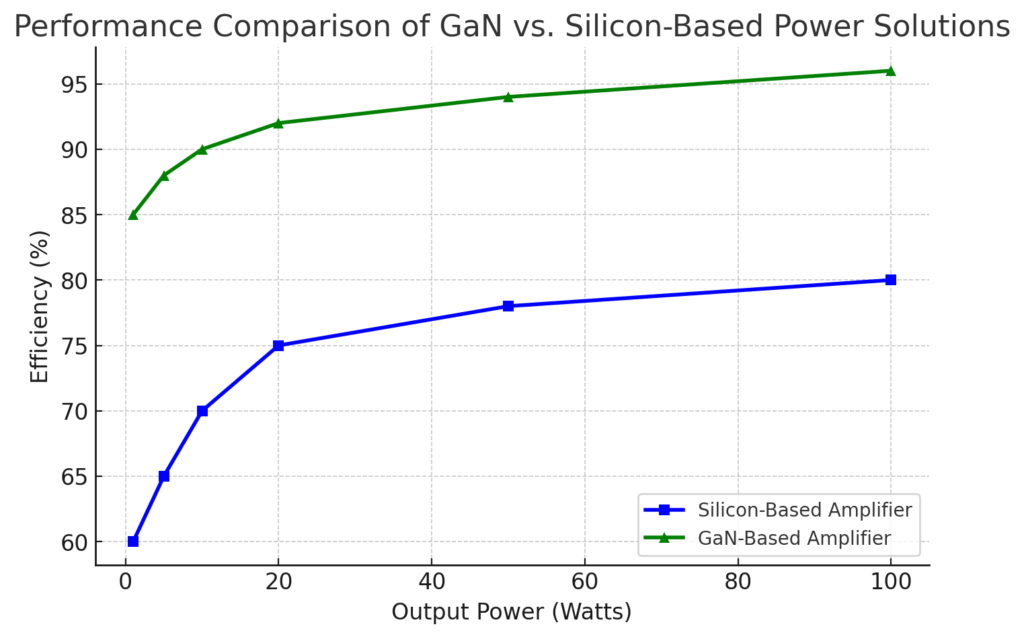
Figure 1: Performance comparison of GaN vs. Silicon-based power solutions, demonstrating GaN’s superior efficiency and lower power loss for Class-D amplifier design (source: Power Electronics News).
Diamond provides substantially greater thermal conductivity. A peer-reviewed review lists approximately 2,200 W/m·K for single-crystal diamond versus 380–450 W/m·K for SiC, a calculated ratio of roughly five to six [2]. These are material values, not a guaranteed device-level improvement; properties of CVD diamonds (lab-grown diamonds created by Chemical Vapor Deposition) depend on film quality and thickness. Integrating diamond beneath the GaN epitaxial layer (a thin crystalline film grown on top of a crystalline substrate) places a heat spreader close to the active high-electron-mobility transistor (HEMT).
The interface is as important as the diamond in delivering optimal heat spreading performance. Poor bonding, thick interlayers or voids add thermal boundary resistance. Evaluation must cover the active region, interface, diamond, package and spacecraft mounting interface.
The thermal comparison in Fig. 2 illustrates the benefit of changing the substrate.
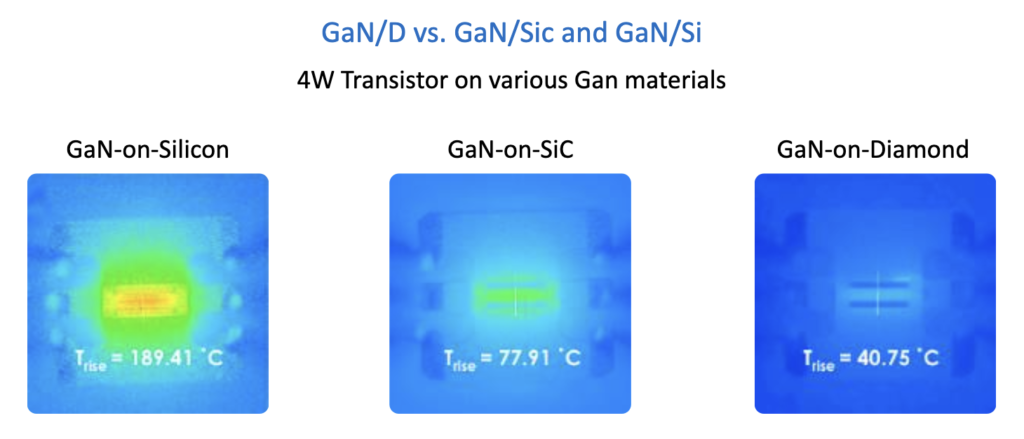
Figure 2 – Thermal comparison between Silicon, SiC and Diamond (source: GaN-on-Diamond in Satellite Radios).
The literature compilation illustrated in Fig. 3 compares device temperature with dissipated power density across different substrates. It outlines the thermal opportunity using GaN-on-Diamond, rather than a controlled comparison of finished radios.
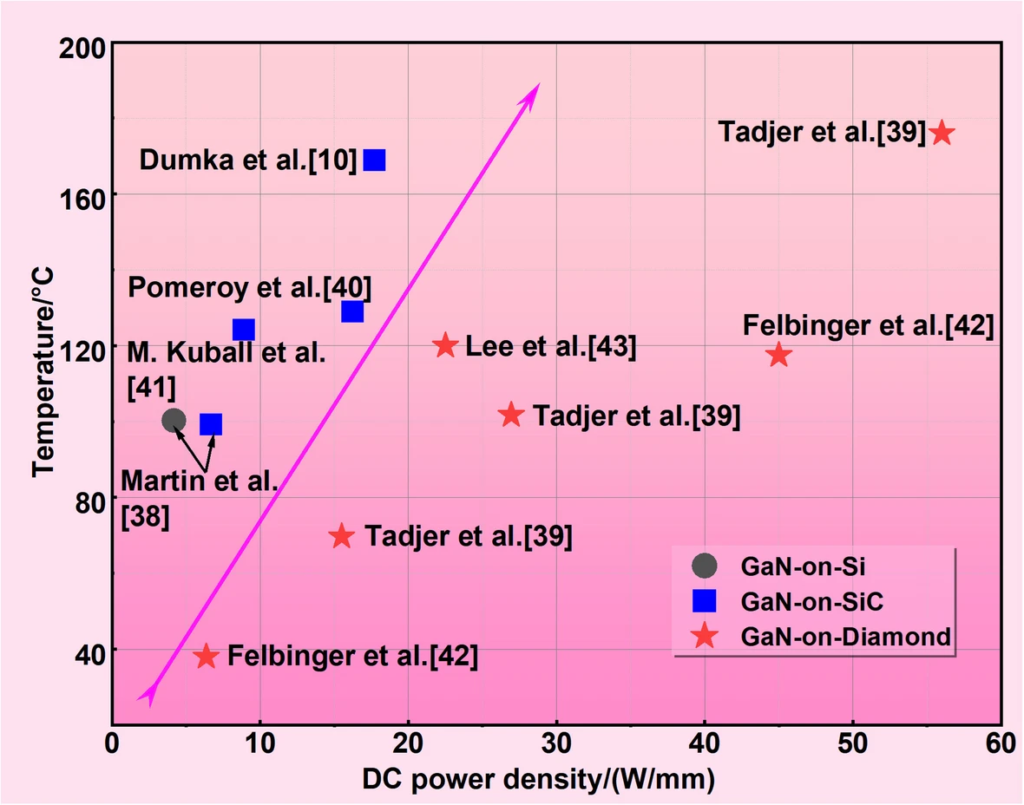
Figure 3 – GaN on diamond technology for next-generation power devices (source: Moore and More).
What the thermal margin can buy
Improved heat extraction creates design choices at device, subsystem and mission level.
More RF output within the same thermal envelope
Lower channel temperature can support higher sustained output or power density, improving link margin, which can provide substantial benefits to mission operators. Continuous-wave operation is not exclusive to diamond; the benefit is additional thermal margin at the required operating point.
Less DC power for a given RF requirement
Where lower temperature improves amplifier efficiency, electrical and radiator loads can fall, releasing power for other payload functions. The saving must be measured at the required RF output and modulation.
Smaller thermal and mechanical hardware
Better heat spreading can reduce package size, heat-spreader mass or board area, subject to confirmation in the spacecraft thermal model.
More operating and reliability margin
Lower channel temperature can reduce thermally accelerated degradation. Life testing, radiation analysis and mission-specific derating remain essential.
For high-order modulation, thermal performance also intersects with linearity. Data rate depends on bandwidth, coding, modulation and the complete link budget, not the substrate alone. Maintaining useful linear output across temperature helps use spectrum and DC power effectively.
Figs. 4 & 5 provides an overview of device-level RF performance.
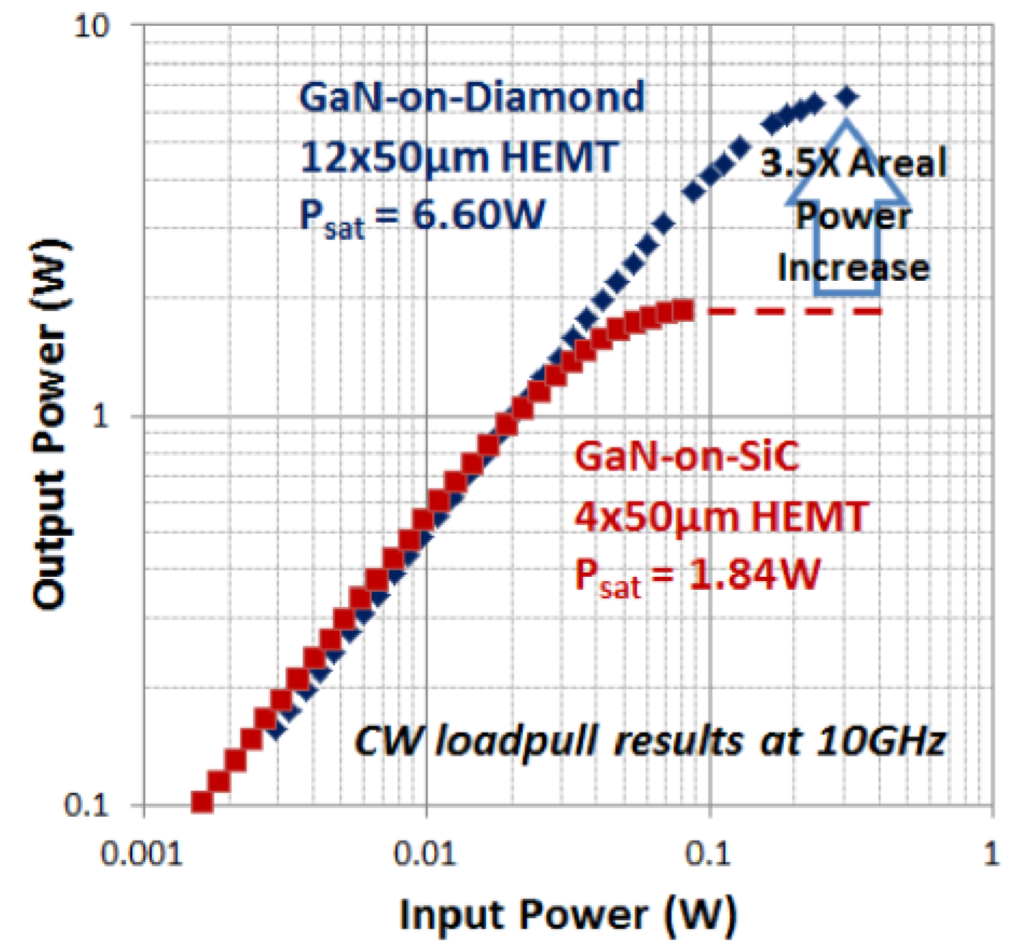
Figure 4 – GaN on Diamond vs SiC power input and output comparison (source: Materials 2022, 15(2)).
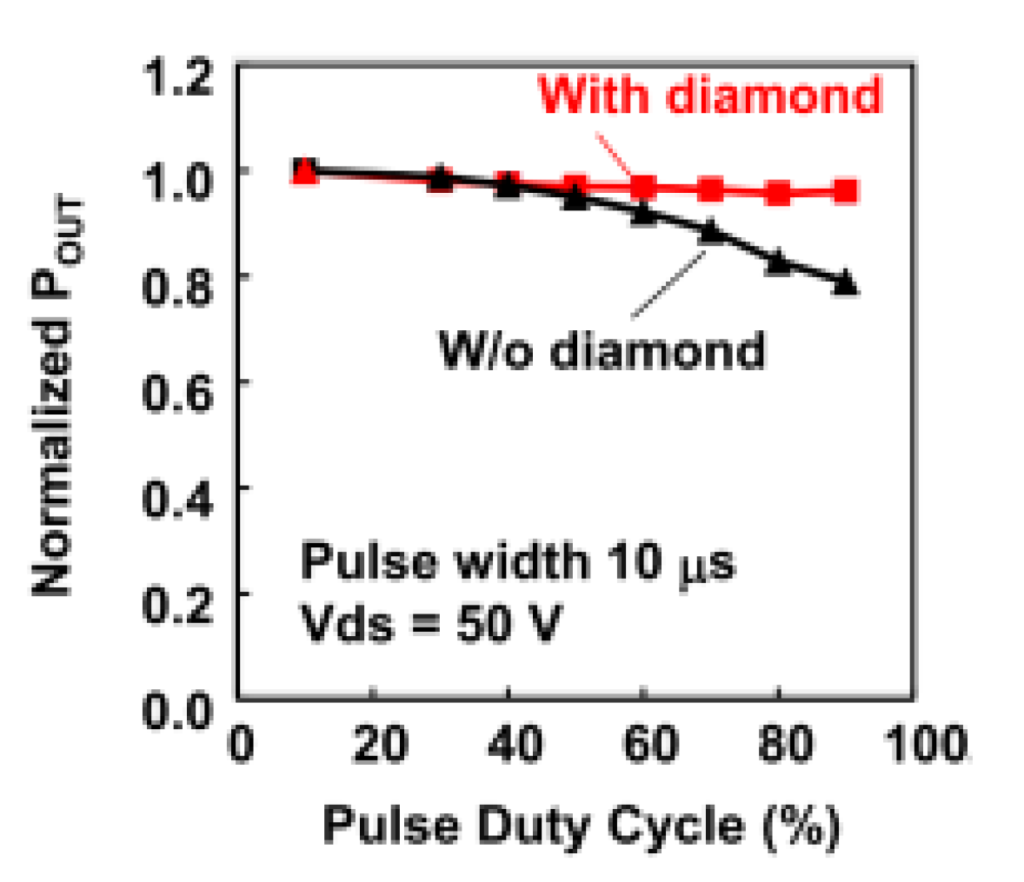
Figure 5 – Normalized Output Power, Pout, vs Pulse Duty Cycle for GaN with and without Diamond (source: Materials 2022, 15(2)).
Diamond cooling for Terrestrial AI Datacenters
Diamond is as seen as a potentially important next step in cooling power hungry terrestrial AI GPUs and servers (see Fig. 6 for an example implemented by Akash). Cooling GPUs or enabling them to run at ambient temperature without expensive liquid cooled datacenters makes both economic and environmental sense.

Figure 6 – Akash diamond cooled AMD server.
While these systems are not space qualified today, the interest in having AI compute in space combined with the energy and thermal demands those systems will require, make diamond cooling an excellent option for those seriously considering orbital AI GPUs.
Start the RF trade study at the hotspot
Diamond does not eliminate conductive paths, radiators or spacecraft-level thermal analysis. It addresses heat spreading at the active device, where a thermal bottleneck can constrain the entire RF chain.
For radios and SSPAs, that can mean more RF output, better efficiency or a smaller subsystem. The practical question is where the added thermal margin creates measurable mission value, offering mission designers a new part of the trade space to explore.
As new space missions continue to place demanding SWaP requirements on designers, GaN-on-Diamond offers a possibility to mitigate thermal impact and ultimately generate greater cost-to-performance outcomes.
Akash’s solutions for the space sector
Akash Systems is a pioneer in GaN-on-diamond technology, translating advances in semiconductor thermal management into satellite radios and solid-state power amplifiers with demonstrated space heritage. Its Diamond Cooling® technology brings diamond’s exceptional heat-spreading capability close to the transistor’s heat source, creating scope for higher RF power density, improved efficiency and more compact communications hardware.

Figure 7 – A conceptual illustration of a Pixxel Space satellite in orbit carrying Akash radios (source: Pixxel Space).
With Akash radios already deployed in orbit aboard Pixxel satellites (Fig. 7), the company combines materials expertise with practical experience in space hardware. For satellite operators, spacecraft manufacturers and equipment suppliers, Akash is a technology partner to engage early, whether selecting communications products for a new mission or exploring how GaN-on-diamond and Diamond Cooling® could enhance their own devices, modules and systems.
For space mission operators, Akash offers an array of solutions, including:


The X/S-Band High-Speed LEO Radio is a compact, flight-heritage satellite radio system for high-data-rate X-band payload downlink and S-band receive functions in LEO missions. It is suited to smallsat and CubeSat satellite communications where engineers need DVB-S2X modulation, high spectral efficiency, low DC power consumption and a very small radio package.
 Request quote
 request info
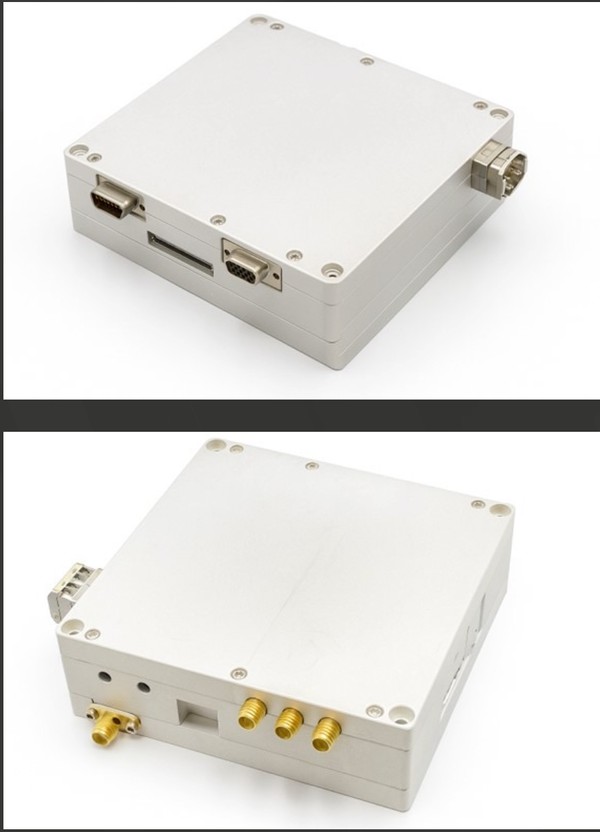
The Integrated X/S-Band Radio combines a high-throughput X-band transmitter with a full-duplex S-band transmit/receive link for command, telemetry and mission communications. It is a strong fit for LEO smallsats that need a single compact satellite radio for payload data downlink, S-band TT&C and flexible ground-segment compatibility.
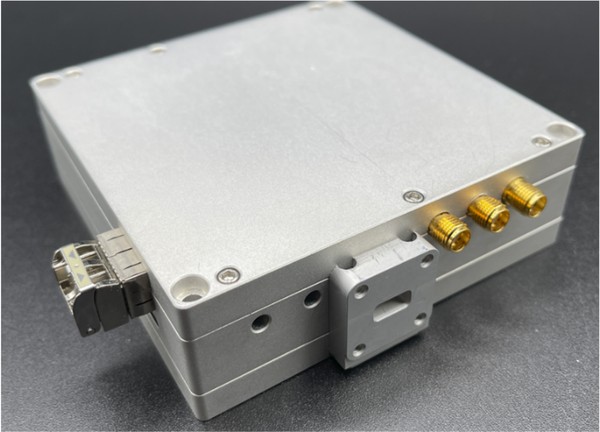
The K/Ka-Band High-Speed LEO Radio provides a compact high-frequency transmit/receive radio for LEO satellite communications, combining a 17.7-20.2 GHz DVB-S2X transmitter with a 27.5-30 GHz DVB-S2 receiver. It is designed for missions that need efficient K-band or Ka-band SatCom links, high-order APSK modulation and flexible RF interfaces including 2.92 mm and WR28 waveguide options.

The Integrated Ka/S-Band Radio is designed for LEO missions that require compact Ka-band high-throughput downlink plus full-duplex S-band TT&C in one radio package. It supports DVB-S2/DVB-S2X up to 256 APSK with ACM and a Ka-band user data rate up to 2.883 Gbps, supporting raw data rates up to 4 Gbps.
For more information, check out Akash’s capability hub on satsearch.
References
Product and qualification figures are retained from the supplied Akash materials and markup, pending the model-specific confirmations indicated. Reference documents: Selected Product Designs, May 2026; CubeSat X/S EO Radio, Flight Model 1.0 Revision K, July 2024.
Public sources are linked beside the relevant passages. The editorial notes following the submission material identify suggested evidence and unresolved claims. The external references cited in the article are listed below.