
This article discusses the negative effects that stray light can have in a space mission or service and the available methods to reduce it.
This information is presented to you by space industry superhero Acktara, also known as the Light Trapper, created by satsearch Trusted Supplier ACM Coatings GmbH (subsidiary of Acktar Ltd.)
Introduction
Light plays a number of crucial roles in any space mission. Modern satellites use different light frequencies and sources for navigation, attitude determination, sensor calibration, power generation, and as primary value generation in optical payloads.
But light across the electromagnetic (EM) spectrum, particularly stray light, can also have a negative effect on different aspects of a mission; disrupting sensors, spoiling useful data, and affecting the information that the system relies on to make decisions. In short, if you get light management wrong you could lose anything from a single data reading to an entire satellite.
In this article we take a close look at the sources and impacts of stray light, as well as how to reduce it on a satellite or space mission. We’ll be helped in this by Acktara, aka the Light Trapper, an expert in light-absorbing black materials and coatings, and member of the Superhero League.
Acktara was created by Acktar to help explain the complexities and importance of minimizing stray light, ensuring effective optical performance in both space and terrestrial hardware, and controlling light across a wide variety of wavelengths. The Superhero League is a marketing collaboration between 6 leading providers of optical and laser services; OPTOMAN, Cailabs, TOPTICA Photonics, Class 5 Photonics, and Precitec.

To begin, Acktara is first going to explain what stray light is and where it comes from.
What is stray light?
In space, the term stray light is used to describe any electromagnetic radiation, from internal or external sources, that somehow disrupts the optical performance of a space system.
This disruption might be very direct and easy to detect (such as obscuring glare that renders an onboard monitoring camera useless) or more insidious, gradually degrading data over the lifetime of a mission. More on this in the next section.
Stray light will typically be in one or more of the most common radiation bands experienced in the Earth’s orbital environment:
- Ultraviolet (UV): 750–30,000 THz frequency range, 100–400 nm wavelength range, and accounting for approximately a tenth of the total EM radiation output from the Sun.
- Visible (Vis): 400–790 THz frequency range, 380–780 nm wavelength range, and accounting for around 40% of the total EM radiation output from the Sun.
- Near-infrared (NIR): 400 THz–300 GHz frequency range, 780–3,000 nm wavelength range, and accounting for around 50% of the total EM radiation output from the Sun.
Stray light in these frequencies can affect a space system in a number of ways and emanate from a variety of sources, as explained by Acktara:

As you can see – there are many ways in which this problem can occur. No matter what your application is in space, how you use and manage the EM radiation from the Sun, and other sources, will have at least some impact on your success.
Let’s take a closer look at exactly what issues this can cause in the next section.
How does stray light affect the success of a space mission?
In terrestrial applications, short-term stray light issues rarely jeopardize an entire mission or application (e.g. in drone flights or autonomous vehicle journeys). They are also more easily adjusted for, particularly for systems with human operators monitoring in real time, and don’t play such a key role in the overall system.
In space, the stakes are far higher. For many missions, the optical data collected is the fundamental value that the operator is trying to consistently generate, and anything that negatively affects that is a cost to the company.
And even when the mission has other objectives (such as exploration, Global Navigation Satellite System (GNSS) provision, or providing connectivity from orbit) stray light can still jeopardize sensor readings.
This can give incorrect measurements of attitude or position, potentially conflicting with other onboard sensors and making it difficult to know exactly where your satellite or spacecraft is, where it is going, and how fast it is moving.

Data degradation – for applications in Earth Observation (EO), or for space telescopes, stray light essentially degrades the signal-to-noise ratio (SNR) of optical payload data. Images with reduced contrast, duplicate readings (sometimes called ghosts), glare, or other artifacts are examples of this.
Inaccurate measurements – for applications such as spectroscopy, stray light can result in imprecise measurements, or even completely false readings. Unmitigated incident or off-axis EM radiation, from external or even internal sources, can cause instruments to pick up signals which aren’t there and obscure those that are.
Sensor disruption – stray light can affect the data collected by attitude determination and satellite positioning sensors (e.g. sun sensors, star trackers, and Earth/horizon sensors) onboard. It can also affect the imagery collected by onboard monitoring cameras, proximity sensors (e.g. for landing or docking) and related equipment. This makes attitude, navigation, pointing, and other applications very difficult, if not impossible.
Data loss – severe stray light effects can lead to the total loss of target data from optical payloads, possibly resulting in mission failure. For example, a satellite camera affected by stray light from nearby reflective surfaces can easily be fully saturated for the entirety of its pass over the region of interest; so even though everything else in the mission is aligned and set up correctly, no useful data is collected.
It’s clear that stray light can be very costly, if not fatal, to a space mission. So next let’s take a look at how it can be managed effectively.
How can you reduce or avoid stray light in space?
Ensuring you effectively manage optical data and impacts in space systems needs a multi-layered approach.
When the data is received by the end-user or operator on the ground, it is usually too late. Yes, a level of post-processing can be performed, but with such data, the key principle is ‘garbage in, garbage out’ – you can’t process away an image that is fundamentally degraded or corrupt.
In recent years, edge computing and on-board data processing (OBDP) capabilities have been extremely popular across the supply chain. And these solutions have made it possible to improve the data that satellites eventually downlink; filtering out useless imagery (e.g. pictures of the Earth’s surface obscured by clouds) and compressing files to maximize capacity.
There are also payload processor solutions that can improve the performance of sensors on a spacecraft, not just the primary payloads. These can ensure better sensitivity in pointing, attitude, or positioning readings for enhanced system control.
However, again, only the data that is actually collected by payloads or sensors can be used and improved in OBDP systems. And if that data is of poor quality, or partially missing, no amount of powerful processing can make it useful.
To really ensure successful optical performance, engineers need to do everything possible to create a sensor or data collection chain that is secure and accurate. This requires robust hardware and the elimination of stray light sources, with effective optical coatings and materials.
These are solutions that Acktar offers for a wide variety of space missions. With heritage spanning more than 50 space projects and over 30,000 parts in orbit, Acktar has been working to help mission engineers reduce the harmful effects of stray light for many years. Here’s how this works:

These are all key characteristics of Acktar’s space portfolio. The company has specialized in solutions that enable light absorption across a wide spectral range and that are both suitable for cleanroom settings and safe for fragile optical components in space. Here are some specific examples:


Acktar™ offers a black coating service to suppress stray light in high-performance optics by absorption in UV, VIS and IR wavelengths.
 Request quote
  request info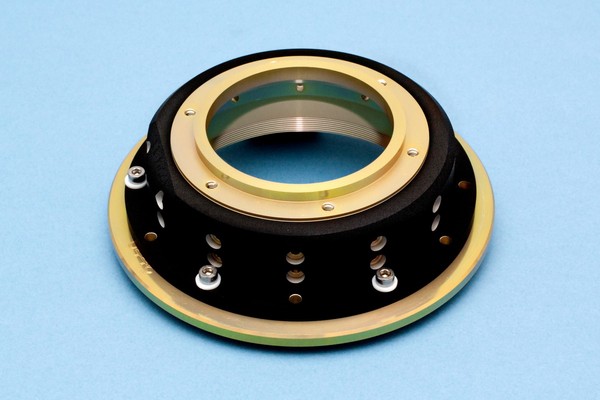
Acktar's Magic Black™ Coatings provide extremely low reflectance and high emissivity in EUV-VIS-NIR frequencies. They are widely deployed in high-resolution imaging instruments, such as terrestrial cameras and space telescopes.

A polyimide film designed to deliver low reflectance and high emissivity across the spectrum from UV thru VIS to SWIR, for straylight suppression. The film is a few microns thick, with no particulation, and is vacuum and thermal—vacuum cycling qualified.
Such solutions are helping organizations all over the world to improve outcomes in their space missions and deliver better results to end-users.
Stray light is just one piece of the optical puzzle
In this article, Acktara has explained the different aspects of stray light and how they can be protected against using optical coatings and foils. However, this is just one part of ensuring a successful mission in space and building a valuable service.
Here are a few more insights from members of the Superhero League:

The OPTOMAN Super-Optics Hero:
“To get reliable performance for laser communication in space, you need optics that can handle the extremely low temperature, radiation and vacuum. That’s why we focus on ion-beam sputtering technology that makes dense, ultra-stable coatings with low absorption, making optics work as a charm even after years in orbit.”
Sens-eye, the Guardian of Quality by Precitec:
“Light is our tool – quality our passion. This applies above all and in particular to the inspection of components that are inaccessible during their use in space. Precitec 3D Metrology’s light-based sensors have been an integral part of quality assurance and high-precision measurement for various space components for many years.”
The Superhero League also features:
- The GFP mouse – Green Fluorescent Punisher by TOPTICA Photonics
- SuperNova – A Catalyst of Extreme Power and Wavelength by Class 5 Photonics
- Captain Shape – The Light Tamer by Cailabs
Conclusion
In 2025, losing valuable data, or even an entire satellite, because of the harmful impact of stray light is something no mission team should be worried about. The solutions are available on the market, from payload processors to optical coatings, and have been proven in a wide range of space applications.
As has been shown above, there are a number of major issues that can result from unmitigated stray light if effective protection isn’t included. So, ensure that every piece of optical equipment is carefully tested and secured to give you the best chance of success.
And when you do, do not neglect to protect reflective surfaces or components. And to find out more about Acktar’s portfolio of optical solutions that will help you do this in today’s missions, click here.