
Thermal management is a crucial part of spacecraft design and operation. Spacecraft and satellites are exposed to extreme temperatures, ranging from the scorching heat of direct sunshine to the freezing cold of shaded areas.
Thermal control coatings are often used to moderate temperature extremes while also protecting sensitive equipment.
This case study, developed in collaboration with, and featuring coatings supplied by, ACM Coatings GmbH (subsidiary of Acktar Ltd.), a paying participant in the satsearch Trusted Supplier program, delves into the qualities, uses, and benefits of Acktar’s thermal management coatings for space.
The challenge – ensuring thermal management in space
Without an atmosphere, there is no medium for heat convection and radiation is the major mechanism of heat transmission. Space hardware surfaces must be engineered to efficiently reflect or absorb heat radiation, and this is where thermal control coatings come in. Thermal management coatings have several functions such as:
- Minimizing heat absorption – to avoid overheating in direct sunlight.
- Ensuring heat emission – to maintain thermal equilibrium.
- Protecting surfaces – to shield delicate structures and equipment from high temperatures and radiation.
Coatings come in a variety of colors and formats, with black and white variations being some of the most common. They enable thermal management of space systems in three ways: passive cooling, passive heating, and blackbody radiation. These each require controlling the delicate balance between solar absorptance and emissivity:
- Solar absorptance (alpha) – the amount of radiation absorbed, between 250 – 2500 microns
- Emissivity (epsilon) – the amount of radiation emitted, between 3 – 20 microns
Whether a material acts as a passive cooler, passive heater, or a blackbody is determined by the ratio between the solar absorptance and emissivity:
- Alpha/epsilon < 1 = passive cooling
- Alpha/epsilon > 1 = passive heating
- Alpha/epsilon ~1 = blackbody (neither heating or cooling)
1. Passive cooling
Passive cooling dissipates surplus heat without the need for external energy sources or active mechanical devices. This approach uses natural heat transmission processes including conduction, convection, and radiation.
The Acktar White™ coating (which has an alpha/epsilon ratio of < 1, making it a passive cooler) features strong emissivity and low solar absorptance, and has been used to enhance or enable passive cooling in a wide range of missions, including on the MIPA instrument for BepiColombo (discussed in more detail below).
2. Passive heating
Passive heating keeps systems or structures at a constant temperature by absorbing ambient heat or solar energy. This approach is frequently used to prevent freezing or to keep operating temperatures stable in colder settings.
Acktar’s Nano Black™ coating (which has an alpha/epsilon ratio of > 1, making it a passive heater) absorbs the Sun’s energy efficiently, with low emissivity, ensuring spacecraft components remain at high enough temperatures to operate effectively.
These coatings have been deployed in a variety of missions including Chandrayyan-2 – ISRO’s 2nd lunar exploration mission – which involved mapping and studying the lunar surface and detecting water ice.
3. Blackbody radiation
A blackbody is a perfect physical body that absorbs all electromagnetic radiation, independent of frequency or angle of impact – meaning that its alpha/epsilon ratio is ~1. They are often used to calibrate devices and sensors, calculating emissivity and absorptivity, and to ensure a system has stable thermal energy.
Acktar’s Metal Velvet™ and Fractal Black™ are two examples of blackbody coatings, exhibiting exceptional absorptivity and emissivity across a wide range of wavelengths. The James Webb Space Telescope (JWST) uses Acktar coatings on its thermal calibration sources to ensure measurement precision via blackbody radiation.
Now that the three forms of thermal management have been more clearly specified, we next share an example of Acktar’s coatings in use on ESA’s BepiColombo mission.
Example – thermal management for solar system exploration
The further into space a spacecraft travels, the more extreme are the demands on precision measurement equipment. And although launch costs are lower and new technologies have expanded organizational capabilities, the majority of deeper space missions have scientific objectives, meaning accurate data collection is vital.
Scientific instrumentation requires advanced thermal management coatings to reach the highest levels of performance – coatings such as Acktar White™ and Fractal Black™, which have been deployed on several spacecraft including, for example, the European Space Agency’s (ESA) flagship Mercury mission BepiColombo.
BepiColombo’s objective is to gain a better understanding of the closest planet to the Sun. On-board the spacecraft are several precisely calibrated instruments that are critical to the scientific goals of the mission, and which must endure extreme conditions in order to collect accurate data.
For example, the Miniature Ion Precipitation Analyzer (MIPA) is a compact, 600g ion mass analyzer that must withstand:
- Severe ionizing radiation,
- Mechanical stresses during launch,
- Approximately 8,000 thermal cycles due to exposure to cold space,
- 14 kW/m² of sun irradiation,
- Mercury’s albedo of about 1 kW/m², and
- Continual UV exposure during the flight.
As you can see, BepiColombo required a highly sophisticated approach to thermal management of critical instruments, to ensure their safety and performance.
The solution – maintaining optimal temperatures in deep space
Following extensive testing and qualification processes, Acktar White™ coatings were selected to ensure passive cooling through reflection of solar radiation. This lessens the heat burden on the spacecraft, which is very important while operating in the inner solar system, where solar intensity is much higher. Acktar White™ has the following key features, bringing significant operational benefits to the mission:
- An operating temperature range of -270°C to +350°C
- Moderate abrasion resistance
- A completely inorganic structure
- Low outgassing (CVCM=0,001%, RML=0,167%)
- Produced using vacuum deposition process with closely controlled morphology
- Cleaned with alcohol acetone without changing optical/technical characteristics
In addition, Acktar’s Fractal Black™ coatings (which exhibit similar performance characteristics to the list above) were selected for testing to verify suitability as a MIPA aperture coating. The MERTIS and SERENA instruments were also coated by Acktar – with Fractal Black™ used as a blackbody.
BepiColombo has already performed 3 flybys of Mercury, capturing hundreds of images and enabling 3D modeling of parts of the surface. The current mission timeline indicates routine science operations should begin in April 2026 – and precise and reliable thermal management of sensitive equipment will be critical up to and during this period.
As this major mission is ongoing there are only limited results available – but in the section below you can view a selection of data from the extensive qualification tests that Acktar coatings have undertaken to ensure reliability and performance in space.
The results – ensuring scientific precision and performance
In the figures below you can see examples of reflectance data on three different Acktar coatings where:
- Absorptance (α) = 1 – measured reflectance (blue plot) within the solar spectrum (green plot)
- Absorptance = emittance in the irradiative spectrum (red plot) ->
- Emittance (ε) = 1 – measured reflectance (blue plot) within the irradiative spectrum (red plot)
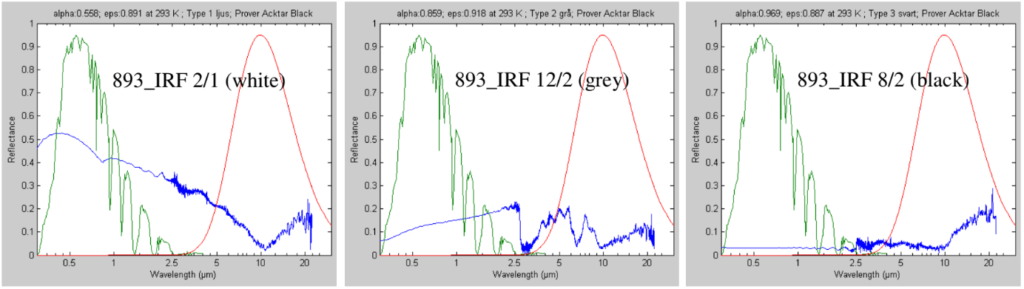
Figure 1: measured reflectance at 293°K of Acktar coatings.
The left-hand graph shows that Acktar White™ reflects in the solar spectrum and emits in the emittance spectrum, meaning that overall it has a cooling effect, a solar absorptance to emissivity ratio of 0.64.
In addition, in the charts below you can see α and ε for an Acktar White™ sample before and after a representative thermal testing program:
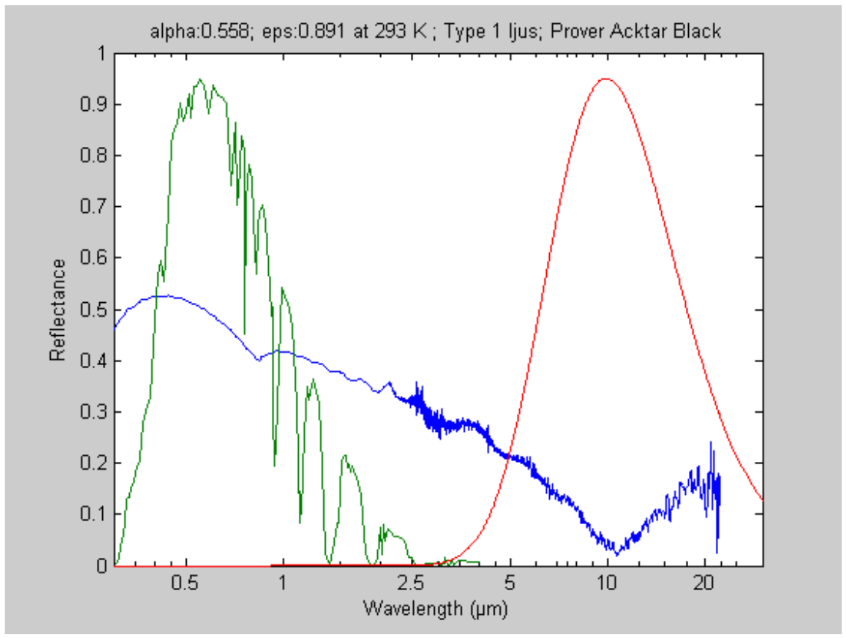
Figure 2: Acktar White before thermal tests.
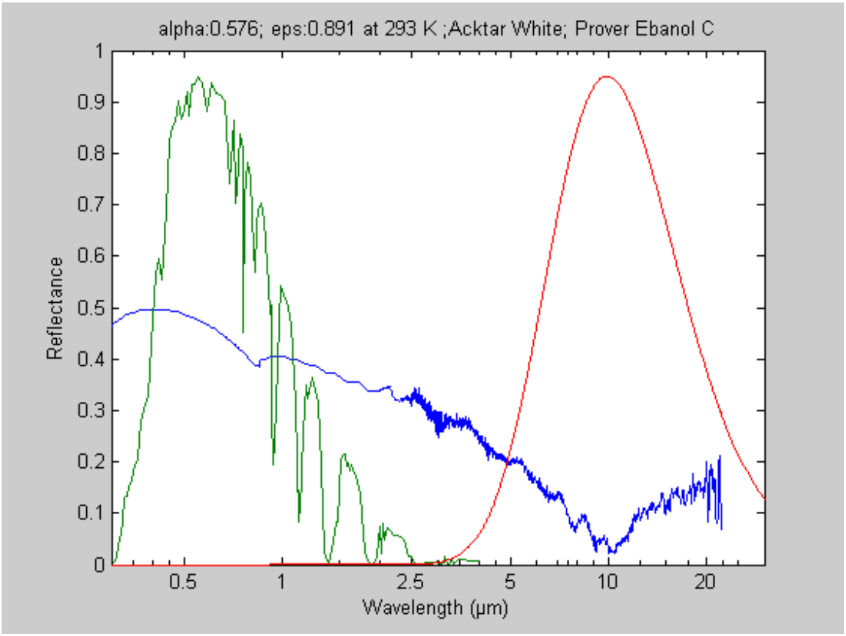
Figure 3: Acktar White after thermal tests.
The α and ε measurement results in Figure 2 and Figure 3 show that the α and ε properties of the Acktar test sample have not significantly changed during testing. The very small deviation can easily be the result of the two α and ε measurement setups.
These results demonstrate the suitability and effectiveness of Acktar’s thermal management coatings for a wide variety of space missions, such as BepiColombo, giving mission teams the best chance of success in trail-blazing projects.
Conclusion
As has been shown, thermal management is an important part of spacecraft design, and coatings can play a significant role in regulating extreme temperatures.
Acktar’s solutions offer novel thermal management solutions with high reflectance, regulated absorptance, and durability. They are critical for protecting spacecraft components, increasing operating efficiency, and contributing to mission success.
As space exploration progresses, the need for dependable thermal control coatings, such as those from Acktar, will only increase, opening the path for more ambitious and long-duration missions.
To find out more about Acktar, and learn how their advanced coatings and films can enhance your missions, take a look at the company’s satsearch supplier hub here.