Mass memory units for space applications are important spacecraft components, providing the necessary data storage and management capabilities required for mission success. Mass memory units (or MMUs) store critical mission data, including scientific measurements, telemetry, and command sequences.
The demanding environment of space requires MMUs to be highly reliable, resilient to radiation, and capable of operating in extreme temperatures and vacuum conditions.
In this article we share some basic advice on how to choose the most suitable mass memory unit for your needs along with information on systems from across the global market. If you’d like to skip straight to the list of MMUs on the market, please click here.
Uses and testing of MMUs in space missions
As space missions and services have grown in scale and complexity, there is a greater need to store, manage, and retrieve large volumes of data onboard satellites and spacecraft. Therefore, MMUs today are used in a number of applications in space missions.
Whether they are integrated into a larger computing system, or purchased independently, MMUs are used to store and manage a variety of mission data such as:
- Scientific data collected by instruments and sensors,
- Data for telecommunication satellites, including signal processing and transmission logs,
- Images and data captured by Earth Observation (EO) satellites,
- Command sequences and telemetry data to ensure efficient spacecraft operations, and
- Diagnostic data and system logs, enabling fault detection and recovery for troubleshooting and maintenance.
As you know, any memory devices are intrinsically highly susceptible to interference or damage from incident radiation.
Therefore, MMUs operating in space need to be thoroughly tested to ensure reliability in the high radiation environment, while also meeting the thermal and mechanical stresses of launch, deployment, and operation. MMUs will typically undergo the following types of analysis:
- Radiation testing – simulating the high radiation levels encountered in space to ensure MMUs can withstand these conditions.
- Thermal cycling – testing MMUs under extreme temperature fluctuations to ensure they maintain performance in varying thermal conditions.
- Vibration and shock testing – ensuring MMUs can survive the mechanical stresses of launch and operation in space.
To help you select a suitable MMU that can meet the requirements of the applications in this section, we’ve put together a few pointers on what to look out for.
Advice on selecting an MMU for a space mission
MMUs on the market are broadly similar in terms of their fundamental physical characteristics, as memory devices in general are commoditized across the world.
However, for use in space there are certain criteria that engineers should carefully consider in order to select the best option for their requirements.
The advice below should of course be considered alongside first-order engineering requirements, such as the SWAP-C (size, weight, power, and cost) budget.
Storage technology performance
MMUs may utilize advanced storage technologies to ensure data integrity and reliability in space, such as:
- Solid-State Drives (SSDs) – SSDs offer high-speed data access and reliability, making them ideal for space applications. They are resistant to shock and vibration, with no moving parts that could fail in the harsh conditions of space.
- Radiation-hardened (rad-hard) memory – to withstand the high radiation levels in space, MMUs use radiation-hardened memory components.
- Error Correction Codes (ECC) – ECC techniques are often implemented to detect and correct data corruption, ensuring data integrity over long-duration missions.
Data management capabilities and redundancy
Sophisticated data management systems and redundancy features are integral to MMUs, so ensure that you consider the following aspects of performance:
- Data compression – advanced algorithms compress data to maximize storage efficiency, allowing more data to be stored within the same physical space. This is an important consideration for high data volume applications.
- Data encryption – to protect sensitive mission data, MMUs employ encryption techniques that secure data from unauthorized access. This is a crucial factor for defense- or surveillance-related applications, but is increasingly important in all missions as the space cyber threat vector expands.
- Redundant storage – redundancy ensures that data is not lost in case of a memory failure. MMUs often incorporate multiple storage units that mirror data, providing backup in case of primary unit failure.
Customization options
MMUs are available in various standard and custom configurations to meet different mission requirements.
Standardized form factor systems are easy to integrate into existing spacecraft designs, while custom configurations can be tailored in terms of capacity, form factor, and interface to meet specific mission requirements.
Common customization options include:
- Storage capacity – customizing the storage capacity to match the data requirements of the mission.
- Interface type – selecting the appropriate interface (e.g., SATA, PCIe) for compatibility with spacecraft systems.
- Environmental specifications – tailoring the MMU to withstand specific environmental conditions, such as extreme temperatures and high radiation levels, for non-standard mission profiles.
In the next section you can see a variety of mass memory units for space missions available on the market.
Commercially-available mass memory units for space
This section includes a variety of MMUs available on the global market today. You can click on the links to open pages with more detail on each system.
From these pages you can submit requests for quotes, documents, or further information by the supplier, and we’ll handle the request for you (find out more about how this works here).
If you want to shortcut this process, or need some assistance refining either your specific MMU or more general on-board computing requirements, you can instead submit an open tender and our expert procurement team will get back to you ASAP.

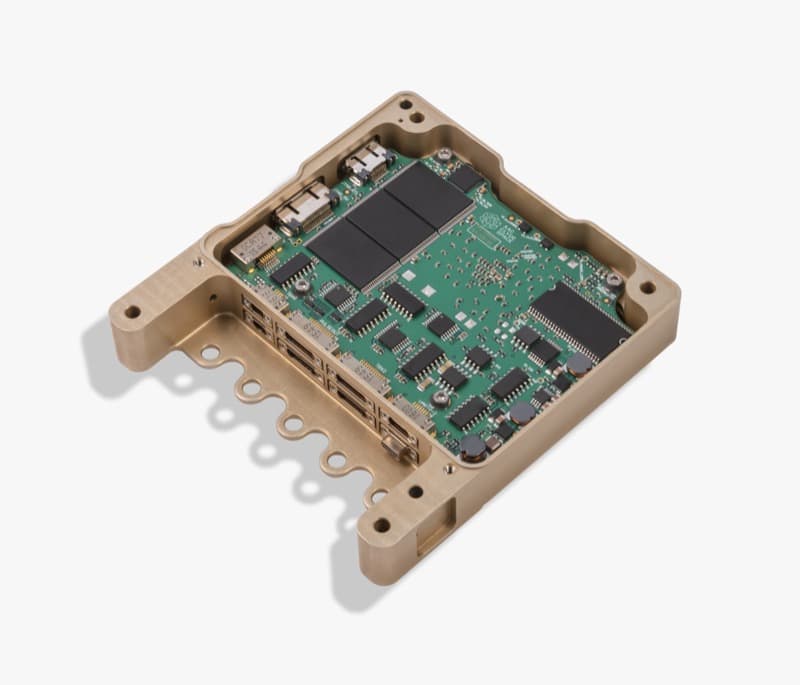
AAC Clyde Space specialises in small satellite technologies and services that enable businesses to access high-quality, timely data from space.
 Request quote
  request info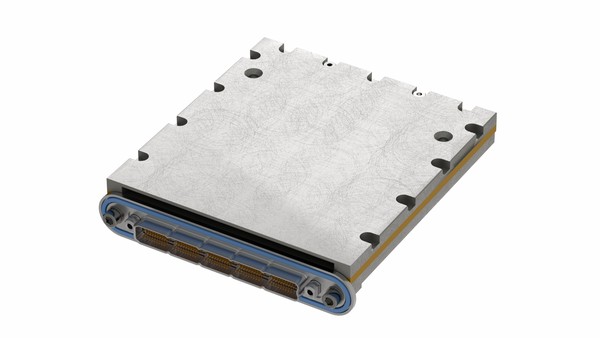

A LEON-3FT (Dual Core) processor with interfaces to connect the AOCS, payload sub-system, and power sub-system, including SpaceWire and CAN. Featuring FPGA capability for customization, along with full-redundant architecture with 2 CPU boards, 2 IO boards and 2 power boards in Europe-Card format.
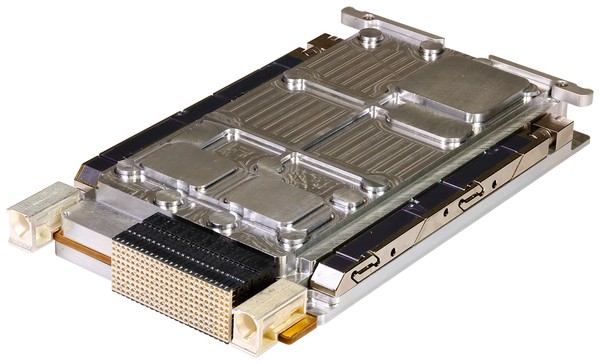
Mercury Systems is the leader in making trusted, secure mission-critical technologies profoundly more accessible to aerospace and defense.
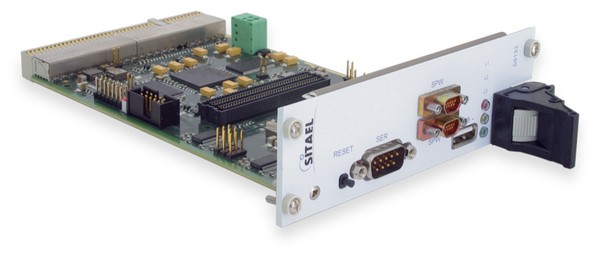
SITAEL covers the processes needed for the Design, Development and Production of Satellites, Advanced Propulsion Systems, Instruments and Avionics.
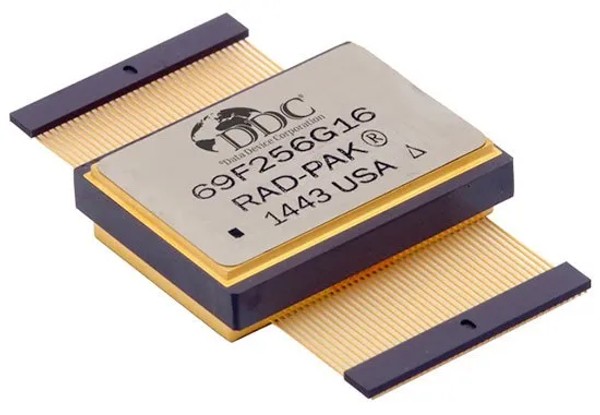
Spacechips develops bespoke space-electronics solutions for manufacturers of satellites and spacecraft.
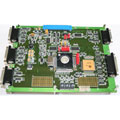
STEEL Electronique is recognised in development ,manufacturing and production of electronic equipment and systems for the space sector.
Need help finding the best solution?
Share your requirements with us now
Would you like to be featured on satsearch?
Click here to get started today