
This episode of the Space Industry podcast by satsearch is a conversation with Nikos Nikolopoulos of Alén Space on advanced communications applications in space, and how the company supports a variety of missions today.
Alén Space is a Spain-based manufacturer of hardware and software for satellites. In the podcast we discuss:
- Emerging trends in satellite communications
- How NewSpace suppliers are innovating to meet this demand
- The range of products and services that Alén Space develops for the industry
- What the next steps are for the company
Find the episode now on your favorite podcast player! And please give us an honest rating and review to help us spread the word about all the important work going on in the space industry today.
Related products
Products referenced in, or related to, the content in this podcast episode:

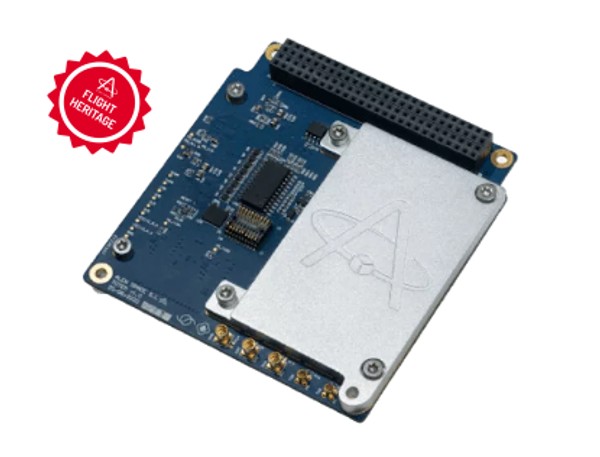
The Alén Space TOTEM Software Defined Radio (SDR) is a flight-proven software defined radio system suitable for communication nanosatellites. TOTEM operates in commonly-used nanosatellite frequency bands using Xilinx's Zynq-7020 SoC with embedded Linux and programmable logic. It also includes a wide frequency range transceiver and can be reconfigured in orbit.
 Request quote
  request info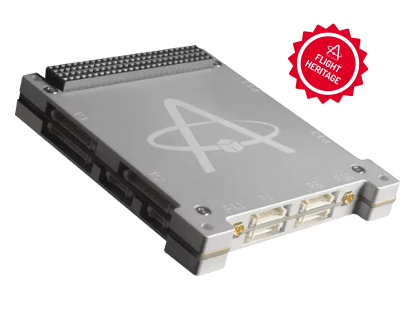
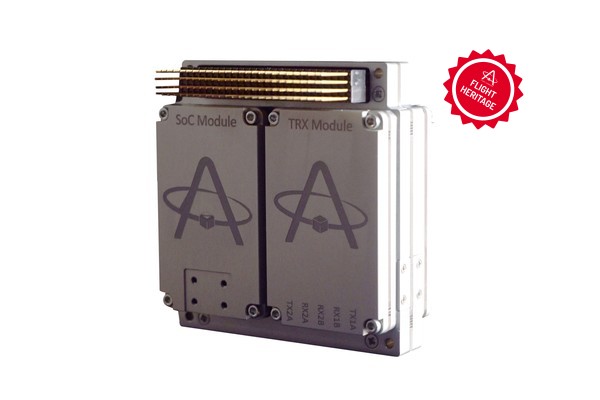
The Alén Space TREVO is a Software Defined Radio (SDR) platform designed for space applications. Its motherboard can handle different numbers of SoCs and transceivers, integrating into a single subsystem all the radio chain and processing units to support the most demanding NewSpace software applications.
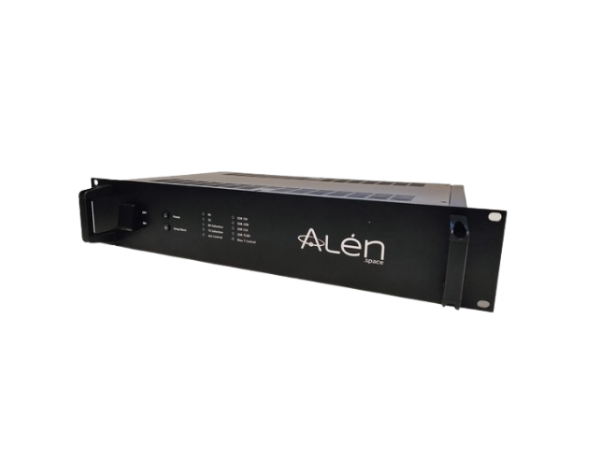
The Alen Space SDR Rack S-Band is a ground station transceiver for the S-Band band for space operation frequency bands. It integrates the SDR and the frontends necessary for communications with satellites in these frequency bands. The SDR Rack S-Band requires a computer or server in which the radio data is processed digitally. It SDR-Rack allows customers to select if the internal SDR transceiver is used, or, in other cases, customers can connect an external transceiver.
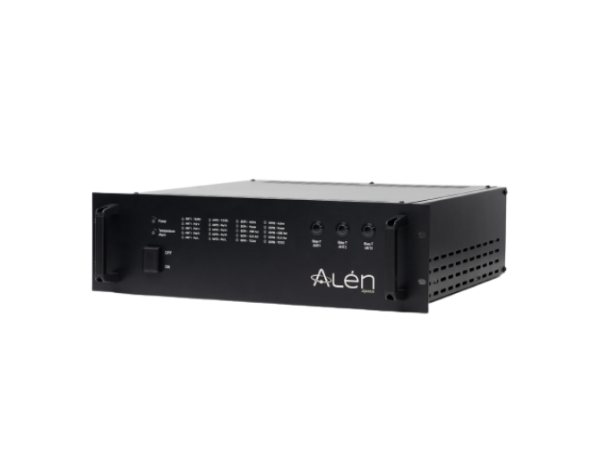
The Alen Space SDR-Rack - Ground Communications is designed for space applications. It is used as a ground station transceiver for the VHF and UHF bands, which integrates the SDR and the frontends necessary for communications with satellites in these bands. The SDR rack is composed of 2 independent SDRs, one for Antenna Port (ANT) 1 and ANT2 bidirectional ports, and the other for reception in ANT3 and transmission in the SDR2 RF output port.
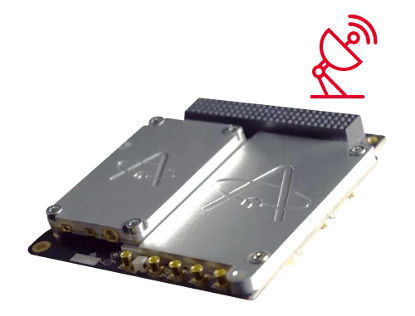
The Alén Space S-band Transmitter is a high data rate transmitter designed for CubeSats and nanosatellites. It is an SDR-based onboard processing (OBP) / programmable FPGA DVB-S2 transmitter. The product weighs approximately 130g and consists of PC/104 form factor. It also consists of different DVB-S2 modulation schemes like QPSK, 8PSK, 16APSK, and 32APSK.
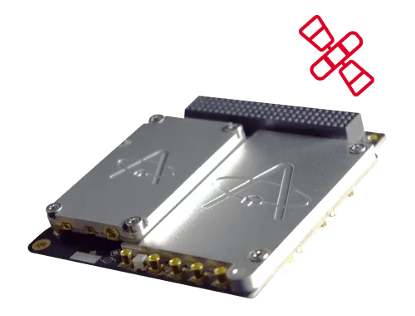
The Alén Space Multi-Application payload configuration can include several applications on a single SDR motherboard, with multiple piggyback frontends. It allows the simultaneous use of different applications. The Multi-app Bundle can include the ADS-B, AIS, DVB-S2, and custom applications in multiple bands.
Transcript
Please note that this transcript is auto-generated and may contain errors and inconsistencies with the podcast audio and therefore we can accept no responsibility or liability relating to the content and accuracy of the text on this web page. The transcript should only be used to accompany the audio, and it is the audio of the podcast which should be referred to in order to confirm any of the information provided in the podcast.
0:01: Hello, everybody.
0:02: I’m your host, Hal Curtis, And I’d like to welcome you to the space industry by sat Search where we share stories about the companies taking us into orbit.
0:10: In this podcast we delve into the opinions and expertise of the people behind the commercial space organisations of today who could become the household names of tomorrow before we get started with the episode.
0:21: Remember, you can find out more information about the suppliers, products and innovations that are mentioned in this discussion on the global marketplace for space at SAT search dot com.
0:31: Hello, everyone and welcome to today’s episode of the space industry Podcast by Sad Search.
0:36: I’m joined today by Nikos from Alan Space Now Alan Space is a space company based in Spain which specialises in small satellite technology in various areas.
0:46: They offer kind of everything from individual subsystems and and ground stations through platforms and even end to end mission support And a space is also a assessors trusted supplier.
0:58: Now, today we’re gonna be talking about advanced communications applications in the Space Industry Day.
1:04: Very important topic as we’re seeing that the nature of missions change companies scaling up certain areas and indeed demand growing in different geographies and different aspects of the global industries.
1:19: Terrestrial industries.
1:20: Yes.
1:20: It could be really interesting to get into this and get NCOs perspective and hear more about Alan Spaces work in this area.
1:26: Firstly, NCOs, welcome to the podcast.
1:29: Great to have you here with us today.
1:30: I wondered if you could set the scene a little bit for our listeners by giving us a quick overview of your background and explain what Alan Space is, , working on today beyond the very brief intro that I just gave.
1:43: Yes.
1:43: , hello, Howell.
1:44: Thank you for having me here.
1:46: I’m really glad to be in this podcast with you.
1:49: And thank you also for the introduction.
1:51: So my name is Nico Nikolopoulos, and I am a space sales engineer in Allen Space.
1:58: So basically, my background is in electrical and computer engineering with a master’s in space technologies, and I have been working with Allen for the past few months.
2:10: Now what L N is doing as you mentioned, we’re offering core technologies that revolve around space communication.
2:17: Talking about S D.
2:18: R s ground stations, O b CS and the like, then our solutions scale up to, , complete end to end, , 10 satellite missions and our company, , has more than 15 years of experience as our team of core founders, , has been, , collaborating since 2008, And, , we were officially established as a company in 2018.
2:45: , a major milestone.
2:46: Also in our history was our acquisition by G.
2:49: M.
2:49: V.
2:49: In 2023.
2:51: And so far, we are supporting 100% success in our project.
2:57: So this is, , something quick to set the scene about Alan Space and myself.
3:01: Fantastic.
3:02: Yeah.
3:02: That’s about as good a success rate as you could hope for.
3:05: Thank you very much for giving the listeners an introduction there to To Alan Space now as I mentioned briefly in the introduction, we’re seeing increasing interest in communications solutions that involve space systems.
3:19: And these are the space based systems, and these are being seen in different industries.
3:25: As I mentioned, different geographies.
3:26: But what do you think?
3:28: , could you go into more detail and explain?
3:30: What do you think is driving this?
3:32: Increased interest and appetite for communication systems with the space based element?
3:38: Yes.
3:38: , indeed, as you mentioned, , we’re seeing an increased demand, , for this type of applications, but to assess, , the reason for this demand, we need to take a step back and see how space is actually involved in our lives right now.
3:55: So, actually, space is becoming a key protagonist in modern society, and the reason is that it can provide solutions for demanding challenges.
4:04: For example, climate change, natural disasters, governmental civil applications.
4:10: , we you we can do, , research in space in many scientific fields, et cetera.
4:17: Now, on the other hand, we also have some significant geopolitical incidents that have been taking place as of recent.
4:24: Yep.
4:25: As we all know.
4:27: So there we have seen that space can provide solutions for such crisis as well.
4:33: Now, as you understand, all this leads nations and private companies to turn more and more to space solutions.
4:41: So as a result, the space sector is booming.
4:44: This is the overall scene, let’s say and yes, specifically for the communications applications.
4:52: It’s one of the main uses of space.
4:54: , we have, , for example, the need for connectivity with five G i o.
4:59: T.
4:59: So there are other applications as a spectrum monitoring vessel tracking a lot of applications related to communication.
5:07: And, of course, communications are at the heart of virtually any space mission because you need to transmit data to Earth and from Earth tied together.
5:19: This is the reason I think we’re seeing this increased demand for communications applications.
5:24: OK, brilliant.
5:24: Yeah, absolutely.
5:25: Makes sense when you consider the by far the primary mode of value exchange to and from space.
5:33: Yeah, is in terms of the data, which is all handled by the communication systems.
5:37: And then there.
5:38: As you mentioned, there’s all these different areas where the appetite for this data is is emerging, is growing and and in some cases has been there for a long time.
5:46: That’s great.
5:46: It makes sense that they we’re seeing this drive in the industry and specifically for the communication systems.
5:55: This is an area where we have seen new space solutions game attraction as opposed to those legacy old space.
6:01: Custom developed larger systems, all the kind of traditional, the split between the old space and new space.
6:08: New space coms Solutions can sometimes offer systems with shorter lead times and and lower prices, which has been the selling point for a lot of the companies that have cropped up in this area.
6:20: So what does Allen space specifically offer in terms of Yeah, communication systems in that could be said to be in a new space mode of delivery?
6:31: The new space companies actually offer short lead times with the commercial of the self components and as well, they offer small satellite platforms.
6:42: Both these aspects lead to a faster time from an inception of a space mission until its realisation and also lead to an increased return of investment.
6:53: This has been a game changer at the same time, I would like to mention specifically for small satellites that by, , employing them in a constellation, you can cover larger areas with slowly visit times.
7:07: As these two aspects have changed the way space missions materialise, we have new breakthrough applications.
7:13: And for example, if a nation wants to monitor its territory for marine traffic and do it frequently, they can employ a constellation with a I s payloads to do that.
7:24: Yeah, this is just something to set the scene about the new advancements in the new space sector, especially regarding the communications applications.
7:31: Now, I would like to mention the example of S.
7:34: D.
7:35: R s or software defined rats.
7:37: Now these S D.
7:38: R s.
7:39: They are platforms that integrate hardware and software that make them highly configurable and allow the development of applications by the end user.
7:49: And actually, they can implement a lot of communication standards, , and protocols, while at the same time, they can cover a wide range of frequencies here.
7:57: We’re talking about high versatility in these platforms.
8:01: So in this regard, they can host applications such as a DS B for air traffic monitoring A i S or V DS.
8:09: These are some examples at the same time, , these S D R s can be used for telemetry and telecom purposes or for payload data transmission to Earth.
8:19: With high data rate, they facilitate fast transfer of valuable information to Earth and from Earth.
8:26: Now, in regards of what A L space offers in this field, we offer two S D.
8:31: R.
8:32: Platforms totem and Treo actually integrates one system on chip and one transceiver, and Treo is highly modular and can integrate up to 20.
8:41: C and up to two transceivers.
8:43: So with these two S.
8:44: D.
8:44: R s, we can cover a wide range of potential mission objectives.
8:49: The choice between these two s.
8:51: D.
8:51: R.
8:51: S depends on the requirements that our customers have.
8:54: So depending on if they have, , requirements for higher processing power or simultaneous execution of applications, for example yes, this was a quick summary of the S D R platforms.
9:05: And what a l offers for this specific type of product.
9:09: OK, fantastic.
9:10: Yeah.
9:10: , the software defined category is is a very interesting one.
9:14: And I think as we’re seeing more demand for versatile missions and systems that can be have different mission profiles or changing mission profiles as well, I think this idea of a communication system reliant upon an S.
9:28: D r that has the ability to operate in these very different ways is yeah, very interesting.
9:34: Exactly.
9:35: And practically the end user can also, for example, develop their own application based on our S d R platform and then see these applications fly in space.
9:44: Yeah, fantastic.
9:45: Which is, , a capability that wasn’t possible 1015 years ago, potentially without great cost.
9:51: So that’s great.
9:52: What about the other subsystems that Alan Space manufactures?
9:55: Where do you see the market opportunities for these?
9:58: With the it’s such a clear niche or not niche opportunity for S t.
10:02: R s.
10:03: But yeah, where are the opportunities for the other systems?
10:06: Yes.
10:06: So, apart from the S d.
10:08: R platforms that I mentioned before, Tom and Trego, , for example, we offer three scale is the name of the product, which is an O BC and telemeter and telecom command module hosted in the same PC 104 format module.
10:24: So we’re talking about the two in 10 BC and TT C in a single module that, , actually saves space in the Nanos platforms that we very well know that they are volume constraint at the same time, I would like to mention and I’m really glad to mention that we’re soon launching, , a new O BC only subsystem.
10:44: So stay tuned for that.
10:45: Yeah.
10:46: So, apart from our O BC tri, , O BC N d t c three we offer ground stations that can facilitate communications with Leo satellites in the U H F V h f and S A.
10:59: Now our ground stations can be assembled by our customer, and they can implement multiple radio protocols so they can be used in various missions.
11:08: You have one ground station, and then you can develop different types of software modems and you can use the same ground station to talk to various satellites in different bands, of course.
11:19: And finally, I would also like to mention our mission control software.
11:23: It’s a solution that we have developed at a L E.
11:26: And it’s actually an important interface that we use as part of our mission implementation between ground and space.
11:34: It facilitates some interactions with the satellite in orbit in into it in an intuitive way.
11:40: And the M CS is actually the interface that allows us or our customer to operate satellites and payloads while, of course, receiving telemetry data and scientific measurements, we can see that there are a lot of opportunities in the market for these products because more and more customers be them governmental organisations, institutions or companies.
12:01: They’re all reaching for space.
12:03: And we see that the demand for small satellite missions is increasing, so our wide portfolio of products can cover the communications and data handling needs that arise in this aspect.
12:15: Excellent.
12:15: Thank you for that overview.
12:17: Yes, it certainly seems like, , I I may be wrong.
12:19: But a portfolio that has developed very logically based on the needs of the customers over the years and and incorporate what is possible on the engineering side at Alan Space and where innovation can be brought to market.
12:32: Very interesting.
12:32: Thank you.
12:33: Now you mentioned a little bit earlier the examples in the industry Well, on the demand side of kind of breakthrough applications such as maritime tracking for a whole territory.
12:43: It was one of the examples that you, you gave and how this is now more possible and and cost effective of using a space system or constellation now than it you know, has been in years past.
12:58: Because the launch costs are lower, the technologies are better, the processes and everything are proven and understood.
13:04: And I think this is a really key way in which the industry is maturing so important to recognise this, that these opportunities or these application areas, they begin with a need with a problem on Earth that a certain organisation has to solve.
13:21: And in these cases, the customers, the end users.
13:24: The customers can sometimes be more agnostic to the technology that is being used and the solutions that is being used than we see in space missions built from a technologist’s point of view, and to try and prove this out and prove that out.
13:38: Whereas the end users for treasure applications want results So I I think in this case we’re also seeing this trend towards customers looking for full mission design and particularly if they’re new to the space industry or the space application is complementary to what they do.
13:54: Terrestrially.
13:55: And as we mentioned start I know Alan Space has an offer here as well.
13:59: So I wonder if you could discuss this the end to end mission management aspect of what you offer and where you see the advantages of companies working with a partner like Alan Space lie and maybe touch on when teams should design their own missions actually themselves as well.
14:16: Yes, exactly.
14:17: A L Space can design a full space mission.
14:20: Can design, develop and materialise a full space mission, be it for communications or other types of applications.
14:27: Thus, we are providing an end to end solution based on our customised requirements.
14:31: This solution includes the satellite platform, the payload, the ground station, the operation management, a true end to end solution regarding the advantages of this approach.
14:41: Let’s say that a company or an institution has designed a payload, and, , the given company or institution does not have the capacity to design and materialise a full space mission so they can just provide us with their payload and let Alan take care of the rest as we can guarantee a safe execution for the mission objectives that our customer wants.
15:04: Of course, this also works.
15:05: If, the payload is designed and manufactured by us, then the customer only has to give us his requirements.
15:11: And we take care even, , the payload design and development.
15:16: Now, another advantage of this approach is that the customer does not have to worry about compatibility issues, which, to our experience, is a common occurance when complex systems such as the ones that are used in space applications interface with each other.
15:33: , and this occurrence actually something that is not, , thoroughly assessed by those that come up with a mission concept what we can guarantee with our end to end.
15:43: , space mission solution is uniform design and operation based on our in-house developed technologies, a true full term solution.
15:52: And yes, at the same time.
15:55: , another added benefit, , of our approach is that we can offer educational courses for our customers teams.
16:03: So these courses are carried out.
16:06: , during the mission development and execution, , by us, and they revolve around assembly integration and verification and operations.
16:15: For example, let’s say that the university wants us to develop a mission, then in the, , duration of the mission design, development and execution, we can have the student team here at our premises and train them so they can get some know how and real industry experience about the processes used so they can get their payload in orbit, , low risk, and at the same time gain some new knowledge about how space missions actually materialise.
16:45: That’s fantastic.
16:46: That’s a really great way to approach this kind of upskilling and building capacity in your customer base today and for the future and in the wider industry as well.
16:55: So that’s great.
16:56: Thank thanks for explaining how the mission management aspect of of things work, and I I guess, to bring this home a little bit more for the listeners out there.
17:04: Could you share some information on what Alan Space is is working on next and upcoming real missions and projects that you have in the pipeline?
17:13: Yes.
17:14: So, actually, right now, we’re expecting the launch of the satellite constellation five g i o T Constellation.
17:22: It is comprised of 46 years satellites.
17:25: It was designed and manufactured by a lens space, and it will be launched in July, hopefully as part of the transporter 11 writer mission with SpaceX.
17:36: And, , I would like to mention that we are really looking forward to that launch.
17:41: And also, we are now materialising the Satmar mission.
17:46: Actually, this mission involves the development of a six year satellite platform hosting an S D.
17:50: R.
17:50: Payload, designed and manufactured by us.
17:53: And this payload will test the feasibility of the V.
17:57: D.
17:57: E s standard, which is actually an evolution of the A a standard to maintain the connectivity and communication at great distances from the coast.
18:06: And finally, I would also like to mention that we have an active role in the E s, a project called Leo P N t.
18:14: , so lower.
18:15: So position, navigation and timing where we are designing a satellite platform.
18:21: So for all these updates regarding our missions, stay tuned in our social media and our website.
18:27: Oh, fantastic.
18:29: That’s great.
18:29: Thank you.
18:29: And best of luck with all those missions those emissions and launches.
18:33: Thank you.
18:33: Thank you.
18:34: Always nervous times.
18:35: But as the launch cadences and launch, reliability is increasing every year, maybe less and less nervous.
18:41: As with each situation so great, that’s everything I wanted to ask you about in terms of Alan Spaces work and on communication systems in space missions.
18:51: Finally, I just want perhaps on a more personal level if you could share with us.
18:55: I asked this question to a lot of our guests.
18:57: A variation of this.
18:58: I wonder if you could share with us what you are most excited about in the space industry.
19:02: In the next say 10 years, this is a a really exciting time.
19:06: Lots of things going on And, yeah, what’s what are you What’s really interested you?
19:10: Yes, , so personally.
19:12: And also, , all of us at a l, , we are looking forward to contribute, , to the autonomy of Spain in the space sector, , with the with the development of cutting edge technologies.
19:23: , that, of course, are beneficial for society.
19:26: And, , Spain is actually making a great effort to advance its space sector with the national Spanish Space Agency.
19:33: being operational since 2023.
19:36: Of course, by extension, this will contribute to the much needed autonomy of Europe in this field as well.
19:43: Also, personally, I’m really looking forward to the establishment of human presence on the moon.
19:50: I think it’s, , an event that cannot be overlooked.
19:54: And I also expect that the new space companies will be called to play a really important role.
20:00: , in this emerging, , lunar economy, Of course.
20:04: , this endeavour of establishing, , base and human presence on the moon, , will act as a stepping stone, , to reach Mars.
20:13: And this, , thought of expanding our presence in extraterrestrial bodies has been in the collective mind of humanity for many years now.
20:23: And it is amazing to see it materialise slowly but surely in our days, Fantastic.
20:30: Yeah, me too.
20:31: Thank you, Nicholas.
20:32: It is a great place to to wrap up.
20:33: I think it’s our audience will have learned a lot today from you about the different areas that Alan Space is working on.
20:41: The importance of these communication systems for space missions, bringing this added ability to cope with the demand that’s coming up and the versatility to adapt to different mission scenarios, et cetera.
20:53: And the role that s t.
20:54: R s have to play in that is is obviously clear.
20:57: So that’s fantastic.
20:58: Thank you.
20:58: And then explaining the other aspects of the products and services that you offer and where they fit in and and relate to that to actual real world missions, which is the most important thing, the actual, genuine results that we can get.
21:11: So thank you very much for sharing so much of this information with us and with all our listeners today.
21:15: Thank you very much.
21:16: I will.
21:17: And I’m really looking forward to talking to you again.
21:20: It was a pleasure.
21:21: Yeah, absolutely.
21:22: We’ll certainly do it against the time and to all e out there.
21:25: Thank you, too.
21:25: For spending time with us today on the space industry podcast by a search.
21:29: We will include links in the show notes to all of the different products and services that Nikos has mentioned.
21:36: That Alan, space office today.
21:38: And yeah, you’ll be able to find out a lot more information on those Really appreciate you giving us your attention if you like the show.
21:44: Please do give it a rating and review on your favourite podcast player.
21:48: It really helps us spread the word about the work that these companies across the global sector are doing to improve the supply chain, improve the value chain and take us all in some way or another into orbit.
22:01: So thank you.
22:01: And please stay tuned for the next episode of the space industry podcast when it’s life.
22:05: Thank you.
22:11: thank you for listening to this episode of the space industry by s Search.
22:15: I hope you enjoyed today’s story about one of the companies taking us into orbit.
22:18: We’ll be back soon with more in depth behind the scenes insights from private space businesses.
22:23: In the meantime, you can go to set search dot com for more information on the space industry today or find us on social media.
22:29: If you have any questions or comments, stay up to date.
22:31: Please subscribe to our weekly newsletter, and you can also get each podcast on demand on iTunes, Spotify, the Google play Store or whichever podcast service you typically use.