
This episode of the Space Industry podcast by satsearch is a conversation with Michael Seidl and Adrian Helwig of Texas Instruments on phased array antenna technologies and how they can enhance performance and versatility in space.
Show notes
Texas Instruments is a global semiconductor manufacturing company with expertise in analog and embedded processing chips. The company was founded in 1930 and is headquartered in Dallas, Texas. In the podcast we discuss:
- Why the RF spectrum is getting more congested
- How phased array antennas can provide a possible solution to alleviate this
- How this technology works
- The types of applications that could most benefit from phased array antenna use
- Advice on designing with and integrating such systems in a space communications setup
Find the episode now on your favorite podcast player! And please give us an honest rating and review to help us spread the word about all the important work going on in the space industry today.
Useful Texas Instruments resources
- Texas Instruments website
- Spacecraft Circuit Design Handbook
- Application Brief: Radiation-Tolerant, 30-krad, Voltage-Sensing ADC Circuits
- Application Brief: Space-Grade, 100-krad, 100-V, High-Side Current Sensing Circuit
- Precision Analog solutions for Satellite Subsystems webinar
- TI Space Products Guide
- View All Products
- Space Applications
Related products
Products referenced in, or related to, the content in this podcast episode:

The Texas Instruments ADC12DJ5200-SP device is an RF-sampling, giga-sample, analog-to-digital converter (ADC) that can directly sample input frequencies from DC to above 10 GHz. It can be configured as a dual-channel, 5.2 GSPS ADC, or single-channel, 10.4 GSPS ADC. The support of a useable input frequency range of up to 10 GHz enables direct RF sampling of L-band, S-band, C-band, and X-band for frequency agile systems.
 Request quote
  request info
The Texas Instruments AFE11612-SEP is an integrated analog monitor and control device designed for high-density, general-purpose monitor and control systems. It includes 12 12-bit digital-to-analog converters (DACs) and a 16-channel, 12-bit, analog-to-digital converter (ADC). The device also incorporates eight general-purpose inputs and outputs (GPIOs), two remote temperature sensor channels, and a local temperature sensor channel.

The Texas Instruments ADC128S102-SEP is a radiation-tolerant analog-to-digital converter (ADC) designed for space applications. It is a low-power, eight-channel, CMOS, 12-bit ADC specified for conversion throughput rates of 50 kSPS to 1 MSPS. The converter is based on a successive approximation register (SAR) architecture with an internal track-and-hold circuit. It can be configured to accept up to eight input signals at inputs IN0 through IN7.
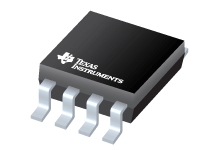
The Texas Instruments LMH5485-SEP is a radiation-tolerant, low-power, voltage-feedback, fully differential amplifier (FDA). The combination of power consumption, bandwidth, and noise allows the LMH5485-SEP to be well-suited for power-sensitive data acquisition systems with frequencies >10 MHz that require both the best signal-to-noise ratio (SNR) and spurious-free dynamic range (SFDR).

The Texas Instruments TPS7H5004-SP is a radiation-hardened PWM controller designed for space applications. It provides a number of features that are beneficial for the design of DC-DC converter topologies intended for space applications. The controller can be driven using an external clock through the SYNC pin or by using the internal oscillator at a frequency programmed by the user. It also has a 22-pin CFP package.
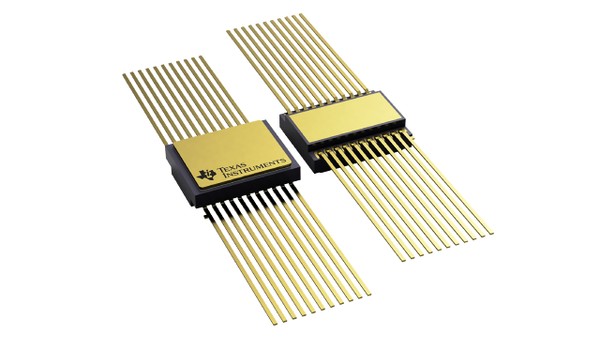
The Texas Instruments TPS7H5003-SP is a radiation-hardened PWM controller designed for space applications. It provides a number of features that are beneficial for the design of DC-DC converter topologies intended for space applications. The controller can be driven using an external clock through the SYNC pin or by using the internal oscillator at a frequency programmed by the user. It also has a 22-pin CFP package.

The Texas Instruments TRF0206-SP is a radiation hardened Radio Frequency (RF) amplifier optimized for RF applications. It is mainly suitable for ac-coupled applications that require a single-ended to differential conversion when driving an analog-to-digital converter (ADC). The device is fabricated in Texas Instruments’ advanced complementary BiCMOS process and is available in a space-qualified, LCCC package. A power-down feature is also available for power savings.
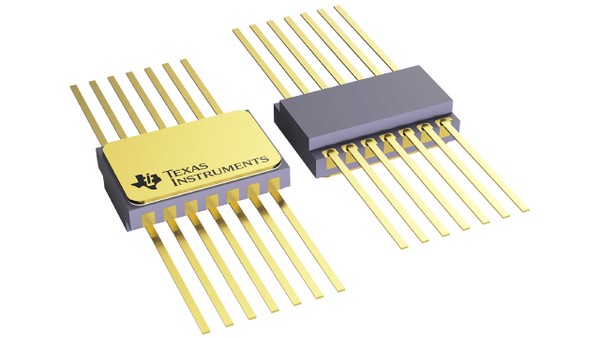
The Texas Instruments LMP7704-SP is a precision amplifier with low input bias and low offset voltage. It is a radiation-hardened device and operates in the military temperature range of −55°C to +125°C. It can be configured for transducer, bridge, strain gauge, and transimpedance amplification.
Transcript
Please note that this transcript is auto-generated and may contain errors and inconsistencies with the podcast audio and therefore we can accept no responsibility or liability relating to the content and accuracy of the text on this web page. The transcript should only be used to accompany the audio, and it is the audio of the podcast which should be referred to in order to confirm any of the information provided in the podcast.
0:00: Hello, everybody.
0:01: I’m your host, Hywel Curtis, And I’d like to welcome you to the space industry by sat Search where we share stories about the companies taking us into orbit.
0:09: In this podcast we delve into the opinions and expertise of the people behind the commercial space organisations of today who could become the household names of tomorrow before we get started with the episode.
0:20: Remember, you can find out more information about the suppliers, products and innovations that are mentioned in this discussion on the global marketplace for space at SAT search dot com.
0:31: Hello there.
0:31: And welcome to today’s episode of the space industry podcast by Satur I’m joined today by some returning guests on the podcast.
0:38: Michael Seidel and Adrian Helvig from Global Electronics Manufacturer and the Satur trusted supplier, Texas Instruments.
0:45: A name you’re you you must be familiar with if you’ve listened to this podcast.
0:50: But also, if you’re anything to do with the space industry or a wide range of other industries where Texas Instruments or T I, as it’s commonly known, operates.
0:58: It’s great to have you both back on the show really, really interested to hear more about the work that tech that t.
1:04: I is doing in space.
1:06: There’s always a lot of information presented by the company about the different applications and and components and and how they can be used to improve missions that t I shares.
1:17: So it is great.
1:18: Now, today we’re going to be talking about phased array antennas and how they can improve both performance and flexibility, which is, or versatility, which is increasingly important in modern space missions as we’re seeing teams, professionalising and services, trying to trying to get more value and do more with the equipment and the resources and the people that they have.
1:41: Yeah, really excited to get into this topic today now.
1:45: we’ll start by setting the scene a little bit.
1:47: Many people in the space industry are increasingly aware of how congested the R F spectrum has become and is becoming.
1:55: And there’s a few different reasons for this.
1:58: I wondered if Adrian potentially could explain why this problem has come about and what R F engineers are doing or can do to mitigate it.
2:07: Yes, sure, Welcome everybody.
2:09: Yes, so I will be happy to answer that one.
2:12: So the R F spectrum has become very crowded for several reasons, really.
2:17: And the fact is, we need more data and faster speeds, right?
2:23: So the demand for available spectrum simply has increased.
2:27: In addition to that, , there are also many new application in services like, for example, phone services, Internet services or Earth observation satellites like weather satellites, for example, defence communication And those applications are using up more of the spectrum.
2:48: And let me also add one additional point here about the low earth orbit satellites.
2:55: , because on the one hand, you can think those are offering more data transmission opportunities for your system.
3:03: But at the same time, they are also creating another problem right because those satellites are moving very quickly relative to ground.
3:13: And this makes it really hard to maintain the stable communication link.
3:18: Yeah, And now, to deal with all those issues engineers, developers, they are developing a new solutions.
3:26: And to be very honest with you, the one of most promising is the use of phased array antenna.
3:32: So actually, our topic today.
3:35: and these antennas can direct the communication beam electronically without needing mechanical parts to move.
3:44: And this allows really for better use of available spectrum by sending multiple signals at different angles and frequencies.
3:54: And at the same time, this technology helps also to reduce the interference and improves overall system efficiency.
4:04: And in using the R F spectrum so in summary, by using the phased array antennas, the space industry can really benefit and handle the anyway very crowded arf spectrum much better.
4:21: OK, fantastic.
4:22: Yeah, it makes sense as we’ve seen the industry scaling that these this very valuable areas of the spectrum are under increasing demand.
4:30: But yeah, can you explain issues like the Leo satellites, the the the how hard it is to maintain those stable communication links?
4:38: I think that really puts this issue into perspective.
4:41: And, as you say, the phase array antenna technology is seen as a really promising solution for this.
4:46: As I mentioned in the intro to the show, let’s get into more detail on this technology now.
4:51: As far as I understand phaser a antennas bring two big benefits.
4:57: The increased versatility because of as you mentioned, the digital beam forming or the electronic steering, and that I believe they can enable greater bandwidth because they can operate with narrower beams.
5:10: So I wonder if we could discuss this first point and please correct my inaccuracies if they are there.
5:15: But yeah, I wondered if Michael, if you could explain what digital beam forming is and what benefits it can bring to space applications.
5:24: Yes, I’m very happy to attempt.
5:27: This is definitely not trivial to understand.
5:30: But let me give it a try.
5:32: Imagine you have, , several antennas.
5:35: Not only one antenna, but you have several antennas next to each other.
5:38: And you you really put them equally spaced one next to the other, right.
5:44: And they form an array of antenna.
5:46: That’s either a linear array in only one dimension that they are next to each other, or you put them in a rectangular format and have them in two dimensions space next to each other.
5:57: But you have multiple antennas and all these antennas They send the very same signal, right?
6:03: They just add up.
6:04: They accumulate and form altogether a now a, , a radiation characteristic with a single beam.
6:12: But a more focused beam than if you have only a single element.
6:16: So that’s the first thing we have to put there to get a more narrow, more focused beam because you’re accumulating the characteristics of multiple antennas together and the second one.
6:29: And that’s actually a pretty interesting, even fascinating fact happening there.
6:34: What people do now is they put a delay where you’re saying all antenna elements send the same signal.
6:41: They do send the same signal, but each one a little bit later than the other one.
6:45: So you put this constant delay on each one of those next to each other.
6:50: And then the interesting thing, What happens then is that the angle of radiation change changes its direction.
6:58: Like the wavefront is moving in a different direction then and really controllable by the delay.
7:06: You apply to each of these elements, and that makes now this antenna steered purely based on electronics.
7:13: So no mechanics involved.
7:16: And that is, of course, a big benefit that if you don’t have to send many mechanics to space, that is, of course, a major advantage and now the the next level of, , interest is like you have you can have this steering of the beam you’re radiating.
7:38: You can differentiate between frequencies, so you have one carrier frequency getting one set of delays and the other carrier frequency getting a a different set of delays.
7:51: And with that, you have now two beams of different frequency pointing at different locations.
7:58: And this is where you can now put groups on ground user groups on ground together and give this one group one carrier frequency in one direction and the other group another care if you can see this is how you divide up the spectrum very effectively and with a very focused theme where you accomplished and the best signal to noise ratio on these user groups.
8:20: Really interesting.
8:21: So it’s almost as if you’re operating with two different antennas physically pointing in two different directions.
8:28: But you aren’t.
8:28: You’re using the same one.
8:30: It’s electronically pointing the beam in different directions.
8:33: Interesting.
8:34: And then, , what about the achieving the increased data rate by operating with narrow beams?
8:41: So how does this aspect of things work?
8:43: Hm?
8:44: Yeah, So that that that’s really another aspect of using those phased array antennas.
8:50: Let me try to explain that achieving those increased data rates by operating with narrow beams works because these better focused antenna beams ensure that the transmitted signal arrives at the receiver with greater strength.
9:07: And when the signal is stronger, it improves so called signal to noise ratio.
9:12: Right.
9:12: And this means, , there is less interference and the received signal is clearer.
9:19: And this clearer signal allows simply for higher data throughput as more information can be transmitted accurately and efficiently.
9:29: So thinking about this those narrow beams are really essential in in boosting data rates and and making the communication in more reliable and robust.
9:40: I I see that makes sense.
9:43: Christopher.
9:44: Ok, OK, yeah, I got it.
9:45: So we have these.
9:48: We have this technology, the phase array, an TELEOLOGY.
9:51: It provides these certain benefits around increasing data rate and, and so on.
9:57: Now we mentioned that the R F spectrum is very particularly crowded.
10:03: Therefore, this kind of technology is needed, but to bring it to the home to the so that space engineers and mission designers really understand what value this technology brings, I wondered if you could give some examples of different space applications and services that would benefit the most from using phase a antenna technology and and why that would be the case.
10:24: Yeah, yeah, So there are really many and I can try to list some of them.
10:29: In general.
10:29: Phased array antennas would really greatly benefit in and would greatly benefit any space application that relies on high data.
10:39: , transmission.
10:40: Right.
10:40: So the best example here is telecommunication services.
10:45: Why, yeah, because they need a high data rates.
10:49: Another example could be rather imaging applications.
10:53: Those applications would also benefit from this because they need very strong, focused beams for accurate imaging and there is also another aspect I wanted to talk here.
11:05: Those more focused beams helps also to reduce the transmit power right, and this makes the whole system much more efficient.
11:16: and now, in the beginning, we were talking about the challenges of low Earth orbit satellites and the rapid movement relative to ground.
11:25: So now, with the phased array antennas, they can quickly adjust to compensate for those rapid movements and this ensure again the reliable communication link, right?
11:38: So overall, those phased array antennas improve your performance, your efficiency and reliability across really a wide range of space applications and services.
11:49: OK, makes sense.
11:52: But of course, we always try and address this when we talk about space.
11:57: Engineering missions in space are all about compromise.
12:00: You mentioned as you mentioned earlier, that we can’t send mechanics into space to fix things.
12:05: There are unique limitations placed upon any technology because of the extremes of the operating environment.
12:13: So my next question is, how is the swap sea budget of a mission affected by using phaser A antennas and and what can engineers do to deal with the I would guess inevitable tradeoffs that would occur by using these technologies Yeah, yeah, I think First off, I think you suspected already.
12:32: Looking at the number of elements the amount of electronics and the cost and the the power budget and the size and the weight all goes up.
12:40: So your swap, or the size, weight and power and cost budget is that the first plan compromised.
12:48: But what you get in return is, of course, the amount of data rate and the amount of data rate per user you accomplish with it.
12:56: And that really matters, right?
12:57: And this is where the ratio improves a lot, right?
13:00: So it’s absolutely worthwhile going there in this direction by increasing the data rate.
13:07: And we said it before, right?
13:08: No need for mechanical steering is, of course, also very good.
13:12: Benefit, important benefit.
13:14: And it’s super fast, right?
13:15: As we move over ground very fast.
13:18: That is where these electronically steered antennas help us very much with the big challenge that is probably will always be around with us.
13:25: We put a lot of electronics in a very dense area, and that is where the challenge is.
13:33: And of course, the amount of electronics and the complexity increases the cost.
13:37: But This is where the good news is that meanwhile, the electronics industry and semiconductor industry has come up with solutions that really, , make it now possible to come, , at reasonable heat development and reasonable cost.
13:53: So we can really enable these phased antennas now, also for satellite missions.
13:57: Fantastic.
13:58: Yeah.
13:58: Thanks for addressing those.
13:59: The balance that needs to be struck, the heat generation is one thing.
14:03: But as we’re seeing something of a trend towards larger form factor systems in the industry, this is partially mitigated because obviously, larger systems are able to deal with heat generation waste heat in different ways and also that you can cope with more complex engineering, sometimes more easily in a larger system.
14:23: Excuse me, but yeah, the balance that needs to be struck in terms of increasing the swap budget is key.
14:28: And I, as you highlighted Michael, the the aim is to get a great balance of cost for performance, not absolute cost.
14:36: So, yeah, if you’re if the cost which you’re developing data creating generating data sorry is lower and the data quality is higher based on the same unit, then you’re in a good position.
14:48: But you also highlighted the complexity involved in the engineering here as a provider of these sort of systems, how does Texas instruments help engineers or do How can you help engineers to deal with this complexity and incorporate phaser A antennas into designs and development of space missions?
15:06: Yeah, So we are really offering a wide range of solutions here to help engineers to to use this technology in their designs.
15:16: Let me talk about so some of them, obviously we need to start with high speed AD CS, , docks and analogue front ends, right?
15:25: And t I is offering really advanced AD CS and docks with high data rates and wide bandwidth at the same time, with lower power consumption and lower noise you need those data converters for capturing and transmitting.
15:42: And to be honest, sometimes even for processing the high frequency signals accurately.
15:47: And I’m thinking here about devices like the ADC 12 DJ 5200 p for receiving a part, but also on the transmit part.
15:57: For example, the D 39 R F 10 Dash P can be used now.
16:03: If the customers prefer more integrated solution, we can also offer so called analogue fronts.
16:10: Those products simply integrate several of those ads and ducks into one device, and I’m thinking here, especially about the recently released A f E 7950 Dash S P, which is our direct sampling analogue front and which supports frequencies up to expend.
16:30: Now, if you talk about a CS and DS, obviously you also need to consider clocking, which is also essential for those kind of applications because you need extremely low face noise and jitter, , sometimes even to fanto seconds level right.
16:46: And another important topic when we talking about clocking is the synchronisation feature with very high accuracy, sometimes down to one pics.
16:57: And this is really essential for maintaining this precise timing between phased array systems and elements.
17:06: And now, if the customers need jitter cleaning and distribution capabilities for clocking signals, they can use our L.
17:13: M K 4832 p or if they, for example, need to generate a signal and need a synthesiser, they can use LX 2600 and 15 p or the LM 20,694 dash P.
17:30: In addition to that, I also wanted to mention a pretty new trend.
17:36: Also in space application.
17:37: A lot of customers already trying to replace their bulky, discrete balloons with fully differential amplifiers.
17:47: And exactly for that reason, we are offering products with high linearity across a wide bandwidth up to 12 gigahertz.
17:56: At the moment, , and the current portfolio supports one DB gain flatness up to around eight gigahertz.
18:04: At the moment, , the product is called T R F 0206 s p, which is exactly four differential amplifiers for this kind of, , application.
18:15: and now the big advantage.
18:16: This fully differential amplifier compared to the balloon is much smaller and much lighter, so that’s a really perfect fit for those space constraints applications like communication equipment, for example.
18:32: OK, Ok, yeah.
18:33: Yeah.
18:33: I see you guys are clearly thinking about everything required to really incorporate the phaser a antenna technology into space mission designs and deal with the the interfaces and the data rates and managing the data rates and getting the best out of those systems and your communication system as a whole.
18:54: What about the power of management?
18:55: However, how is this dealt with?
18:57: Yeah, this is, of course, also a super important topic, especially on Facebook a antennas.
19:03: And the one thing is, you need to have these power or distribution of power generation devices a very highly efficient in a small form factor.
19:15: So we talk about, , power density very high, and we’re talking R f signal R F solutions.
19:22: So we need to also have very low noise, right.
19:25: We we are highly interested in the signal performance cannot use any noise there.
19:31: And so there is a quite a lot of solutions we can offer here to really provide you a very accurate and stable power supply.
19:38: So here’s the so-called point of loads.
19:41: The p o.
19:41: L s like the T.
19:43: P s seven h 4011 Dash s p that allows you even up to a 12 volt input to generate the low voltages.
19:51: Or you have, another good example is an L D o.
19:54: A very low noise.
19:55: L d o.
19:56: It’s called the T P.
19:57: S seven h 1 1 1 1 dash S p very easy to remember.
20:02: , that has such low noise or high p s r r The power supply rejection ratio is so extremely good on that one that customers call it.
20:11: Really, It’s like this is an ideal power supply for us.
20:15: And that is of course, extremely helpful for the end product, of course, but also during development.
20:20: As you optimise the system, you just know there’s one thing less to worry about.
20:25: If you have a perfect rail, whatever causes your signal to degrade.
20:29: It’s not that power rail that makes things a lot easier for you, of course.
20:33: So that’s the overall power tree for supplying the the data converters and maybe the F PGA and processing capabilities.
20:41: Another key element in the power budget is, of course, power amplifier.
20:47: The power you transmit has to be all generated by this power amplifier, and these solid-state power amplifiers, Modern devices.
20:56: They need a very are complex bias in control systems.
21:01: So they need a certain voltage level that needs to be supplied.
21:05: And according to the temperature and the the, , the current running through the power amplifier, you need to adjust the spicing voltage.
21:14: And here comes a device from T I.
21:18: That can is really helpful here.
21:20: It’s called an A F e 11612 minus SEPA highly integrated analogue front, and that has 12 decks and 16 AD CS plus temperature sensors and a couple of GP I OS integrated.
21:35: And that really helps to get you the P A.
21:37: Biassing and control Integra, , implemented in a very effective way.
21:44: that’s the aspect of the pottery itself.
21:46: But, , in space, we have also the topic.
21:49: And that was many times, not really immediately thought about is the fault detection, isolation and recovery.
21:55: So whatever we do in space, we need to make sure if something goes wrong, the electronics quickly identify the problem, but not only identify, but they need to isolate the the problem from the rest of the system and need to see how to recover from that and get the system back up working.
22:13: So this fault detection, isolation and recovery is a play of where you need to, of course, set need sensors and detect the problem.
22:22: So we have this in our power devices, oftentimes integrated with the over current protection over voltage protection and detection over temperature detection and corresponding fault output pin.
22:35: So the system can be informed that something went wrong.
22:39: , as we talk about isolation, we have load switches with even with, , precision current sensing implemented me, , meanwhile, like, here’s a device like the T.
22:50: P.
22:50: S seven h 2140 dash s p.
22:53: So this is the 32 volt quad channel.
22:56: If you and these load switches can then either automatically detect that something is wrong and switch off and isolate the problematic system from the rest of the bus, or can be actually be controlled by another sy, , system manager to dis disconnect things and this control and management or orchestrating this whole fault detection, isolation and recovery.
23:22: There comes a device handy.
23:25: It’s called the T MS.
23:26: 570 L C 4 3 5 7 Dash S e p.
23:30: It’s an MC u we just released for space grade.
23:33: It’s a device integrating our cortex, R five floating point cores, and actually two of them are operating in lockstep.
23:43: And this overall design here being especially developed for high reliability applications that offers really a very high diagnostic coverage, but also a very near instant fault detection, as we call it.
23:58: And it’s very helpful in orchestrate the f.
24:01: D.
24:01: I R and Michael.
24:05: Let me, , add maybe additional point also on the multi commission support, right?
24:10: Because it’s also a very important point, and and and and T supports simply different mission requirements Also.
24:17: So, depending on the orbit customer is operating, , the application so low Earth orbit or gas stationary orbit, the customers can choose between a plastic package with higher radiation performance so called Q M l Class P, or plastic space enhanced product so called S E.
24:40: And now the most important advantage.
24:42: Those products are, in most cases pin to pin compatible, which offers a huge flexibility for customers in their designs.
24:52: And at the same time, it makes sure customers are using dedicated product for their space environment.
25:01: OK, yeah, this is a very important aspect as well as we’re seeing as we discussed more versatile missions, longer missions or missions with multiple goals that may be in different orbits potentially, or a customer who’s creating technology for different different satellites or different vehicles, whatever it is.
25:20: Four different orbits that.
25:22: But they want to limit non recurring energy by non recurring engineering apologies with a consistent aspect of the technology.
25:30: So yeah, This is great.
25:31: Thank you.
25:32: So I can see how much that T I is doing in this area and mentioning fault detection and understand the power management separately from the data, the data rates and the data chain compatibility has been really useful.
25:46: Thank you.
25:47: Thank you for going into detail on this and to the listeners We’ll obviously share more information about the different, , products and and T I resources that have been mentioned in the show notes.
25:56: You can read more into how these sorts of technologies and the designs of the application notes and the thinking behind them can be readily incorporated into your designs, your plans if this is of interest to you.
26:09: So thank you guys for that.
26:11: I just wanted to wrap up by yeah, coming back to the topic that we started with and discuss how, in a wider sense, you see this aspect of the space industry evolving.
26:24: It would seem like the R F spectrum is only going to become more crowded in the short term, and we might then run into issues with an increased regulatory burden with the bodies in charge of portioning and controlling the spectrum are requiring a greater mean overhead of space missions and companies, and might even make it difficult for some companies, especially those smaller, newer teams, to get satellites into orbit on the time scales and budgets that that makes sense to them.
26:53: Yeah, I wondered what your thoughts were on how you see this area changing and progressing.
26:59: Moving forward.
27:00: Yeah, I I think it’s definitely on the move, and I think we have reached critical mass.
27:05: So that’s the trend to face on.
27:07: Tennis is probably very hard to reverse anymore, but what we will definitely see moving forward is that we will see an increase of number of elements because that gives you always, as we talked about before, a more focused beam that you want and because you also have even more beams per antenna, and that all translates them into those benefits of you have maybe more users and higher data rates per user per beam.
27:34: More users overall, so just a bigger business after all the other trends.
27:40: As you say, the spectrum is getting crowded so people try to go even higher frequency bands and as technology proceeds where this is entirely possible and here comes for change.
27:51: Something good.
27:52: The higher you go in frequency, you’re shrinking the space needed between the antenna elements.
27:58: So that is how you put them together.
28:01: Then if these spaces go even smaller, you can have put more elements per antenna per square metre or per area if you want.
28:11: Right, So that’s actually going really the right direction.
28:14: But what’s not helping you is that your heat problem increases the moment, right.
28:19: You put even more electronics on an even denser space.
28:22: But that is where yeah, , companies like us will keep working here to help on that area.
28:30: Another positive trend in the satellite technology is that the cost, , of launch per the kilogramme per weight that keeps this decreasing.
28:39: So that’s where we have multiple new players now that help bring down the cost in this newer rockets and launches, and that enables them even more satellite players, more applications, services business models there and maybe look at an example like cell phones.
28:56: Of course, they are directly connected to satellites.
28:59: Already today we can do voice, we can do text, but moving forward, we will have two broadband our Internet access over satellites from our cell phones.
29:11: So in every area of the on earth, you can really reach your broadband connectivity.
29:17: And so we see there is a continuous growth and development in this market ahead of us.
29:25: That means that our customers need to redevelop.
29:29: But they also want to reuse things.
29:32: They wanna standardised components so they don’t always have to start from scratch.
29:36: They can really, , have an evolution in the product development.
29:41: And there’s also the need for one development and support multiple mission profiles.
29:46: As Adrian had pointed out, we have the S e p , for the Leo missions, the Q m LP for the GE O missions.
29:54: Moving forward.
29:55: You have the pin compatibility and all that in mind.
29:58: This is where t.
29:59: I is so convinced what’s needed here is really space.
30:03: Great catalogue products.
30:04: In a way, you know what they are.
30:06: You can reorder when you want them.
30:09: You can reorder as many as you want and you can do this also in 10 or or 15 years from now.
30:15: Fantastic.
30:16: That makes sense.
30:17: As as an approach to the industry.
30:20: I think we’ve seen how this these kind of approaches obviously work in other industry sectors, and I think, yeah, T I is really doing a great job of operating in this manner.
30:30: And, yeah, it was great to to understand your thinking behind how this area is moving forward.
30:36: So I think this is a great place to wrap up today’s conversation.
30:40: Thank you both for sharing.
30:41: Thank you, Adrian and Michael, for sharing so many of your insights today on how phase to a antennas work, what they use for the advantages that they bring.
30:50: How to cope with the tradeoffs in terms of the power and the heat and the engineering complexity and what can be done to ease that integration and of the of such technologies into existing designs and space missions and plans for the future.
31:06: So thank you both very much.
31:08: We’ll share and to the listeners, we’ll share more information on the products and resources mentioned by the guests today in the show notes, and you can find out more about T.
31:17: I on their website and on this search portfolio, which is a very extensive and has a lot of information on the products that we’ve discussed today.
31:24: So thank you to everybody out there for spending time with us today on the space industry podcast.
31:29: We really appreciate your attention, if you like the show.
31:32: , Please give us an honest rating review on your favourite podcast player and stay tuned for the next episode of the show when we will be speaking to more of the companies taking us all into orbit.
31:45: Thank you very much.
31:48: thank you for listening to this episode of the space industry by s Search.
31:52: I hope you enjoyed today’s story about one of the companies taking us into orbit.
31:56: We’ll be back soon with more in depth behind the scenes insights from private space businesses.
32:00: In the meantime, you can go to set search dot com for more information on the space industry today or find us on social media.
32:06: If you have any questions or comments, stay up to date.
32:09: Please subscribe to our weekly newsletter, and you can also get each podcast on demand on iTunes, Spotify, the Google play Store or whichever podcast service you typically use.