
This article is an overview of software solutions offered by Bright Ascension, a paying participant in the satsearch Trusted Supplier program.
Further, the article also provides a brief outlook on the challenges in the software segment of the space industry as well as providing a detailed overview of the company’s HELIX software suite.
The piece was developed in collaboration with Bright Ascension.
Introduction
The space industry relies largely on cutting-edge technology to push the frontiers of exploration and discovery. Amidst the development of the NewSpace sector, Bright Ascension has emerged as a pathfinder, providing end-to-end software solutions that address the space sector’s varied demands.
This article digs into the critical role of Bright Ascension’s complete software solutions in furthering space exploration, satellite operations, and spacecraft development.
Challenges and opportunities
The space sector has many challenges, such as severe operating environments, the pressure of competition, cost controls, demanding mission criteria, and huge safety and commercial risks. As a result, designing software solutions for space missions has many distinct problems, including:
Reliability: spacecraft and satellites operate in severe settings where system failures can be disastrous. To resist the rigors of space, software systems must prioritize dependability and fault tolerance.
Scalability: with the development of satellite constellations and ambitious exploration missions, scalability is critical and determines the success of the mission. Software must be scalable to accommodate an increasing number of assets, including new hardware subsystems, emerging technologies, multi-vendor/multi-platform environments, multiple ground station network, etc.
The key to successful operations lies in seamless integration mechanisms and efficient management of available assets and resources, which currently remains an unsolved problem.
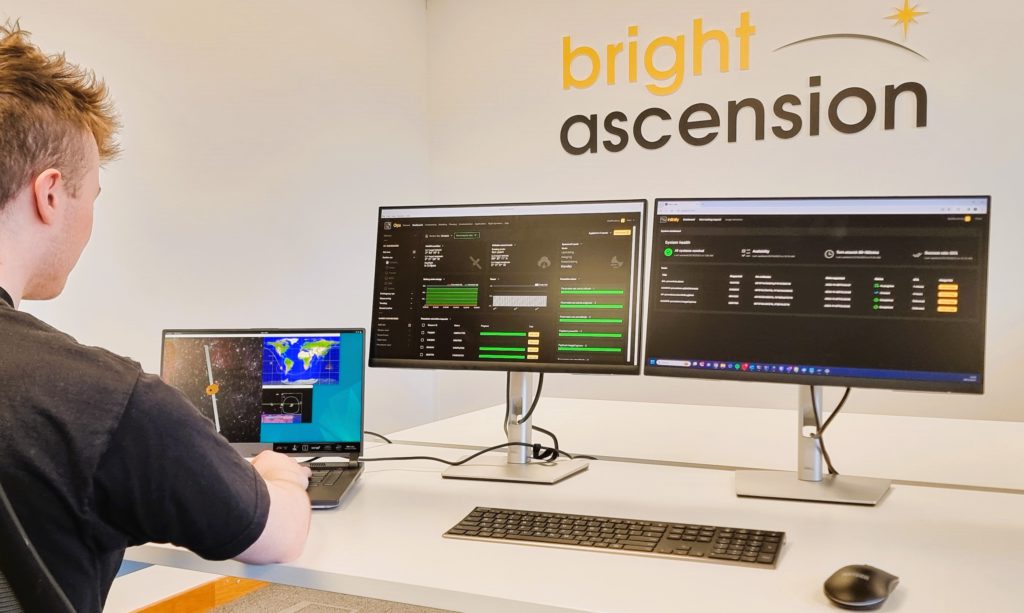
Timescales: the importance of rapid software development cannot be overstated. The space industry operates within tight schedules and constantly evolving technological landscapes, demanding agile and efficient software development processes. In an environment where every second counts, rapid software development allows organizations to respond quickly to changing mission requirements, adapt to unforeseen challenges, and facilitate iterative testing and refinement, ultimately ensuring that space missions remain on track.
Cost of ownership: it’s often underestimated how crucial it is to consider the total cost of a mission, as long-term perspectives are frequently overlooked during the design of mission software. Typically, software is designed to control and operate satellites built in a similar way, solving immediate problems but not investing enough into longer-term solutions.
However, the continuous replenishment of satellites as they reach the end of their lifespan often requires the introduction of new technology, hardware, or software into existing systems. This can result in significant operational risks, leading to uncontrollable increases in mission costs and, in some cases, even total mission failure.
Bright Ascension’s footprint in the space software market
Founded in 2011, Bright Ascension has established itself as a trusted authority in space-based software solutions. With over 50 software deployments in orbit, the company has gained unrivalled expertise and a deep understanding of the upstream processes involved in satellite construction, deployment, and operations.
Over the years Bright Ascension has learned that, to be successful, missions need to resolve some of the currently unaddressed software challenges, such as:
- How to improve efficiency when building a satellite in order to make the development faster, simpler, cheaper, and more reliable;
- How to improve efficiency when operating a growing and evolving multi-platform constellation where new spacecraft are constantly introduced and replenished;
- How to improve efficiency by shifting hardware functionality into the software domain, by making use of software-defined systems;
- How to improve efficiency when delivering data, services and actionable insights to end users by maximizing the utilization of available assets and resources.
This unique upstream software experience gained over the years allowed Bright Ascension to develop an innovative end-to-end solution that addresses these challenges and seamlessly integrates all software satellite systems, optimizes data collection processes, and delivers actionable insights to its clients’ customers.
This solution is called HELIX.
The HELIX family of space software products offers a fully integrated end-to-end solution, covering every aspect of space activities – from building flight software and managing ground operations to delivering space-based services and transforming them into value-added insights and applications. HELIX bridges the gap between currently disjointed and fragmented space software systems for significantly improved efficiency, simplicity, and noticeably lower costs. Designed with scalability in mind, it simplifies management of ever-changing mission requirements and hardware diversity within multi-vendor constellations, while offering end-to-end control and monitoring analytics.
 Request quote
  request info
Product inclusions under HELIX suite
HELIX as a suite of products offers a highly-integrated end-to-end space software solution – from flight software to ground operations and data-insights applications. It tightly connects currently disjointed and fragmented space software systems for significantly improved efficiency, simplicity, and noticeably lower costs.
The HELIX software suite is built on a blend of flight-proven cutting-edge technology and novel solutions that were methodically designed to handle the particular problems of space missions. HELIX is designed to cover the following software systems:
- Rapid flight software development
- Automated testing and simulation
- Automated operations and ground control software
- Mission add-on/app development for spacecraft or ground deployment
- Accessing space data for value-added insights and intelligence
- Cross-product monitoring and analytics
Built on a unified technological foundation, HELIX enables rapid and effortless integration of all upstream and downstream software systems, while retaining end-to-end security. This seamless integration ensures efficient mission management, operations, and smooth coordination across all components.
Moreover, HELIX streamlines the delivery of space-based services, providing fast and cost-effective solutions to meet the demands of modern space missions.
HELIX suite – increasing scalability for space missions
The space industry has witnessed a remarkable transformation in recent years, with an increased focus on satellite deployments, space exploration missions, and the burgeoning commercial space sector. This surge in activity, however, has brought an array of challenges such as intricate mission planning, complex satellite operations, and the need for interoperability among diverse space systems.
Perhaps one of the most challenging aspects of this dynamic landscape is the constant growth, evolution, and scaling up of missions. With each new spacecraft or mission comes a host of new requirements, hardware components, vendors, and technologies.
Predicting the exact trajectory of these changes can be daunting and it is critical to maintain a system that is open, flexible, and efficient in order to effectively manage the diverse and ever-evolving environment of space exploration. Flexibility and adaptability are key in navigating this terrain, enabling companies to respond quickly to emerging needs and capitalize on new opportunities as they arise.
Unravelling HELIX: understanding efficiency in space missions
The HELIX Software Suite is a complete set of tools that provides customers with unprecedented control and provides a unique opportunity to bring significantly more efficiency to their respective space mission offers.
HELIX enables the development of highly specific mission add-ons that can be seamlessly deployed either on the ground or directly onto spacecraft during its orbital lifespan. Typically, transmitting large volumes of data from space to the ground or pulling it from the cloud incurs significant costs and inefficiencies. HELIX completely changes this process by allowing the deployment of apps directly on spacecraft to process data in space.
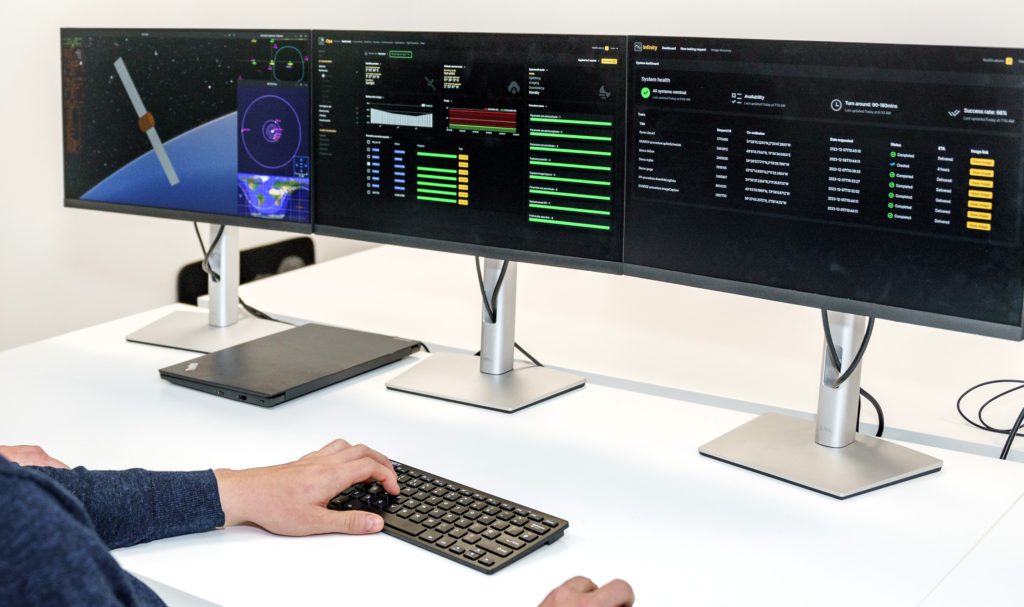
This approach ensures that only precise results essential to ground staff or customers are transmitted, removing the need for extensive data transfer. Moreover, these HELIX apps or add-ons can be developed and deployed at any stage of the mission, effectively pushing mission capabilities into space. This transformative approach not only reduces costs but also accelerates data processing and service delivery, making space missions significantly more efficient and agile.
HELIX apps hold a paramount significance in spacecraft and missions with software-defined systems, such as Software-Defined Radios (SDR), Field-Programmable Gate Arrays (FPGA), and System-on-Chip (SoC). These systems rely heavily on software for their functionality and operation, making the role of HELIX Apps indispensable. Their versatility and adaptability shine through in modern space missions, where the dynamic nature of space exploration demands flexible and robust software solutions.
OS-VOLT: HELIX in a real-life mission
HELIX products are getting to the final stages of development and are already expected to form the foundation for the OS-VOLT project within ESA’s Versatile Optical Laboratory for Telecommunications. Led by Craft Prospect Ltd. for the Telecom Directorate of ESA under the ScyLight programme, the mission is designed to evaluate and test radical new real-time techniques and technologies in low Earth orbit.
HELIX Flightkit, a flight software development product within the HELIX family, will be used to ensure that onboard software is developed quickly, risk-free and within the tight budget constraints.
Due to the nature of the project, OS-VOLT involves a considerable amount of onboard autonomy through software-defined onboard data processing, which helps establish secure end-to-end communication, avoiding the cloud. The HELIX App execution environment, integrated with the high performance compute platform, will be used to ensure flexible software-defined operations.
Once developed, HELIX Test will take the software package through the entire operational cycle to help identify any actionable intelligence to ensure safety of system and the best quality of operational processes.
As the spacecraft reaches the orbit, it will be operated via HELIX Ops, which is designed to reduce the complexity and cost of operations through extensive automation capabilities and tight integration with the flight side.
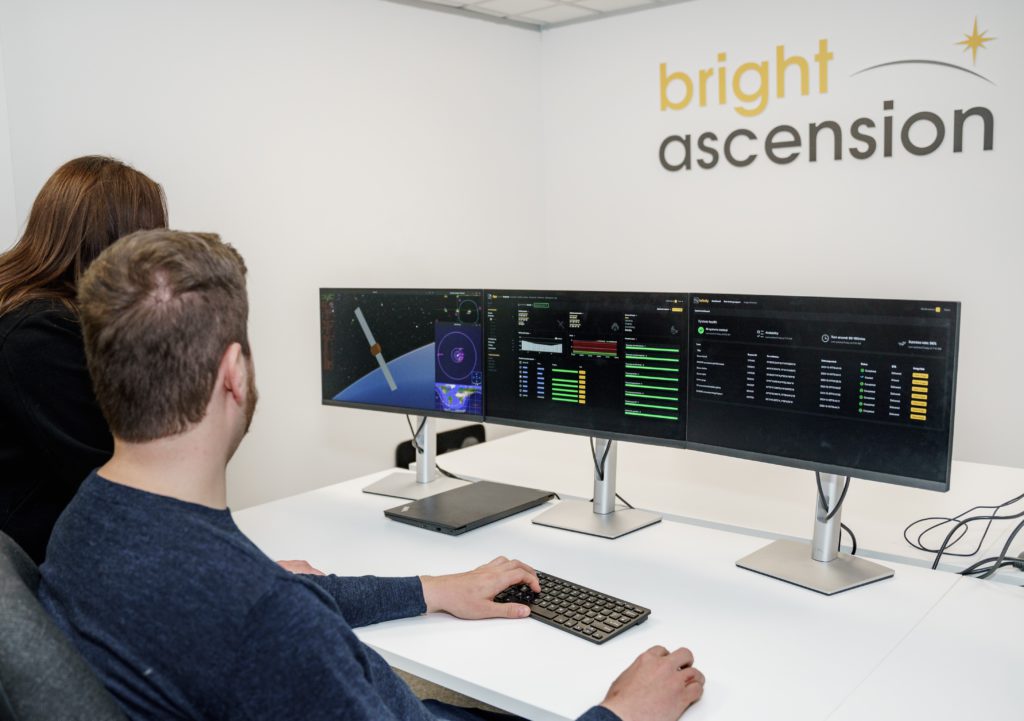
Yet, the most innovative and cutting-edge part of the OS-VOLT software development is the downstream service delivery solution. The project includes an extensible and customisable HELIX Infinity platform to provide secure high-level tasking capabilities for a number of anchor customers. It will allow end users to shape and define their data requests based on a specific set of criteria to then be processed onboard or on the ground via mission add-ons, developed through HELIX Appkit.
As such, one of the outcomes of OS-VOLT is the provision of climate and forestry monitoring services for Resilience Constellation, the mission’s largest client. The monitoring data will be gathered through the onboard hyperspectral imager, but most of the measurements will performed on the edge by the onboard software add-ons, developed through HELIX Appkit. This set-up will enable the space system to work significantly more efficiently for faster data processing and delivery.
Across the core services to be demonstrated on the OS-VOLT mission, a common need is the ability to bridge upstream and downstream, breaking down barriers to efficiency and adaptability whilst retaining end-to-end security. By functioning as continuous software infrastructure, the combined HELIX suite of products will demonstrate an increased ease of access to upstream facilities for downstream applications, leading to decreased total cost of ownership for a service and offering the potential to unlock a wide range of future applications for single-satellite to large or multi-constellation use.
Enabling the next frontier
As the space industry continues to evolve, the need for advanced and adaptable software solutions becomes increasingly pronounced. Bright Ascension, with its forward-looking approach, remains committed to pushing the boundaries of what is possible in space exploration.
As the space industry continues its rapid expansion, the role of software solutions in ensuring the success of missions becomes increasingly crucial. Bright Ascension’s commitment to innovation, interoperability, security, and reliability positions it as a leading force in shaping the future of space exploration, paving the way for humanity to reach new heights in the cosmos.
To find out more about Bright Ascension, please view their supplier hub here on the satsearch platform.