
Multi-layer insulation (MLI) for satellites consists of thermally insulated layers that can prevent both excessive heat loss from a component and significant heating from environmental fluxes and other sources.
Such thermal management is vital in space-based assets to ensure operational stability and minimize risks. MLI systems are also widely used in space launch vehicles, in areas which experience both extreme heat and cold during a mission.
In this article we take a look at how MLI works, discuss the factors that you need to consider when selecting the right insulation product or solution for your next space mission, and share information about manufacturers and products on the market today.
If you’re familiar with multi-layer insulation for satellites, and would instead like to skip straight down to the information about the products on the market, please click here.
In the next section we give a brief overview of what function MLI performs in satellites.
Multi-layer insulation for satellites – how it works
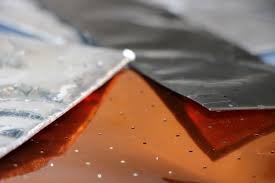
Composed of multiple layers, made up of various materials (dependent on mission requirements), MLI blankets and materials are typically embossed so that consecutive layers touch each other only at few points, decreasing the number of conductive path between layers.
Different layers will feature varying emissive and absorptive qualities in order to reflect heat as required. It isn’t possible to reduce incident heat absorption by 100%, but the right combination of thin films can achieve radiation reflection of at least 90% at each layer, for a negligible total irradiation.

In a high-performing MLI product, thermal protection is ensured in a number of ways:
- Radiation heat transfer is reduced by making the surfaces of MLI blankets and surfaces reflective
- Solid conduction is minimized by using low conductivity spacers between surfaces
- Gaseous heat conduction is reduced by allowing gases trapped vent to space and by maintaining vacuum in void space between surfaces.
At higher gas pressure (i.e. pressure above 10−4 torr) thermal conductivity due to gas conduction significantly increases. Therefore, ensuring highly evacuated void spaces is necessary.
The above phenomenon also demonstrates importance of reducing out-gassing, hence provision for venting should also be considered.
In the next section we take a closer a look at some of the key factors that thermal engineers like you need to consider when assessing which MLI product is right for your mission.
Advice on selecting an MLI solution for your next mission
Alongside typical commercial considerations (such as flight heritage, mass, price, lead time, and export control considerations) there are a variety of parameters that may determine which MLI solution is the most suitable for your next mission.
These characteristics may be assessed at the individual layer level, as well as the overall MLI blanket or material level.
Temperature
One of the most important parameters is the maximum and minimum temperatures your equipment will be exposed to during the mission phase. The expected spacecraft operational temperature range could be, for example, -100°C to 150°C (-150°F to +300°F).
This will primarily be determined by the target orbit(s), system lifetime, mission plan, operational scenarios of the surfaces protected using MLI, and surrounding hardware.
Required MLI performance
The function and requirements of each MLI blanket should be clearly specified (at the overall level and for each individual layer). In this process, some of the typical considerations are:
- If glint prevention is required
- If electrostatic discharge prevention is required
- Whether atomic oxygen prevention is required
- The venting requirements on both the hardware and space side
- Exterior and interior solar absorptance values
- Exterior and interior infrared emittance values
- Overall effective emittance
- The impacts of any mechanical loads – in minimal, optimal, and maximal mission scenarios
- Whether micrometeoroid protection is required
- Grounding requirements
- The level of contamination prevention provided
- The flammability of material used

Attachment requirements
Various attachment methods are used for different MLI products, including tie chords, velcro and tape. Here are some factors to weigh up when assessing which method will be used in different areas of your system:
- Thread is used to stitch blanket seams, to attach them to velcro, or to join two blankets
- Simple nylon thread can sometimes serve if satellites will not be exposed to atomic oxygen in the mission
- Adhesives are used to bond fasteners to structures
- Low-outgassing, silicon-based adhesives are commonly used. These are typically not applied on surfaces directly exposed to LEO or surfaces with temperatures higher than 200°C
In the section below, information on individual MLI products and custom development services available on the global space marketplace is included, along with links to pages giving more detail on each solution.
Multi-layer insulation for satellites on the global market
This section includes a variety of MLI solutions available on the global market today. You can click on any of the links to open pages with more detail on each system.
From these pages you can submit requests for quotes, documents, or further information by the supplier, and we’ll handle the request for you (find out more about how this all works here).
If you want to shortcut this process, or need some assistance refining either your specific MLI or more general satellite thermal management requirements, you can instead submit a free open tender and our expert procurement team will get back to you ASAP.

The DHV Technology Multi-layer Insulation Blankets are thermal insulation designed for space applications. It consists of thermal insulation composed of multiple layers of optical and electrically conductive materials separated by thin netting spacers. These blankets are critical in preserving spacecraft from the extreme environment in space. The manufacturing process of this product is carried out with an ISO Class 8 temperature and humidity-controlled clean room.
 Request quote
  request info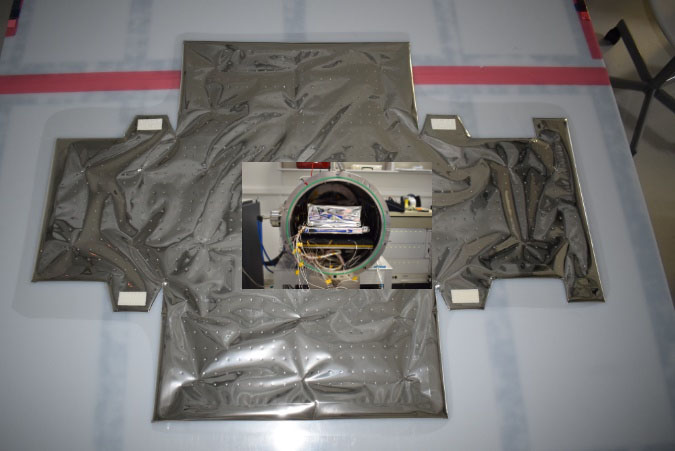
Admatis provides MLI blankets, whose development and production include thermal engineering, layup, and manufacturing, assembly, test and integration.
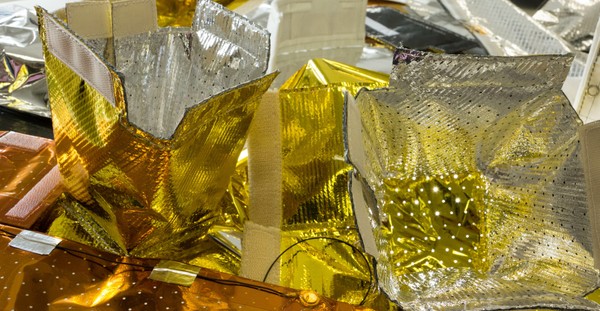
AFM provides a wide range of MLI to the Aerospace community, using a combination of thin films, foils, and fabrics.
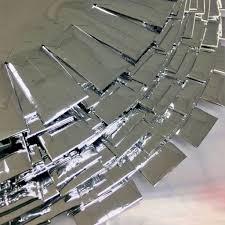
Aerothreads designs, fabricates and delivers exceptional quality MLI blankets of quickly and efficiently in accordance with industry best practices.
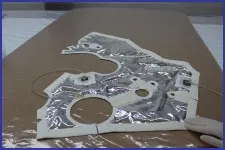
A&R Tarpaulins, Inc. custom manufactures MLI and SLI Blankets which are used in space launch vehicles that are exposed to both extreme heat and cold.


Design, manufacturing and integration of MLI blankets for aerospace, cryogenic and TVAC applications.

Beyond Gravity is a leading provider of high-quality, reliable, and high-performing multilayer insulation solutions for satellites and instruments.

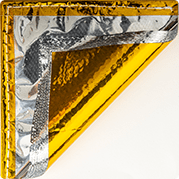
Dunmore multilayer films, with engineered absorptance and emittance properties, are used to manufacture MLI blankets for passive thermal control.

The Hemeria MLI thermal protections is a single-layer and multi-layer insulation (MLI) for satellite and instrument thermal control subsystems. Hemeria offers complex MLI including MLI’s for LEO, MEO, GEO. Hemeria produces 2000 blankets per year.


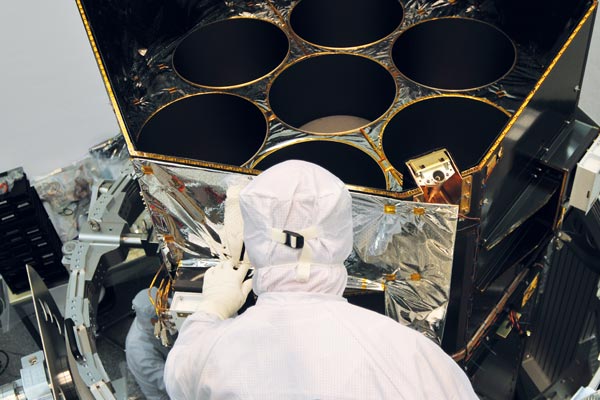
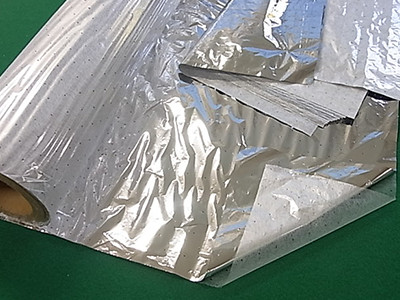
Kaneka offers vacuum multilayer insulation which is used as a radiant heat-controlling film in vacuum conditions in extreme-cold space applications.

Meyer Tool specializes in MLI vacuum insulation providing unmatched insulating performance within a given thickness.
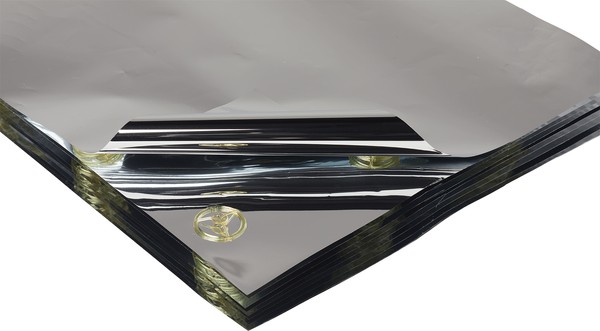
Quest Thermal offers Integrated MLI , the best multilayer insulation available, offering the lowest heat leak of any current insulation solution.

Sheldahl provides a range of MLI blankets using aluminum or gold to reflect radiant heat and reduce the amount of heat transferred to the spacecraft.
RAL Space supplies MLI solutions to customers globally, with excellent heritage experience of MLI delivery for satellites and space instruments.

By shielding satellites from temperature extremes, Web Industries provides MLI solutions to protect equipment and ensure successful space operations.
Thanks for reading! If you need any further help identifying the right MLI solution for your specific needs, please share your specifications with us and we’ll use our global network of suppliers to find options.
Do you make multi-layer insulation for satellites or space systems, and want to be included in this article? Click here to find out how to claim your free profile on satsearch today.
Then, once your pages are live, just send us an email and we can discuss showcasing your products to the global space engineering community on this page.