Earth sensors or horizon sensors are attitude determination devices used onboard satellites that enable an understanding of the system’s orientation with respect to the Earth itself.
The Earth is a major reference point in Low Earth Orbit (LEO) so it is relatively straightforward to determine a satellite’s attitude with respect to it, either as a point in space or, for greater accuracy, by focussing on the planet’s horizon.
In this article we take a closer look at how these attitude sensors work and share information on a range of products available on the market today – with links you can use for procurement from the suppliers, if you need such a solution for your mission.
If you’re familiar with how horizon and earth sensors work and would instead like to skip straight down to the information about the products on the market, please click here.
Attitude sensing in space
A satellite’s attitude is its orientation relative to an external frame of reference.
The external references must be fixed inertial points or frames, so that attitude measurements are accurate. They are typically a celestial body, orbital plane, or a nearby object such as a space station.
To determine the attitude of a satellite we need to specify the set of 3D coordinate axes of the satellite itself (the body frame) and a set of 3D coordinate axes in the orbit (the orbit frame).
It is important that attitude sensors can accurately, efficiently, and consistently measure the body frame with respect to the orbit frame so that it can be adjusted as required. This is important for several applications such as:
- Aligning optical communications systems or satellite antennas to maximize data exchange.
- Correctly positioning Earth Observation (EO) cameras to capture the required data in the mission,
- Ensuring solar panels are correctly aligned with the Sun to maximize power generation, or
- Accurately pointing telescopes or spectrometers towards specific celestial bodies.
An onboard satellite attitude control system is made up of sensors, which measure the relative orientations of the orbital and body frames, and actuators, which can change the body frame’s orientation by applying torque where required – such as reaction wheels or control moment gyroscopes.
Earth/horizon sensors are one of the main forms of sensor used, alongside sun sensors, star trackers, and magnetometers.
How does an Earth sensor work?
Earth sensors work by collecting and processing optical signals (typically in the infrared spectrum) emitted by the Earth and using them to determine the relative position and orientation of the satellite, with respect to the direction of those signals.
This allows for reasonable calculations of the nadir vector – the local vertical, or direction between the Earth itself and the satellite. The process is also sometimes referred to as “limb sensing” – describing the idea of sensing the limbs of the atmosphere, synonymous with horizon sensing.
(Please note that the terms Earth sensor and horizon sensor are used interchangeably, both in the industry and in this article, and you may also see Earth horizon sensor used too.)
The Earth takes up a significant proportion of the observable sky, in 3 dimensions, for any orbit. It is therefore a sensible reference object for attitude determination of satellites.
In higher orbits it can be sufficient to use the Earth as a simple reference point. For example, for a geostationary orbit an Earth sensor can achieve an accuracy of around 10°.
However, lower orbits instead require sensors to use the Earth’s horizon as a reference frame. Specifically, infrared sensors can detect the discontinuity between the horizon and the cosmic background by determining the direction of electromagnetic radiation (in the infrared band; from 2 to 30 µm) emitted by atmospheric carbon dioxide.
This occurs in only a relatively narrow band, and can give a much more precise nadir vector (or other measurement) determination than using the Earth’s as a discrete point.
State-of-the-art Earth and horizon sensors take advantage of many advances in our understanding of the radiation emitted by Earth, the Moon, and the Sun to generate clearer attitude results.
In the next section we share details on some of the specific systems available on the market, which can deliver this performance.
Earth sensors and horizon sensors on the global market
This section includes a variety of Earth / Horizon Sensors available on the global market today.
Click on the links to open pages with more detail on each system.
From these pages you can submit requests for quotes, documents, or further information by the supplier, and we’ll handle the request for you (find out more about how this all works here).
If you want to shortcut this process, or need some assistance refining either your specific horizon/earth sensor or more general attitude measurement requirements, you can instead submit an open tender and our expert procurement team will get back to you ASAP.

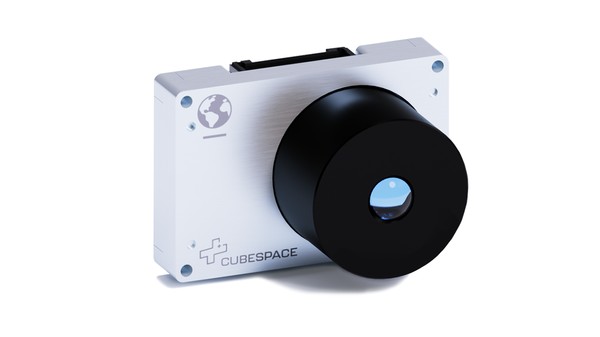
The CubeSpace CubeSense Earth is an infrared horizon sensor that provides high-accuracy pitch and roll determination throughout the orbit. It allows for accurate satellite control in eclipse without the need for a star tracker. The sensor is suitable for satellites requiring nadir pointing or station tracking throughout the orbit.
 Request quote
  request info
The Solar MEMS HSNS is a Horizon Sensor designed for nanosatellites. It is a Quad Thermopile sensor for Earth detection and Nadir vector determination. This device measures the infrared radiation from Space and from Earth with 4 IR-eyes, providing accurate and reliable detection and attitude determination. The HSNS is based on previous experience with Solar MEMS making attitude sensors and long research projects on IR sensing devices.



Need help finding the best solution?
Share your requirements with us now
Would you like to be featured on satsearch?
Click here to get started today
Further reading
- Attitude sensors
- Accelerometers
- Gyroscopes
- Inertial Measurement Units (IMUs)
- Sun sensors
- Star trackers
- Satellite components