In this post, we provide an overview of satellite EPS or Electrical Power Systems and share details of various products on the global market – if you’re familiar with this technology and would like to skip over the introductory material to get straight to the product listings, please click here.
The primary role of the satellite EPS is to supply other systems in the satellite with the necessary electrical power to operate effectively.
The source of the power is the energy collected from the solar panels which are exposed to direct solar radiation or to indirect radiation from albedo.
Batteries are installed alongside the solar panels to store energy which can then be used when the satellite regularly passes through the shadow of the Earth. Batteries can also help to provide sufficient power during periods of peak demand by the payload on-board the satellite.
The collected and stored power must then be distributed to other systems throughout the satellite as needed by the EPS.
The satellite itself may need multiple voltage levels for different sensors and sub-systems. Managing these levels is another function of the system; the satellite EPS houses a power conditioning unit which is able to deliver the required amount of electrical power at several voltages. It also plays an important role in monitoring spacecraft status.
Subsystems such as power conversion boards and interface, Power Conditioning and Distribution Unit (PCDUs), and Maximum Power Point Trackers (MPPTs) all play a role in the power management and control process.
Alongside power provision and management, the EPS plays a crucial role in monitoring the satellite’s health, as discussed in the next section.
Assessing satellite status
The health of the satellite needs to be checked regularly to make sure that there are no major problems in any sub-system during its operations in orbit.
Collecting routine information from various sub-systems and sensors is also a core function of the EPS. This involves measuring various important voltages, currents, and temperatures which are called the “Housekeeping Parameters.”
These are communicated back to the ground as a part of the telemetry of the satellite for operators to keep track of the overall health of their system and guard against potential faults or poor performance.
The high levels of radiation in space can cause ”single event latch-up” in the semiconductor devices on the satellite.
This can damage some of the components on the satellite if the power is not turned off quickly enough, so the EPS is also required to protect the satellite and its sub-systems against over-currents.
Selecting an Electrical Power System for a space mission
When assessing whether a particular EPS is the best fit for your mission, the typical space hardware criteria of Size, Weight, and Power (SWaP) are particularly important.
- Size – power equipment can take up lots of spacecraft volume, relative to the overall size, and the power that can be generated by solar panels is a function of their surface area, meaning size is a very important characteristic.
- Weight – similarly, EPS hardware can account for a significant amount of the mass budget. Batteries in particular are relatively heavy compared to other subsystems. So weight is a key limiting factor.
- Power – obviously, selecting the most suitable EPS will require a clear indication of your satellite’s overall power budget range, and the operational power requirements of the EPS itself will also need to be factored in.
In addition to these usual criteria, some other important factors to weigh up are:
- EPS contents – note that different suppliers market different product formulations under the label “Electrical Power System” (e.g. solar panels, PCDUs, MPPTs, conversion cards etc.) so ensure that you know what setup is required for your mission.
- Heritage – a power system failure is fatal to a mission, so ensure that you de-risk this as much as possible by querying any system’s operational heritage.
- Interoperability – as an EPS can play such a key role in satellite health monitoring (as described in the previous section) the system’s interoperability and interface capacity with the spacecraft’s communications system and on-board computer is very important.
In addition, for the CubeSat form factor there are some additional design considerations and conventions that have emerged from the industry, take a look in the next section.
Electrical CubeSat requirements
There are certain electrical requirements that are recommended for the standard CubeSat form factor which EPSs should adhere to:
- If the satellite features a rechargeable battery it should be fully discharged or deactivated for the launch.
- In order to avoid RF or electrical interference of primary payloads, or the launch vehicle itself, no CubeSat electronics should be active during launch.
- For each CubeSat at least one deployment switch is required, although two are recommended. These should be located at clearly designated points.
- If developers wish to perform testing and battery charging after integration they must provide ground support equipment (GSE) that connects to the CubeSat through designated data ports.
- A remove before flight (RBF) pin is usually required in order to deactivate the CubeSat during integration outside the P-POD or alternative launch separation system. This pin will then be removed once the CubeSats are placed inside the P-POD, and it must fit within the designated data port.
More information on these recommendations can be found in this paper on CubeSat Design Specifications [PDF].
Satellite EPS products on the global market
In this section, you can explore Electrical Power Systems available on the global market. These listings will be updated when new satellite EPS products are added to the global marketplace for space at satsearch.co – so please check back for more or sign up for our mailing list to get all the updates.
We have also put together an overview of CubeSat solar panels and solar cells if you need additional power components to complete your satellite and an overview of on-board computers should you require ancillary control systems.
You can click on any of the links or images below to find out more about each of the products. You can also submit a request for information (RFI) on the product pages or send us a general query using our RFI tool to discuss your specific needs, and we will use our global networks of suppliers to find a system to meet your specifications.
Please note that this overview primarily includes integrated EPS products which may contain the following:
- Solar panels to generate power,
- Power regulation and power conversion systems for solar generation, such as Maximum Power Point Trackers (MPPTs),
- Batteries to store energy until needed, and
- Power Conditioning and Distribution Units (PCDUs) to manage energy output from the EPS to the satellite.
Get more information on all products listed at the click of a button
We can help you access quotes, lead times, or any other information from all of the suppliers listed below (and more) with our simple, free tender system. Just share your details with us and wait for the responses to arrive in your inbox.

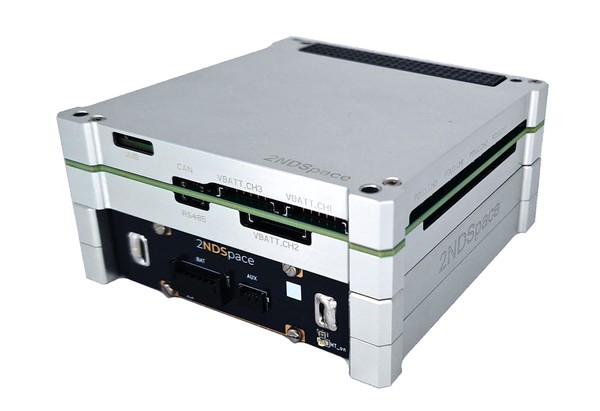
Modular turn-key power module with up to 12 power output. >10years life in LEO and implementing Power-continuity faul tolerant architecture
 Request quote
  request info
Designed to be robust and reliable with performance failsafes, the flight proven STARBUCK-NANO range are one of the most flown power system ranges in the world.

Designed to be robust and reliable with performance failsafes, the flight proven STARBUCK-NANO range are one of the most flown power system ranges in the world.
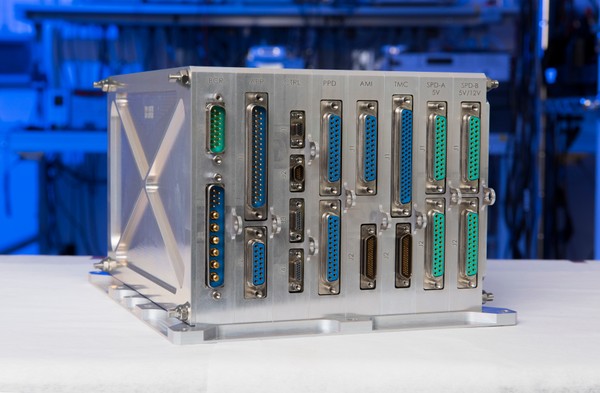
AAC Clyde Space has developed a modular microsatellite PCDU concept with focus on high reliability, resiliency and performance.
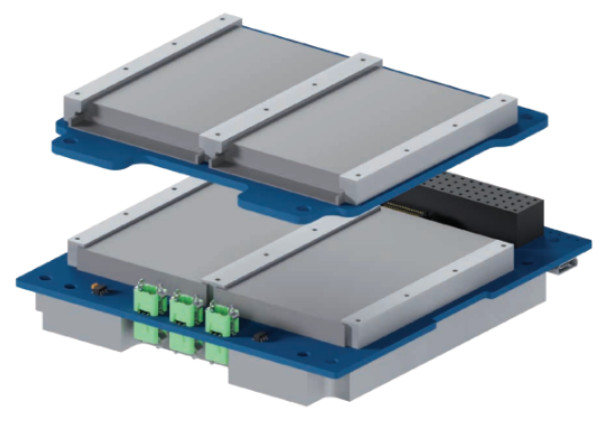
The DHV Technology PicoEPS is designed for 1U and 2U CubeSats. It consists of power and battery module in one single board which optimizes mass and volume for large payloads integrated into 1U and 2U platforms. The system is configurable as per the mission requirement. The PicoEPS battery capacity could be extended with a battery module with a capacity of up to 2800mAh.

The DHV Technology NanoEPS is designed for 2U to 12U CubeSats. It consists of power and battery module. The NanoEPS is mainly designed to be integrated into different non-deployable 3U CubeSats to triple deployable 2U, 3U, or 6U and double deployable 12U CubeSats with various configurations.
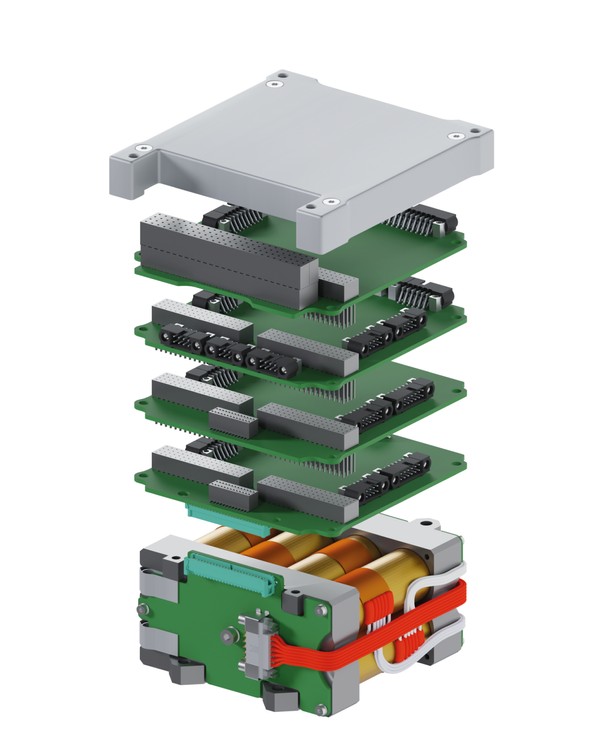
The DHV Technology MicroEPS is designed for 3U to 16U CubeSats. It consists of power and battery module. The MicroEPS is mainly designed to be integrated into different non-deployable 6U CubeSats to quad deployable 3U, 6U, 12U and 16U CubeSats with various configurations.
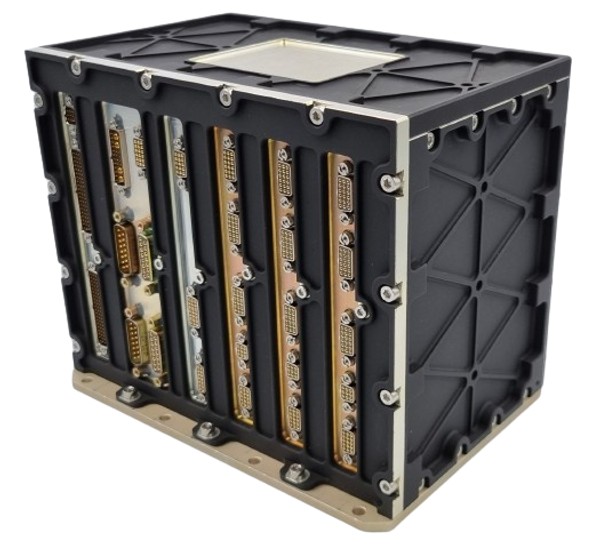
The EPS-LP is Dragonfly Aerospace’s advanced 28V Electrical Power System (EPS) designed for spacecraft power control and distribution.
Now in its 8th generation, this system boasts heritage design that ensures exceptional reliability and performance, making it ideal for nano, micro, and mini satellites.
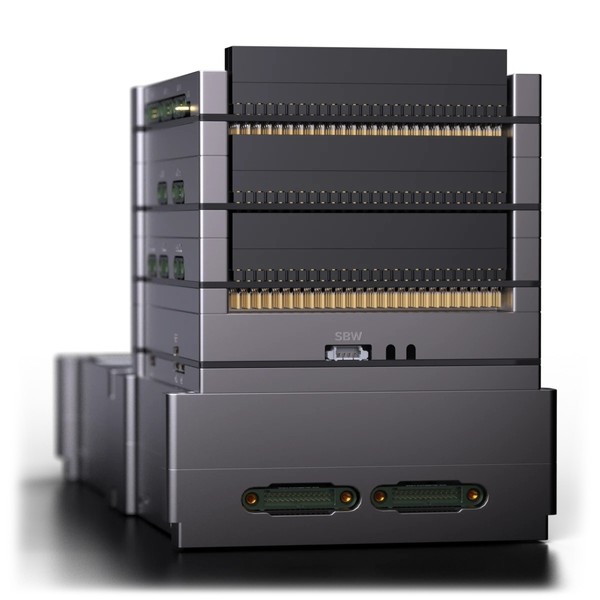
The EPS I – Electrical Power System is an Electrical Power System with flight heritage including ISS-level requirements. and is fully compliant with the CubeSat standard.
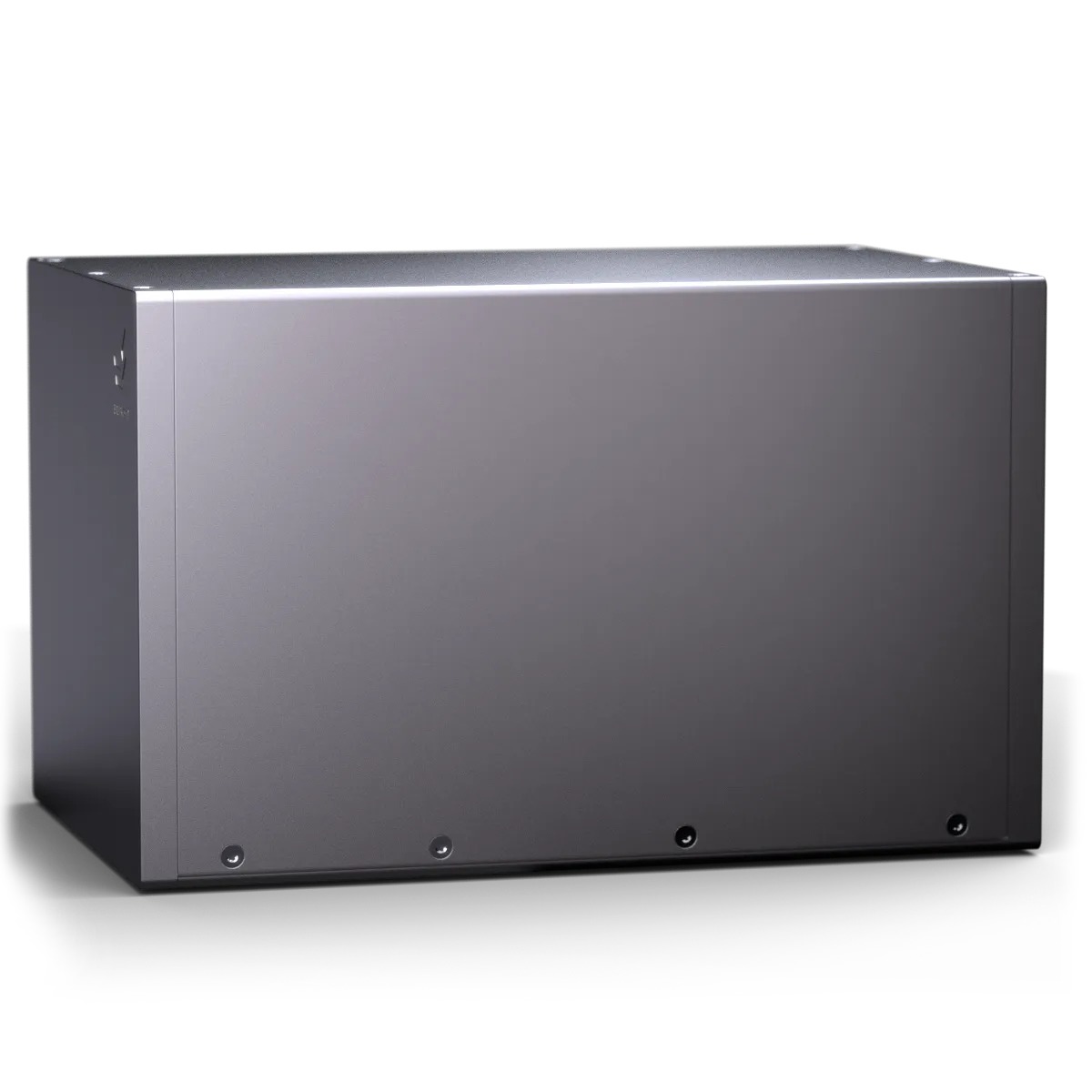
The EnduroSat EPS II (inc. battery pack) - Electrical Power System is Electrical Power System to support payloads with high power requirements. The system has multiple outputs with high power efficiency and it is fully compliant with the CubeSat standard.
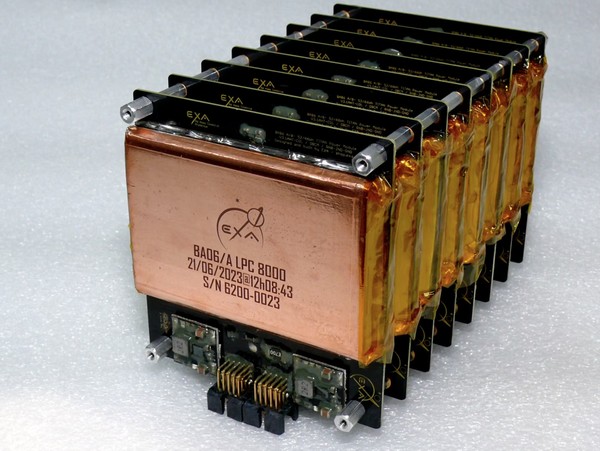
A 1U-sized power bank module built from 7 battery arrays, designed to provide high energy capacity and redundancy. The 1.26 kg system has a total battery pack power of 350 Wh and a capacity of 42,000 mAh or 84,000 mAh depending on configuration. The batteries are customizable in terms of in terms of output, cable, connectors, and interfaces.

The EXA ICEPS is an all-in-one, configurable spacecraft system core, designed to be the central operational heart for CubeSats. ICEPS compresses the functions of many cards into a single, 25mm-thick system, using modularity for fully customizable hardware that can range from being simply an EPS or including a range of features.
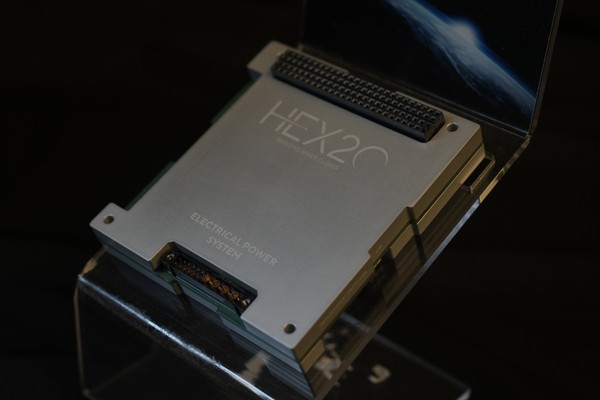
The HEX20 AX EPS represents a state-of-the-art system, inheriting its lineage from the successful InspireSat-1 bus. This advanced EPS board efficiently manages electrical power generation and distribution. The EPS board is equipped with functionalities, including optimizing solar array input through peak power tracking, adept management of onboard and external battery charging, precise charge level control, voltage regulation, and facilitating streamlined power distribution across the entirety of the spacecraft.


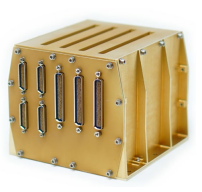

The NPC Spacemind GEMINI-Cubesat EPS is an electrical power system (EPS) for CubeSats, with a mass of 300g.

The Aphelion Cubesat Bus Module is an integrated electrical power system and on-board computer solution.


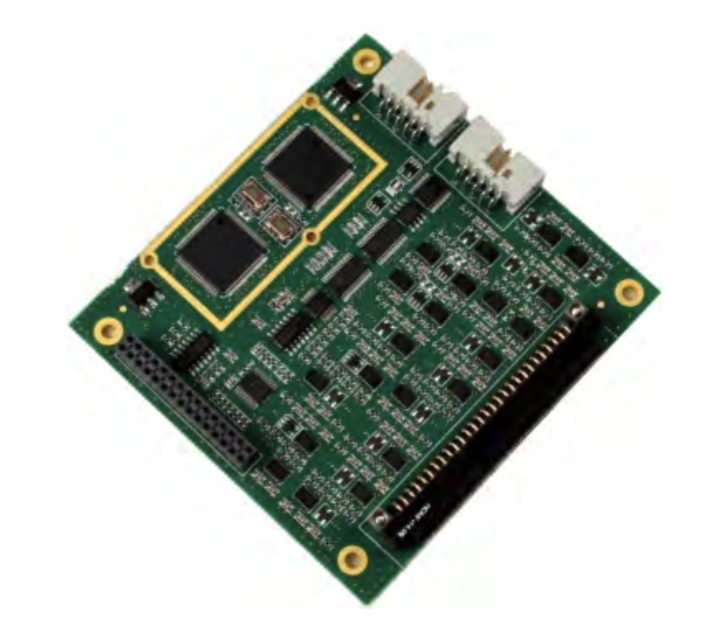


An off-the-shelf Electrical Power System available in three standard configurations (Type A/B/C), for powering 1U – 3U Cubesats. The system leverages wide bandgap semiconductor technologies and is equipped with an integrated heater, hardware-based Maximum Power Point Tracking (MPPT) and hardware voltage and over-current protection.

The ISIS Modular Electrical Power Subsystem version 2 (v2) is the second-generation modular EPS designed and manufactured by ISIS. Designed as a flexible EPS targeting larger nano-satellites and microsatellites from 3U upwards, the system can include up to three Battery Packs (IPBP) per Battery Unit board (IPBU).


Designed to offer a low-cost Electrical Power System (EPS) with 10-20 Wh of battery energy. The system can power a CubeSat stack of modules during development, and provides attached modules with +7.4Vdc (nominal), +5Vdc and +3.3Vdc rails. Recharging is via the built-in microUSB connector or from system +5V_USB.

The modular Redwire Modular Array for the Direct Distribution of Integrated Energy (MADDIE) Electrical Space Power System is integrates the PV, charge controllers, and battery pack components into a single standardized EPS module. This minimizes NRE and lead time while simplifying AIT.
Need help finding the best solution?
Share your requirements with us now
Would you like to be featured on satsearch?
Click here to get started today
Related technologies and further reading
At the links below you can find a range of satsearch articles that will be useful for learning more about this topic, or that feature other categories of technologies which you may need to consider in your mission.
- Satellite batteries on the market
- CubeSat thrusters and in-space propulsion
- Software-defined radios (SDRs) for space
- On-board computers (OBCs) for space
- Optical payloads for space
- Satellite software providers on the global market
- Payload processors for satellites
- A brief introduction to the space supply chain